Category: Japanese

  • Strawberry Matcha Sando

    Strawberry Matcha Sando

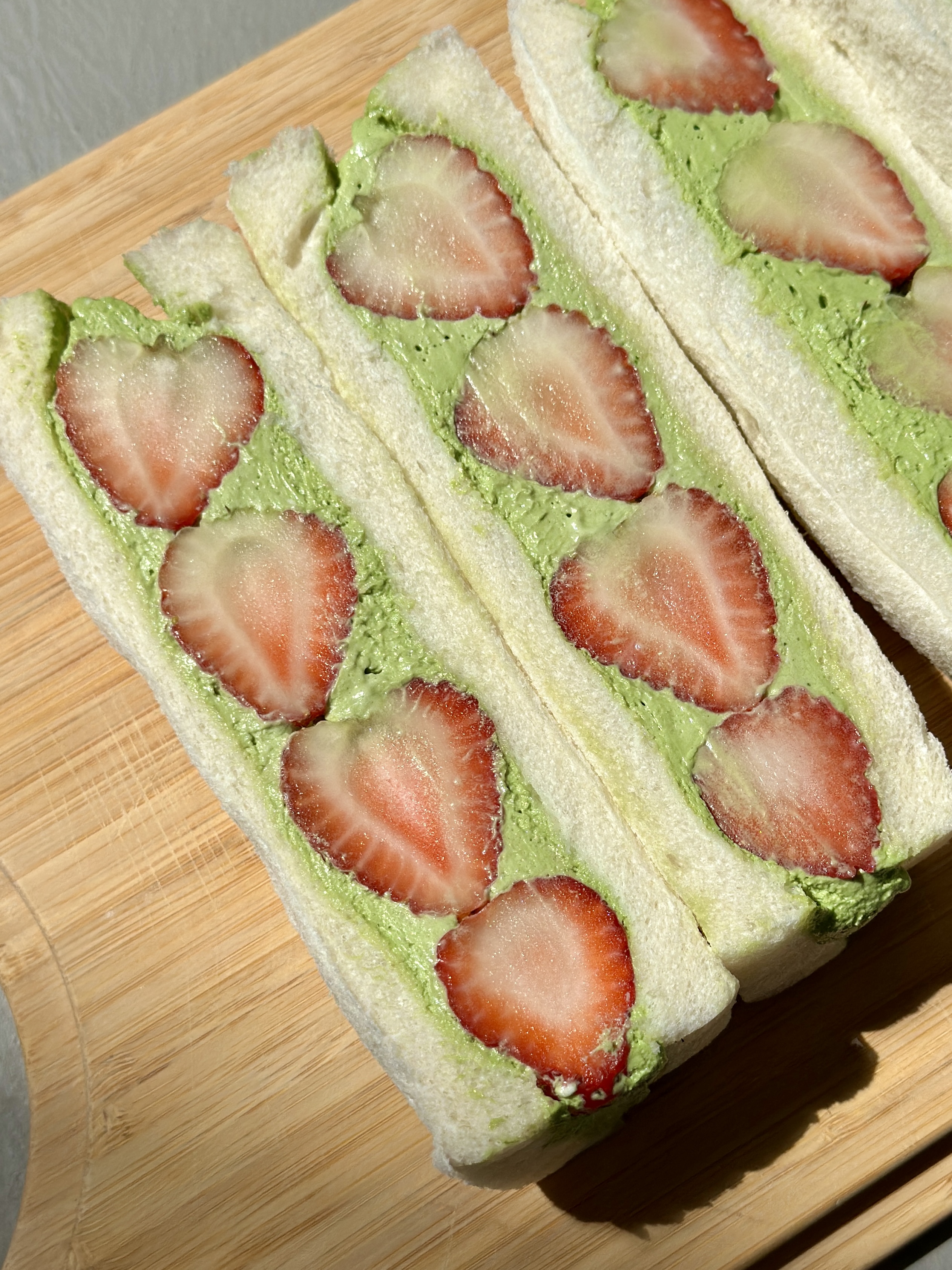
    This popular Japanese sandwich: strawberry matcha sando consists of fresh strawberries, vegan whipped cream between fluffy bread slices.

    Fruit sandos are a popular type of sandwich in Japan and they’re made by layering fresh fruit and lightly sweetened whipped cream between soft, fluffy white bread – usually a Japanese milk bread called shokupan. These sandwiches usually have beautiful cross-sections like this strawberry matcha sando.

    How to Make The Perfect Sando

    For this recipe, I use vegan whipped cream by Nature’s Charme. This coconut whipped cream is the best I’ve used in place of dairy whipped cream. Chill the sandwich before cutting to keep the cream firm and the shape intact. Do also remember to use fruits that aren’t too ripe or juicy to avoid the bread from becoming soggy.

    Ingredients You Need

    • vegan matcha whipped cream – coconut whipped cream, matcha powder
    • fresh fruits – strawberries or mango
    • bread – soft fluffy white bread

    Strawberry Matcha Sando

    This popular Japanese sandwich: strawberry matcha sando consists of fresh strawberries, vegan whipped cream between fluffy bread slices.
    Prep Time15 minutes
    Cook Time30 minutes
    Total Time45 minutes
    Course: Appetizer, Main Course
    Cuisine: Japanese
    Keyword: sandwich
    Servings: 3

    Ingredients

    • 8-12 fresh strawberries
    • 1 can chilled coconut cream
    • 1/2-1 tbsp matcha powder
    • 2 tsp maple syrup
    • 4-6 slices white bread

    Instructions

    • In a chilled bowl, transfer the can of the whipping cream. Sift in the matcha powder to prevent clumps. Add maple syrup (optional).
    • Whip using a hand mixer or whisk until stiff peaks form. Be careful not to overwhip.
    • Layout two slices of bread. Spread a thick, even layer of matcha cream on one slice. Arrange strawberries in a line or pattern diagonally.
    • Top up with more matcha cream and even out. Gently press the other bread slices on top.
    • Wrap the sandwich tightly in plastic wrap to hold the shape. Draw a line across the centre of the strawberries to slice them accurately later on. Chill in the fridge for 15-30 minutes.
    • Unwrap and carefully slice the sandwich in half.
  • Crispy Seaweed Tofu

    Crispy Seaweed Tofu

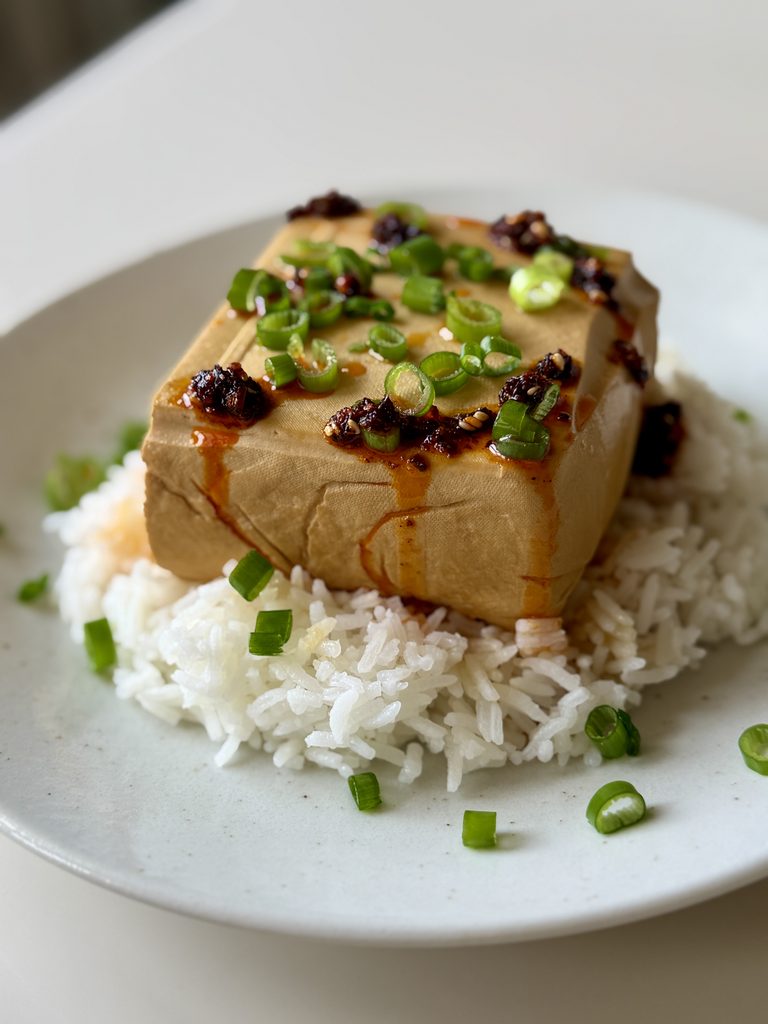
    These crispy nori-wrapped tofu are pan fried to golden brown perfection and coat in an addictive teriyaki glaze! Vegan and gluten free.

    I grew up eating crispy nori-wrapped fried chicken as a snack in my school canteen when I was 10 years old – one of my guilty pleasures was buying these bite sized snacks almost everyday during my 30-minute lunch break. I definitely missed them once I went vegan but these crispy seaweed tofu bites pretty much have the same flavours while being insanely addictive!

    Seaweed’s umami-rich taste adds depth and complexity to versatile tofu, giving it a savoury and fishy flavour! In this recipe, we glazed it in an addictive teriyaki sauce and it’s perfect when paired with rice with extra vegetables like broccoli and edamame.

    Ingredients You Need

    • extra firm tofu – extra firm tofu holds together the best for this recipe
    • nori sheets
    • corn starch – to make the tofu extra crispy
    • neutral oil for frying
    • teriyaki sauce
      • garlic, ginger
      • light soy sauce, mirin, sake, sesame oil, agave
      • gochugaru
      • corn starch + water
    • garnish
      • green onions
      • toasted sesame seeds

    Gluten free substitutions: Use gluten free soy sauce / tamari / coconut aminos.

    Allium free substitutions: Omit garlic – instead substitute with a pinch of hing. Omit spring onions and garnish with coriander (optional!)

    Crispy Seaweed Tofu

    These crispy nori-wrapped tofu are pan fried to golden brown perfection and coat in an addictive teriyaki glaze! Vegan and gluten free.
    Prep Time15 minutes
    Cook Time20 minutes
    Total Time35 minutes
    Course: Appetizer, Main Course
    Cuisine: Fusion, Japanese
    Keyword: high protein, japanese recipes, tofu recipes
    Servings: 4

    Ingredients

    • 450 g extra firm tofu
    • 2-3 nori sheets
    • 1 cup corn starch
    • neutral oil for panfrying

    Teriyaki Glaze

    • 1 tsp minced garlic
    • 1 tsp minced ginger
    • 2 stalks white part of scalions
    • 2 tbsp light soy sauce
    • 1 tbsp mirin
    • 1 tbsp sake
    • 1 tbsp sesame oil
    • 1 tsp agave
    • 1/2 tbsp gochugaru more if you like more spicy!
    • 1 tsp corn starch + 1/2 cup water

    Garnish

    • spring onions
    • toasted sesame seeds
    • rice

    Instructions

    • Press the tofu to remove excess water with paper towels. They do not need to be completely dry. Cut tofu into small rectangles.
    • Cut nori sheet into thin strips and wrap them around each tofu piece. Coat them in corn starch.
    • Heat oil on a pan. Add the tofu cube and pan fry for 5-7 minutes, turning occasionally, until golden brown and crispy on all sides.
    • Remove the tofu from the pan and set it aside.
    • In the same pan add the sesame oil. Add the minced garlic and ginger, cooking for 1-2 minutes until fragrant.
    • Add white part of scallions and the ingredients for the sauce, including the corn starch slurry.
    • Mix until the mixture thickens. Add back in the tofu and give that a good but gentle toss.
    • Garnish with spring onions, toasted sesame seeds and serve!
  • Vegan Chickpea ‘Tuna’ Rice Bowl

    Vegan Chickpea ‘Tuna’ Rice Bowl

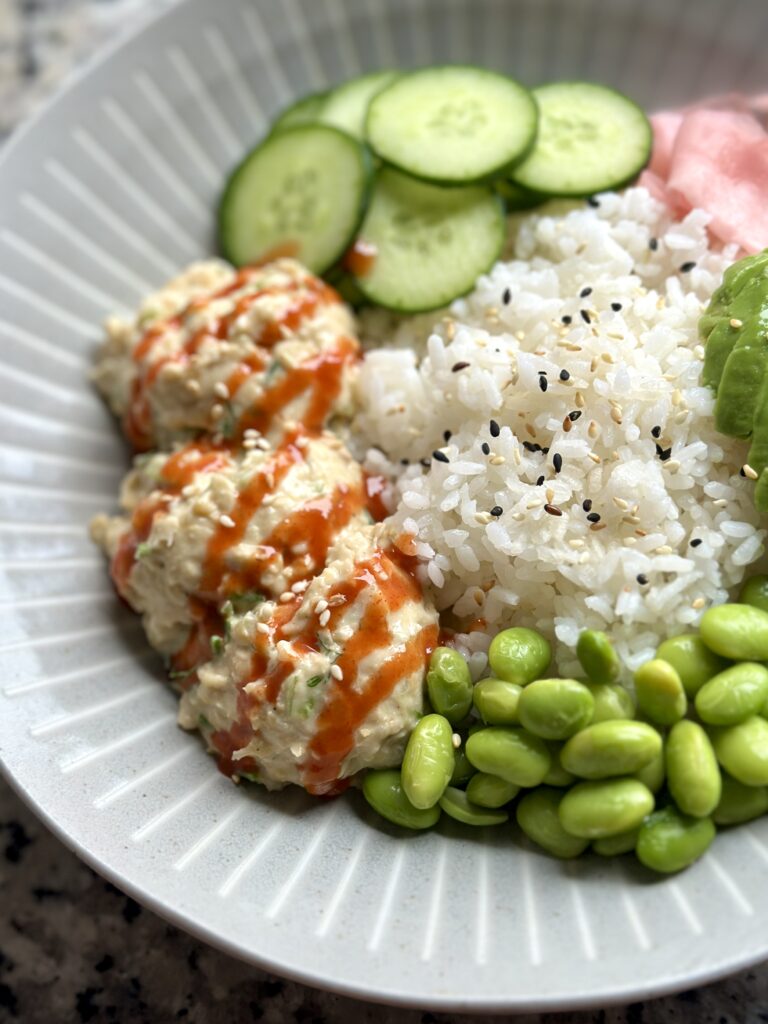
    This easy chickpea ‘tuna’ is made with healthy ingredients & paired with edamame, cucumbers, pickled ginger and avocado for the perfect high protein meal!

    The delicious and flavourful combination of chickpea ‘tuna’, avocado, edamame, cucumbers with a generous drizzle of sriracha is just perfection! You can make this within 30 minutes – even blitzing it for quicker preparation!

    Having lived in a really hot and humid country all year round, these refreshing rice bowls are one way to keep me sane. Fresh, crunchy vegetables are a must and when paired with a warm bowl of rice and this chickpea ‘tuna’ with 25 grams of protein, flavour and nutrition are guaranteed.

    Making this vegan tuna is so simple – simply mash the chickpeas (or blitz them), then combine them with chopped celery, spring onions, dill, capers, seasonings and vegan mayo.

    Ingredients You Need

    • organic chickpeas – I just use cooked chickpeas from a can for quicker prep.
    • celery – this contributes to the signature flavour in tuna salads!
    • herbs – spring onions, fresh fill, capers
    • acidity – lemon juice
    • seasonings – garlic powder, old bay seasoning
    • vegan mayonnaise – I used a vegan garlic aioli!
    • sauce – sriracha
    • serving – cooked white rice, edamame, cucumber, avocado
    • garnish – toasted white and black sesame seeds

    Gluten free substitutions: Ensure your sauces – vegan mayo and sriracha – are gluten free.

    Allium free substitutions: Omit spring onions and garlic powder. Add a pinch of hing (asafoetida) into the chickpea tuna mixture.

    Vegan Chickpea ‘Tuna’ Rice Bowl

    This easy chickpea 'tuna' is made with healthy ingredients & paired with edamame, cucumbers, pickled ginger and avocado for the perfect high protein meal!
    Prep Time15 minutes
    Cook Time15 minutes
    Total Time30 minutes
    Course: Main Course
    Cuisine: Fusion, Japanese
    Keyword: chickpeas, japanese recipes, rice bowl, vegan tuna
    Servings: 2

    Ingredients

    • 1 can cooked chickpeas 400g
    • 1 medium celery stick 6-8 inches
    • 3 tbsp chopped spring onions
    • 1 stalk fresh dill or 1 tsp dried dill
    • 6 capers
    • 1/2 tbsp lemon juice
    • 1/2 tsp garlic powder
    • 1/2 tsp old bay seasoning
    • 3 tbsp vegan mayo
    • salt
    • black pepper
    • sriracha

    Serving

    • 2 servings white rice or sushi rice
    • 2/3 cup cooked edamame
    • 1 medium japanese cucumber
    • 1 avocado
    • 2 tsp white sesame seeds
    • 2 tsp black sesame seeds
    • pickled sushi ginger optional

    Instructions

    • Rinse and drain the chickpeas – mash them to bit or you can also blitz them.
    • Chop celery, spring onions, dill and capers. Add them to the chickpea mix.
    • Add the rest of the ingredients – lemon juice, garlic powder, old bay seasoning, salt, black pepper, and vegan mayo. Mix well.
    • Serve 3 scoops of vegan tuna with rice, followed by cucumbers, edamame, avocado, and pickled ginger.
    • Drizzle sriracha over the vegan tuna and garnish with toasted sesame seeds. Enjoy!

  • Vegan Japanese Tempura

    Vegan Japanese Tempura

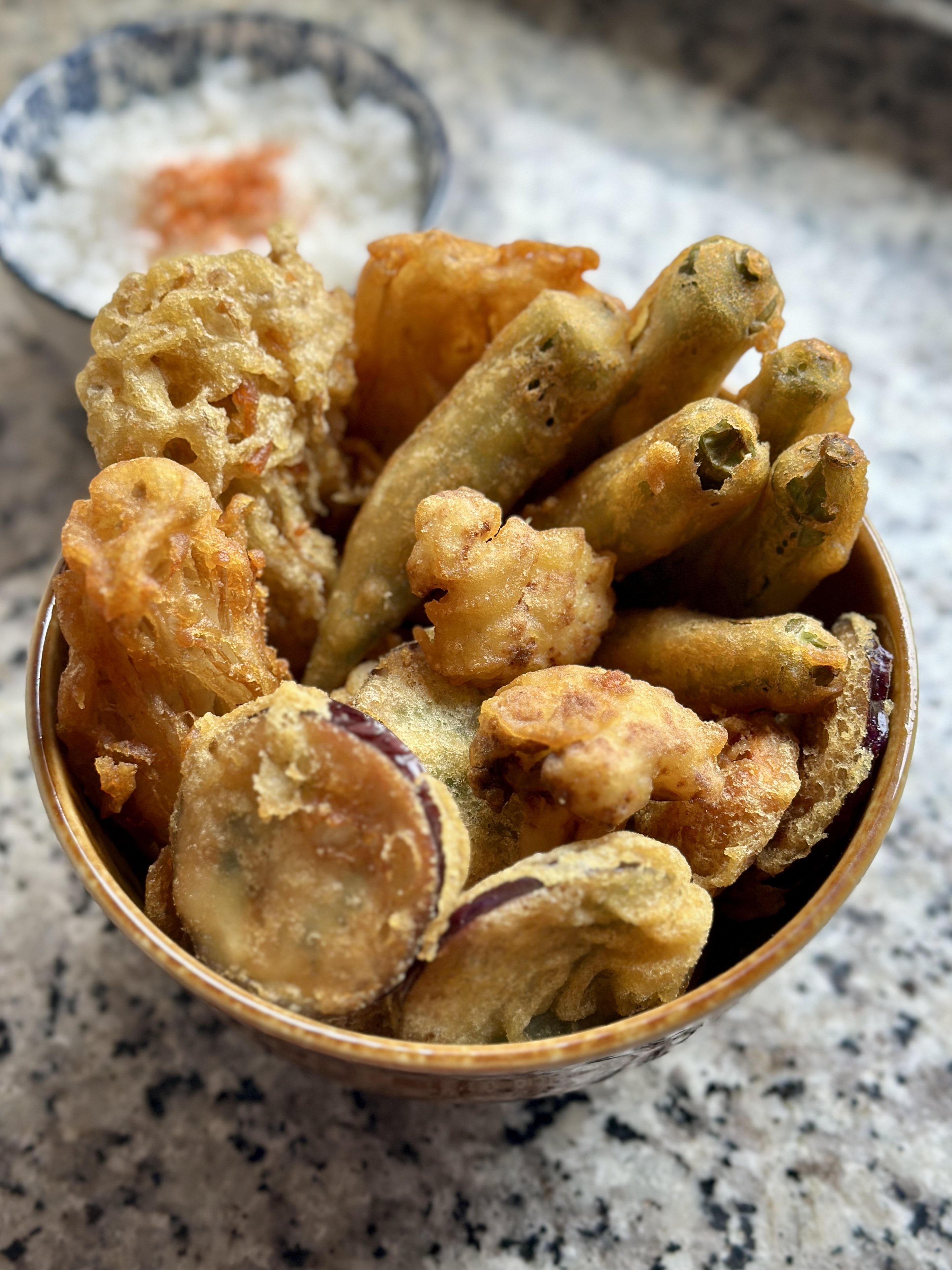
    This easy crispy, golden Japanese tempura is made with fresh veggies and a light, air egg-free batter. Vegan AND gluten free – your new favourite crunchy side dish!

    This crispy Japanese side dish is something that I grew up eating a lot – whether it’s at Japanese-fusion hawker stalls or high end restaurants. Tempura is traditionally not vegan (there’s egg in the batter, and usually comes with seafood-based dipping sauces).

    This plant-based recipe doesn’t compromise on crunch or flavour. The ingredients matter – always use fresh vegetables! Choosing the right classics like sweet potato, eggplant, mushrooms, zucchini, green beans, bell peppers will make all the difference. For this recipe, I’ve used thinly sliced sweet potato, eggplant, okra and enoki mushrooms.

    For extra crispiness, ensure your batter basics – use ice-cold sparkling water and cornstarch for extra crispiness. The cold batter combined with the hot oil is what gives this dish its signature crunch! Also, remember not to overmix the batter – lightly stir to keep the batter airy (you should see tiny bubbles!)

    This recipe is gluten free as we use rice flour as the base. You can make a quick dipping sauce that can be found here. Alternatively, you can combine soy sauce, mirin, and a touch of agave and grated ginger.

    Ingredients You Need

    • vegetables – brinjal, okra, sweet potato, mushrooms, tofu
    • aquafaba – I got mine by whipping the water from a can of chickpeas for 10 minutes
    • ice-cold sparkling water
    • baking soda – crunch factor
    • corn starch – adds to the crispiness
    • rice flour – keeps the recipe gluten free
    • salt – or you black salt for a more ‘eggy’ flavour!

    You can serve the tempura with many dishes like my 10-min Chili Peanut Noodles or Japanese Curry Udon.

    Vegan Japanese Tempura

    This easy crispy, golden Japanese tempura is made with fresh veggies and a light, air egg-free batter. Vegan AND gluten free – your new favourite crunchy side dish!
    Prep Time15 minutes
    Cook Time25 minutes
    Total Time40 minutes
    Course: Appetizer, Main Course
    Cuisine: Japanese
    Keyword: japanese, japanese recipes, tempura
    Servings: 4

    Ingredients

    • 1/2 cup aquafaba
    • 1 cup ice cold sparkling water (have more just in case)
    • 1 tsp baking soda
    • 2 tbsp corn starch
    • 1.5 cups rice flour
    • 1 cup rice flour for dry mix
    • 1 tsp salt
    • neutral oil for frying

    Vegetables

    • 1 large eggplant
    • 1 medium sweet potato
    • 1 pack enoki mushrooms
    • 6-8 okra

    Instructions

    • Wash and slice vegetables into bite-sized pieces. Pat dry with a paper towel
    • Drain a can of chickpeas and whisk the water with an electric mixer for 10 minutes to make aquafaba.
    • Combine aquafaba, ice-cold sparkling water, baking soda, corn starch, rice flour and salt. Whisk until well-combined but do not overmix.
    • Dip vegetables into rice flour (dry mix), followed by the wet mix. Then carefully place in hot oil.
    • Fry in batches for 2–3 minutes, until lightly golden and crisp. Remove with a slotted spoon and drain on a wire rack or paper towels.
    • Serve hot with dipping sauce and a side of rice or udon.

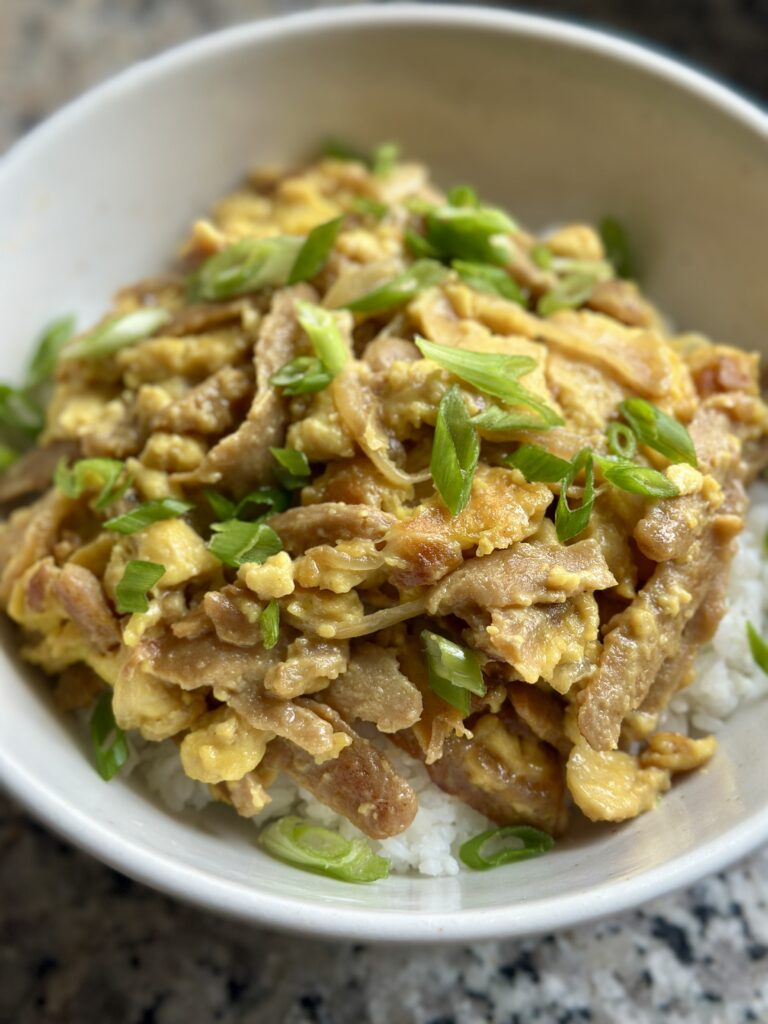
  • Vegan Oyakudon

    Vegan Oyakudon

    This vegan ‘chicken’ and ‘egg’ Japanese rice bowl is a comfort classic that can be prepared in just 20 minutes – easy, vegan and gluten free!

    Oyakudon is a classic Japanese comfort food – “Oya” means “parent,” and “ko” means “child,” which refers to the main ingredients of the dish: chicken (the parent) and eggs (the child). The word “don” refers to “donburi,” which is a bowl of rice topped with many types of ingeredients.

    A vegan version might seem complicated – or even impossible! But here we’re using easy and accessible ingredients to make it. For the ‘chicken’, you can use any plant-based chicken substitute or extra firm tofu. For the egg, we’ll be making a vegan egg mixture using tofu, chickpea flour and seasonings.

    Ingredients You Need

    • aromatics – white onion
    • protein – vegan chicken strips or use extra firm tofu
    • seasonings / sauces – sake, mushroom or dashi powder, light soy sauce, mirin, agave, water
    • vegan egg
      • extra firm tofu
      • soy or oat milk
      • nutritional yeast
      • chickpea flour
      • corn starch
      • turmeric
      • onion and garlic powder
      • black salt
    • to serve – cooked japanese rice and spring onions

    Gluten free substitutions – this recipe is gluten free. However, do double check the ingredient list of nutritional yeast as well as use gluten free oat milk, if using. Vegan chicken strips also have to be gluten free.

    Allium free substitutions: Use 1 cup chopped cabbage strips instead of onions. Use asafoetida instead of onion and garlic powder.

    Vegan Oyakudon

    This vegan 'chicken' and 'egg' Japanese rice bowl is a comfort classic that can be prepared in just 20 minutes – easy, vegan and gluten free!
    Prep Time5 minutes
    Cook Time15 minutes
    Total Time20 minutes
    Course: Main Course
    Cuisine: Japanese
    Keyword: donburi, rice, vegan egg
    Servings: 2

    Ingredients

    Vegan 'Egg'

    • 1 block extra firm tofu about 225g
    • 2/3 cup unsweetened soy milk
    • 1 tbsp nutritional yeast
    • 4 tbsp chickpea flour
    • 1.5 tbsp corn starch
    • 1 tsp onion powder
    • 1 tsp garlic powder
    • 1/4 tsp turmeric
    • 1 tsp black salt

    Stir-Fry

    • 1/2 white onion
    • 1 pack vegan chicken strips 250g extra firm tofu
    • 1 tbsp sake
    • 1 tsp mushroom powder
    • 2 tbsp mirin
    • 1.5 tbsp light soy sauce
    • 2 tsp agave
    • 1/2 cup water

    Garnish

    • 2 servings cooked japanese white rice
    • scallions

    Instructions

    • Slice white onion and pan fry / air fry vegan chicken strips or extra firm tofu until golden.
    • Combine all the ingredients required for the vegan egg into a food processor. Blend on high under you get a smooth paste.
    • To a pan, add onions and saute for 3-4 minutes. Add vegan chicken strips, sake, mirin, light soy sauce, mushroom powder, and agave. Saute for 2 minutes.
    • Then add vegan egg mixture and spread evenly on top of the 'chicken' strips. Slowly add water around the pan.
    • Close the lid and cook for 5-8 minutes. Gently chop up the egg with a pan and scramble all ingredients together.
    • Serve on top of rice and garnish with scallions. Enjoy!

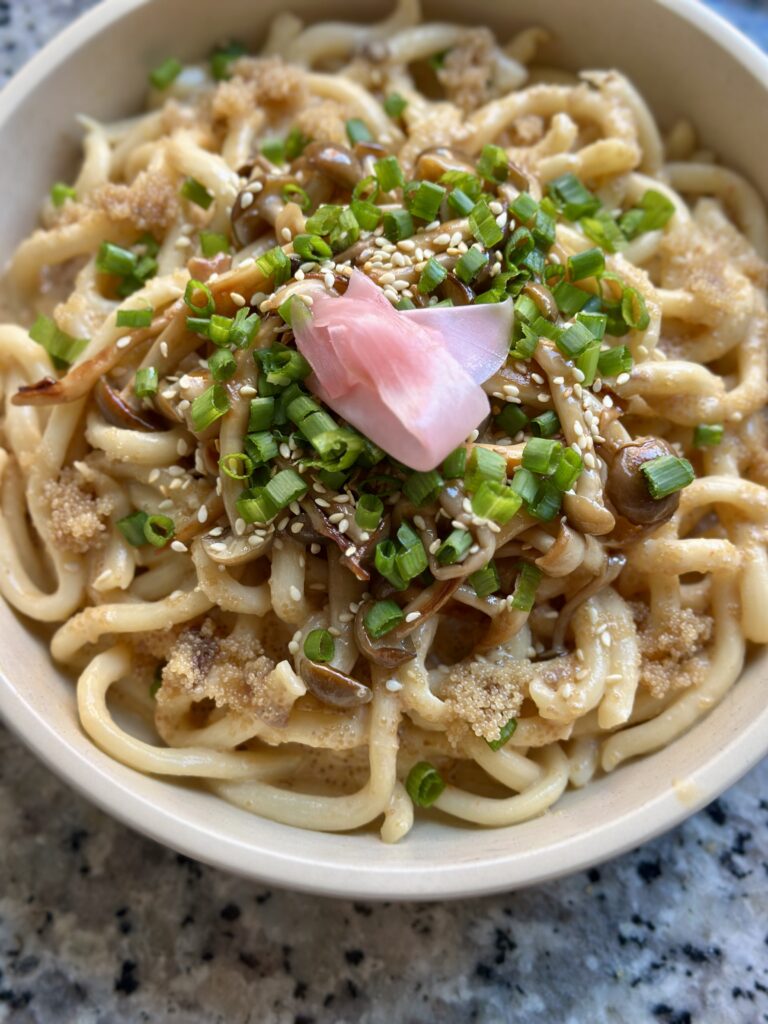
  • Vegan Mentaiko Udon

    Vegan Mentaiko Udon

    This creamy, umami udon with vegan ‘mentaiko’ and pan roasted shimeji mushrooms is satisfying, packed with flavour and can be made in under 30 minutes!

    Mentaiko is made with spicy cod roe, a Japanese-Italian fusion dish was then born when this seafood was combined with noodles. While usually made with spaghetti, today we’ll be combining this delicious mentaiko sauce with udon – except that it’ll be completely seafood free, dairy free and vegan! You read that right.

    Mentaiko is not an easy ingredient to recreate and make it plant-based but Lisa inspired me to use amaranth as a substitute. It’s very fascinating how it looks EXACTLY like mentaiko when cooked in an umami broth. You can keep and use it in other recipes as well or add it to your rice for an extra boost of nutrients.

    Though these require a tad bit more work to prepare, with the mentaiko prepared this recipe comes together in just 20 minutes. It’s one of my go-to recipes when I don’t have time. Not only that, it’s very pantry friendly especially if you have some staples like vegan cream (soy cream, coconut cream, cashew cream) and vegan mayo (I used kewpie’s vegan mayo).

    To recreate the umami, I like to top the udon with some pan fried shimeji mushrooms – not only do that have more umami-ness than regular button mushrooms, they pair so well with the udon for the perfect bite due to their long shape. Alternatively, you can use crab seafood mushrooms that are even longer and have more umami than shimeji mushrooms. So it goes like this…

    UMAMI METER (Highest -> Lowest):
    Crab mushrooms (also known as seafood mushrooms) > Shimeji Mushrooms > Shitake Mushrooms > King Oyster Mushrooms > Oyster Mushrooms > White & Brown Button Mushrooms

    Ingredients You Need:

    • amaranth – this is a type of grain you can find online or in healthfood stores. If you can’t access it, you can skip it as it only serves to look like mentaiko without much of the actual mentaiko flavour. Instead you can just boil a simple broth to add to the sauce that’ll give you the same umami deliciousness!
    • ume plum – for the distinct tartness
    • udon noodles – you can also use spaghetti or any type of pasta!
    • vegan cream – I used soy cream, but you can use coconut cream or cashew cream
    • vegan butter – you can substitute this with olive oil
    • vegan mayo
    • seasonings – sake, soy sauce, mushroom seasoning, nutritional yeast, hot bean paste
    • mushrooms – shimeji mushrooms
    • garnish – toasted sesame seeds, scallions, ginger

    Gluten free substitutions: Use gluten free pasta or rice noodles. Ensure vegan mayo and mushroom seasoning are gluten free.

    Allium free substitutions: Omit scallions.

    Vegan Mentaiko Udon

    This creamy, umami udon with vegan 'mentaiko' and pan roasted shimeji mushrooms is satisfying, packed with flavour and can be made in under 30 minutes!
    Prep Time15 minutes
    Cook Time15 minutes
    Total Time30 minutes
    Course: Main Course
    Cuisine: Japanese
    Keyword: mentaiko, seafood, udon
    Servings: 2

    Ingredients

    Creamy Udon

    • 2 packs frozen or fresh udon
    • 2 tbsp vegan mentaiko
    • 2 tbsp vegan cream
    • 1 tbsp vegan butter
    • 1 tbsp vegan mayo
    • 1 tbsp nutritional yeast
    • 1 tbsp sake
    • 1 tbsp light soy sauce
    • 1 tsp mushroom seasoning
    • 1/4 cup broth
    • 1 tsp hot bean paste
    • 1 cup shimeji mushrooms

    Vegan Mentaiko

    • 1/2 cup amaranth
    • 1.5 cups water
    • 1 tsp soy sauce
    • 1 tsp sake
    • 1 slice kelp
    • 3 medium ume plums chopped

    Garnish

    • toasted sesame seeds
    • green part of scallions
    • marinated ginger

    Instructions

    • Boil amaranth with all the ingredients for about 20 minutes. Take out the kelp and drain the broth from the cooked amaranth. Set aside.
    • Bring a pot of water to a boil. Add the udon noodles and cook according to the package instructions. Or soak them until they separate. Drain and rinse with cold water to stop the cooking process.
    • Heat a little oil in a pan over medium heat and sauté the mushrooms until they are golden, about 3-4 minutes. Season with 1/2 tbsp soy sauce.
    • Remove the mushrooms. Add vegan butter, cream, mayo, nutritional yeast, soy sauce, sake, hot bean paste and mushroom seasoning. Mix well.
    • Add the amaranth (vegan mentaiko) broth. Season with salt if required. Mix well then add in the vegan mentaiko. Simmer for a minute.
    • Add in cooked udon noodles and mix well. Serve on a plate and spoon over the mentaiko sauce. Garnish with panroasted mushrooms, toasted sesame seeds, scallions and ginger. Enjoy!

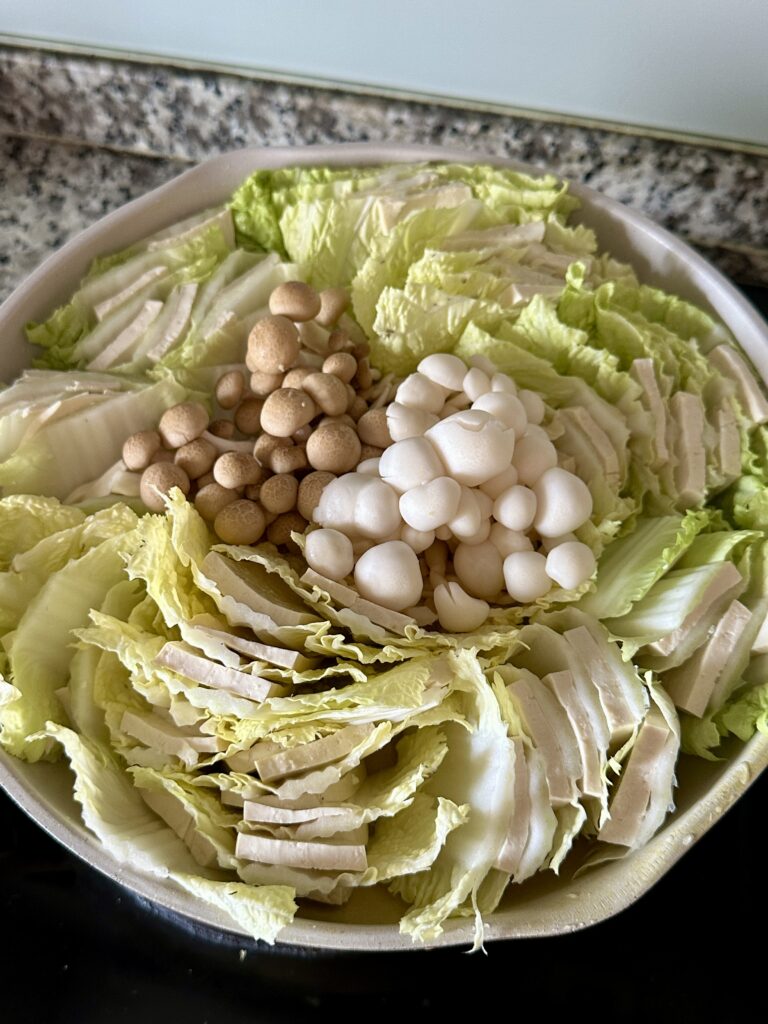
  • Mille-Feuille Nabe (Japanese Hotpot)

    Mille-Feuille Nabe (Japanese Hotpot)

    This napa cabbage and tofu hotpot is a vegan version of the traditional mille-feuille nabe and can be made in just 20 minutes – the most convenient soup ever!

    Mille-Feuille Nabe (ミルフィーユ鍋) is a Japanese hotpot dish that has simple yet delicate flavours. The name “mille-feuille” is derived from the French word for “thousand layers,” referring to the way in which ingredients are layered in the hotpot. It looks really beautiful too!

    For the layering, it typically uses napa cabbage (Chinese cabbage) and thin slices of meat – but in this case we’ll be using thinly sliced tofu. Keeps the protein, without the cruelty! These layers are then arranged in a pot and simmered in an umami broth to soak in all the flavours.

    The clear broth is made from dashi (Japanese stock), which adds a subtle umami flavour. It’s essential to get a vegan dashi – many of which are mushroom based – to make this dish completely plant based. In this broth, I also add kelp to substitute bonito flakes (fish). For a deeper flavour profile, I also add ginger slices, light soy sauce and vegan fish sauce. The broth is then strained and gradually absorbed by the cabbage and tofu as it cooks, infusing everything with maximum umaminess!

    You can make a large batch of this dish – this recipe feeds about 4 people. Or you can meal prep 4 meals (with variations of dipping sauces so it wouldn’t get boring!). You can freeze it for 2 weeks to 1 month to reheat and consume whenever.

    You can also make dipping sauces to go with it: I made the classic traditional dipping sauce as well as my popular sesame hotpot sauce.

    If you would like to try an even more speedy version, you can try my 5-minute Microwaveable Hotpot recipe.

    Ingredients You Need

    • napa cabbage – this is used in the traditional version and also makes for the best texture.
    • extra firm tofu – thinly sliced. I also like to freeze and thaw the tofu for the springi-er texture but that is optional!
    • mushrooms – I used brown and white shimeji mushroom but you can also use enoki, crab or shitake mushrooms.
    • broth – fresh slices of ginger, vegan dashi broth (mushroom seasoning and kelp), sake, light soy sauce and dried red chilies

    Gluten free substitutions: Use gluten free soy sauce or tamari or coconut aminos. Ensure mushroom seasoning is gluten free.

    Allium free substitutions: Omit spring onions in sesame dipping sauce.

    Mille-Feuille Nabe (Japanese Hotpot)

    This napa cabbage and tofu hotpot is a vegan version of the traditional mille-feuille nabe and can be made in just 20 minutes – the most convenient soup ever!
    Prep Time10 minutes
    Cook Time1 hour 10 minutes
    Total Time20 minutes
    Course: Main Course, Soup
    Cuisine: Fusion, Japanese
    Keyword: hotpot, soup
    Servings: 4

    Ingredients

    • 1 head medium sized napa cabbage
    • 300 g extra firm tofu
    • 1/2 cup white shimeji mushrooms
    • 1/2 cup brown shimeji mushrooms

    Broth

    • 4 cups water
    • 5 slices ginger
    • 2 tbsp mushroom seasoning
    • 1 sheet kelp
    • 2 tbsp sake
    • 1.5 tbsp light soy sauce
    • 1 tbsp vegan fish sauce optional
    • 4 dried red chilies

    Soy Dipping Sauce

    • 3 tbsp light soy sauce
    • 1 tsp shichi-mi tōgarashi Japanese chili flakes
    • 1/2 tsp grated ginger

    Sesame Dipping Sauce

    • 2 tbsp sesame paste or unsweetened smooth peanut butter
    • 2 tsp chili oil
    • 1 tbsp sesame oil
    • 1.5 tbsp light soy sauce
    • 2 tbsp scallions
    • 1 tsp toasted sesame seeds
    • remaining broth to mix to loosen the sauce

    Instructions

    • Separate the napa cabbage leaves and wash them. Thinly slice extra firm tofu.
    • Begin layering the cabbage leaves, then add a layer of tofu on top. Continue layering cabbage and tofu, alternating, until you have used them up. You should end up with a "stack" of cabbage and tofu.
    • Hold them tightly and cut them into 3 or 4 stacks. Arrange them in a spiral or concentric circle pattern on a large and deep pot or pan.
    • Once your layers are arranged, place your mushrooms on top.
    • For the broth, combine the water, kombu (kelp), and seasonings in a pot. Heat over medium and bring to a simmer.
    • Then, strain the broth. Pour over the broth evenly around the layered cabbage and tofu. Add dried red chilies to cook in the broth.
    • Cover the pot and let it cook for about 10 minutes, or until the cabbage is tender.
    • As the pot is cooking, mix together the ingredients needed for the hotpot separately.
    • Once cooked, carefully remove the pot from the heat. You can serve directly from the pot or transfer the contents into individual bowls.
    • Serve with soy or/and sesame dipping sauces on the side. You can have this hotpot with a fresh bowl of steamed rice.
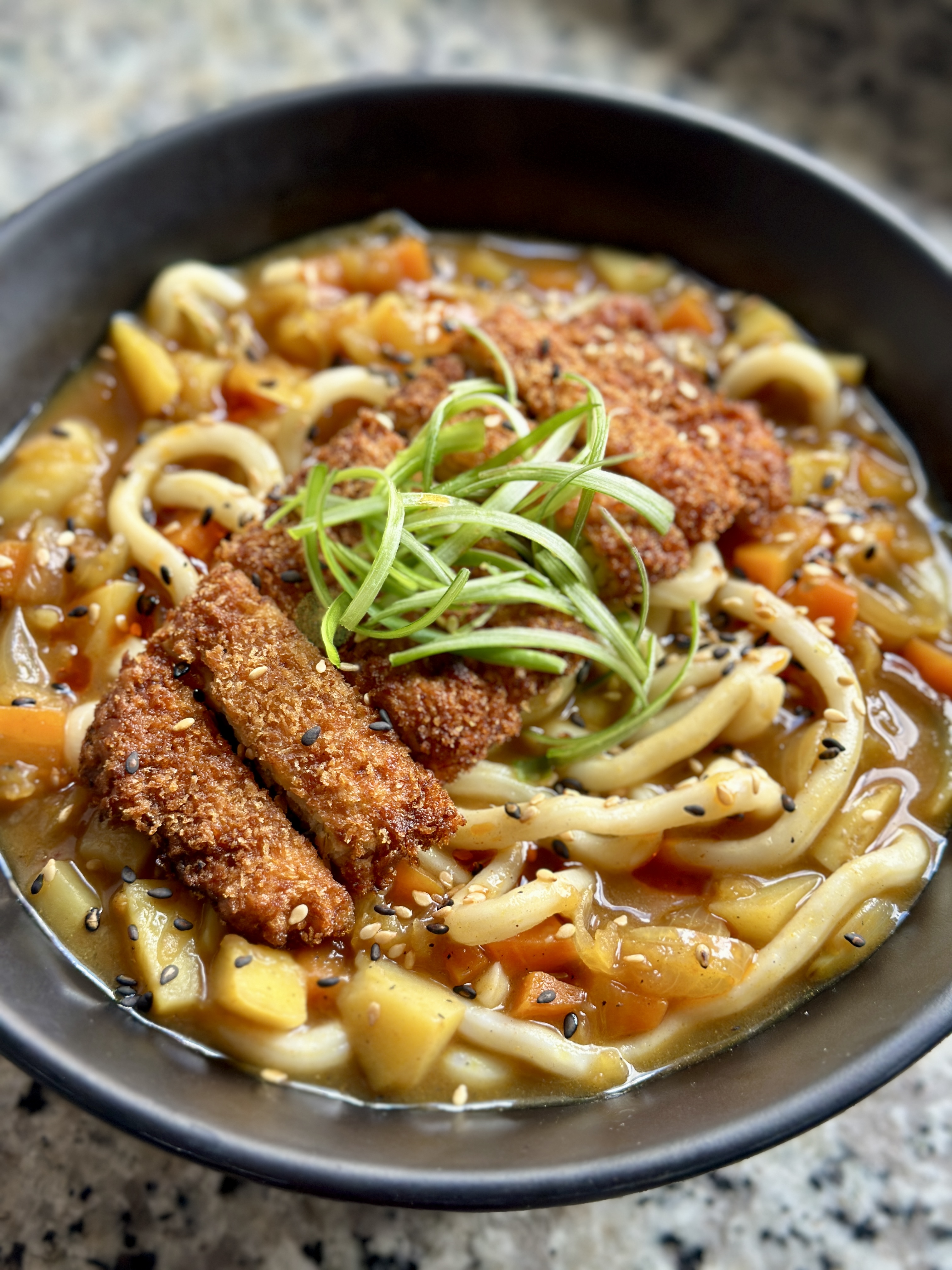
  • Japanese Curry Udon with Crispy Tempeh Katsu

    Japanese Curry Udon with Crispy Tempeh Katsu

    This luscious and thick homemade Japanese Curry Udon paired with crispy Tempeh Katsu is addictive and perfect for your next weeknight dinner.

    Growing up in Singapore, I was exposed to many different types of cuisines, including Japanese cuisine. One of the dishes I had frequently in school or when I patronised the famous Monster Curry chain (known for their gigantic portions of food), was the always the Katsu Curry Rice. It usually comes with a portion of rice, Japanese curry with a customisable spice level and a big katsu chicken cutlet. Sometimes it also came with a side of pickled vegetables.

    When I went vegan, I definitely missed the flavours of having Japanese Curry. The difference between Japanese Curry and many Indian curries are that Japanese curries tend to be slightly sweeter because of the addition of apples and sweeteners.

    Today, we’re making Japanese Curry Udon paired with gut-friendly and crispy tempeh katsu. It’s one of my favourite well balanced meals to make as it has protein, vegetables, carbs and so much flavour!

    Ingredients You Need

    • kombu or dried kelp – to add to the broth for more umami
    • aromatics and vegetables – white onion, carrots, potatoes, grated apple
    • seasonings – light soy sauce, mushroom dashi, mirin curry roux cubes, toasted sesame oil
    • optional addition – a square of vegan dark chocolate
    • noodles – fresh or frozen udon noodles
    • tempeh – you can use fresh or frozen tempeh. Feel free to also substitute for tofu or sweet potato or eggplant slices here!
    • wet mix – plain flour, corn starch, salt, black pepper, onion and garlic powder, japanese chili flakes, sparkling water
    • dry mix – panko breadcrumbs
    • garnish – spring onions, toasted white & black sesame seeds

    Allium free substitutions: Omit onions, spring onions, onion and garlic powder. Substitute with a pinch of hing in the curry as well as the tempeh batter.

    Japanese Curry Udon with Crispy Tempeh Katsu

    This luscious and thick homemade Japanese Curry Udon paired with crispy Tempeh Katsu is addictive and perfect for your next weeknight dinner.
    Prep Time10 minutes
    Cook Time50 minutes
    Total Time1 hour
    Course: Main Course
    Cuisine: Fusion, Japanese
    Keyword: curry udon, noodles, tempeh, udon
    Servings: 2

    Ingredients

    Japanese Curry

    • 2-3 slices slices kombu or dried kelp
    • 3 cups water
    • 1/2 white onion
    • 1/2 carrot chopped
    • 2 small potatoes chopped
    • 1/2 apple grated
    • 1 tbsp toasted sesame oil
    • 2 tbsp light soy sauce
    • 1/2 tbsp mirin
    • 1 tbsp mushroom dashi
    • 2 cubes curry roux
    • 1 square dark chocolate
    • 2 packs udon noodles

    Tempeh Katsu

    • 4 tbsp plain flour sub with gluten free flour
    • 1 tbsp corn starch
    • 1 tsp onion powder
    • 1 tsp garlic powder
    • 1-2 tsp japanese chili flakes
    • 1 tsp salt
    • 1/2 tsp black pepper
    • 1/3 cup sparkling water (to form a thick but not runny batter)
    • 1/2 cup breadcrumbs
    • 1/2 cup neutral oil or more for frying

    Garnish

    • 1 stalk spring onions
    • toasted white sesame seeds
    • toasted black sesame seeds

    Instructions

    • Add kombu slices to 3 cups of water and bring to a boil. Simmer for a few minutes.
    • Chop your carrots and potatoes into small cubes. Blend apple into a paste or grate them. Slice onions.
    • Add sesame oil to a pan, onions, potatoes and carrots. Saute for 5-7 minutes.
    • Add back in the kombu stock. Add grated apple, light soy sauce, mirin and bring to a boil.
    • Add curry roux cubes, mushroom seasoning and simmer with the lid closed until the vegetables are cooked. Before serving, add in a piece of dark chocolate and mix well in the heat. At this stage, you can add more water if you don't want a thick curry.
    • Cook udon noodles according to package instructions.
    • Mix together dry ingredients – plain flour, corn starch, salt, black pepper, onion powder , garlic powder and chili flakes.
    • Add 1/3 cup water gradually (add more to get a thick paste, but the batter should not be runny).
    • Coat a thin slice of tempeh in the mixture. Coat it again in breadcrumbs.
    • Deep fry it until golden brown. Drain the excess oil on a tissue. Slice the tempeh into pieces.
    • Serve curry udon over noodles and place tempeh. Garnish with spring onions, toasted sesame seeds and japanese chili flakes. Enjoy!
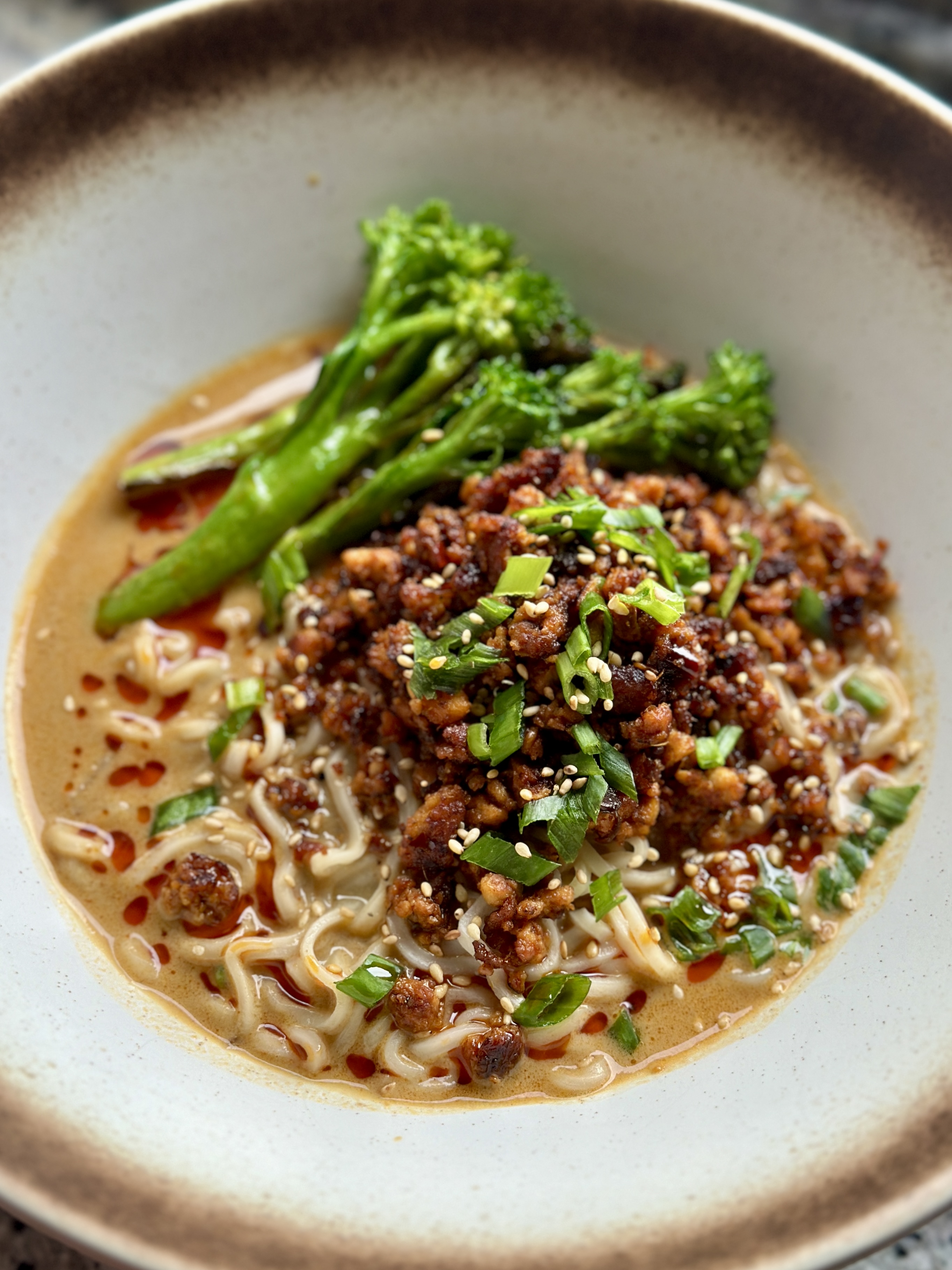
  • Vegan Tantanmen with Charred Tofu

    Vegan Tantanmen with Charred Tofu

    This Vegan Tantanmen features the perfect creamy, silky sesame broth served with spicy charred tofu and broccoli.

    Tantanmen, also known as tantan noodles, originated in China, specifically from the Sichuan province. The dish is believed to have been inspired by the street food sold by vendors carrying a pole (or “tan”) over their shoulders, hence the name “tantan” (担担). Traditionally, it consists of noodles served in a spicy, savoury broth, often featuring ground meat, sesame paste, and a variety of spices.

    The dish was adapted in Japan, where it evolved into incorporating Japanese ingredients — the ramen is often served with a rich sesame-based broth and various toppings. This version is entirely vegan!

    Ingredients You Need

    • extra firm tofu – this is the perfect option to make charred tofu.
    • charred tofu seasoning – garlic, ginger, hot bean paste, vegan oyster sauce and rice wine vinegar
    • ramen – you can use fresh vegan ramen or dried ramen, both options work!
    • tsuyu – sake, mirin, soy sauce, kombu and mushroom seasoning (you can substitute kombu with nori if you cannot access kombu). This makes at least 1 cup of tsuyu – you can use the remaining as a substitute for soy sauce in other recipes.
    • broth – oat milk, starchy noodle water, pickled mustard, mushroom seasoning.
    • sesame paste – this is not the same as tahini! It has a more roasted, earthy and slightly bitter flavour.
    • chili oil – you can use my Homemade Chili Oil recipe!
    • toppings – spring onions, toasted sesame seeds, chili oil (la-yu), charred broccolini

    Gluten free substitutions: Use a gluten free soy sauce. Ensure your mushroom seasoning doesn’t contain any wheat flour and is gluten free. Use unsweetened soy milk instead of oat milk. Omit hot bean paste for the tofu and substitute with more chili oil.

    Alliums free substitution: Omit garlic when making charred tofu and add a pinch of hing (asafoetida). Omit spring onions and substitute with coriander. Use my Homemade Chili Oil recipe which doesn’t contain any alliums!

    Vegan Tantanmen with Charred Tofu

    This Vegan Tantanmen features the perfect creamy, silky sesame broth served with spicy charred tofu and broccoli.
    Prep Time45 minutes
    Cook Time15 minutes
    Total Time1 hour
    Course: Main Course
    Cuisine: Chinese, Fusion, Japanese
    Keyword: noodles, tofu recipes
    Servings: 2

    Ingredients

    Tsuyu

    • 1/4 cup sake
    • 1/2 cup mirin
    • 1/2 cup soy sauce
    • 2 sheets kombu or nori
    • 2 tsp mushroom seasoning

    Soup Base

    • 4 tbsp sesame paste
    • 2 tbsp chili oil
    • 1 cup water
    • 1 cup unsweetened oat milk
    • 1 tbsp mushroom seasoning
    • 2 tbsp chopped pickled mustard

    Charred Tofu

    • 150 g extra firm tofu
    • 2 tsp chili oil
    • 1 tsp garlic paste
    • 1 tsp ginger paste
    • 1 tsp rice wine vinegar
    • 1 tbsp hot bean paste
    • 1 tbsp vegan oyster sauce
    • oil for frying

    Toppings

    • 2 ramen cakes
    • 4 stalks broccolini
    • 4 tbsp spring onions
    • 2 tsp toasted sesame seeds
    • chili oil

    Instructions

    • Heat up a pan over medium flame and crumble some tofu onto a pan. Add chili oil and fry until it gets crispy. Saute garlic and ginger on the side.
    • Prepare the tsuyu by combing the ingredients and bringing to a boil. Simmer for 5 minutes and strain out the kombu/nori sheets. You can use the leftover tsuyu for other recipes as a seasoning sauce.
    • Mix together, add hot bean paste, rice wine vinegar, vegan oyster sauce. Saute the tofu until lightly charred (more crisp than golden brown).
    • Cook the ramen noodles according to package instructions. Drain, save the water and set aside.
    • In a small pot, combine the starchy noodle water, oat milk, mushroom seasoning and chopped pickled mustard greens.
    • Add 2 tbsp sesame paste, 1 tbsp chili oil, 2 tbsp tsuyu in a bowl. Mix together. Ladle in scoops of the oat milk broth and mix well.
    • Char some broccoli on a pan with oil and glaze with tsuyu.
    • Divide and place the cooked noodles into bowls.
    • Top with charred tofu, broccolini, spring onions, toasted sesame seeds and chili oil. Enjoy!

  • Spicy Miso Ramen with Crispy Tofu

    Spicy Miso Ramen with Crispy Tofu

    This one-pot spicy miso ramen with crispy tofu can be made in JUST 20 MINUTES! The perfect weekday dinner when you’re wiped out.

    I’m sure most of you have tried some rendition of miso ramen before – Miso is fermented soy beans and it’s an incredibly versatile ingredient that can be used to flavour many dishes. Miso ramen soup is flavoured with miso, resulting in a fragrant soup with a rich umami flavour.

    Some fun facts about miso – this fermented umami bomb was thought to have originated in ancient China. From here, it was likely that it travelled Japan via mainland China and the Korean Peninsula in the Asuka period during the 7th Century.

    Isn’t Miso Ramen NOT vegan?

    The traditional version of miso ramen would consist of a rich pork and chicken broth with chashu (tender pork slices) and a soft boiled egg. But! It can be easily veganised, retaining the same umami flavour and preserving the creaminess of it all.

    The toppings really make or break some miso ramen dishes I’ve tried – here, I have added crispy soy tofu, charred corn, and spring onions. I topped it off with some chili flavoured sesame oil and toasted sesame seeds. You can also use this pan fried Popcorn Tofu Bites recipe instead.

    Regular ramen noodles contain egg so make sure to look out for ramen noodles made from wheat flour. For that ‘eggy’ taste, you can add 1/2 tsp baking soda when boiling the ramen. Game changing!

    Gluten free substitutions: Sub soy sauce for gluten free soy sauce, tamari or coconut aminos.

    Please also ensure you choose GLUTEN FREE MISO PASTE. I used Red Miso for this recipe. If you cannot find gluten-free oat milk, soy or cashew milks are great substitutes.

    The spice level is customizable as well. This recipe is not spicy but if you want to add some heat to it, top off with some spicy chili oil or add more hot bean paste.

    Allium free substitutions: Substitute garlic for a pinch of hing. Omit spring onions and use chopped cilantro instead!

    Spicy Miso Ramen with Crispy Tofu

    This one-pot spicy miso ramen with crispy tofu can be made in JUST 20 MINUTES! The perfect weekday dinner when you're wiped out.
    Prep Time5 minutes
    Cook Time15 minutes
    Total Time20 minutes
    Course: Main Course, Soup
    Cuisine: Fusion, Japanese
    Keyword: miso soup, noodles
    Servings: 2

    Ingredients

    • 2 servings ramen noodles + water to boil
    • 3.5 cups water
    • 1 tbsp low sodium miso paste
    • 1 tbsp light soy sauce
    • 1 tbsp hot bean paste
    • 1 tbsp rice wine vinegar
    • 1 tsp mushroom seasoning or kombu dashi
    • 1/4 tsp white pepper
    • 4-5 slices ginger
    • 2 cloves smashed garlic
    • 1/2 cup oat milk

    Crispy Tofu

    • 200-250 g extra firm tofu
    • 1 tbsp light soy sauce

    Garnish

    • corn
    • spring onions
    • white sesame seeds
    • black sesame seeds
    • chili oil

    Instructions

    • Boil ramen noodles according to package instructions. Pan fry tofu cubes in olive oil until crispy.
    • Add soy sauce to the tofu and saute for a few minutes. I also sauteed my corn on the same pan until charred.
    • Add 3.5 cups water to a pot. Add garlic, ginger, hot bean paste, rice wine vinegar, mushroom seasoning, soy sauce and white pepper. Bring to a boil.
    • Bring the flame to low and add dissolve miso paste in the soup. Mix until well-combined.
    • Finish with a dash of oat milk. Drain the soup.
    • Pour soup over the noodles. Garnish with tofu, charred corn, spring onions, chili oil and toasted sesame seeds. Enjoy!