Category: Korean

  • Korean Bibimbap Sandwich

    Korean Bibimbap Sandwich

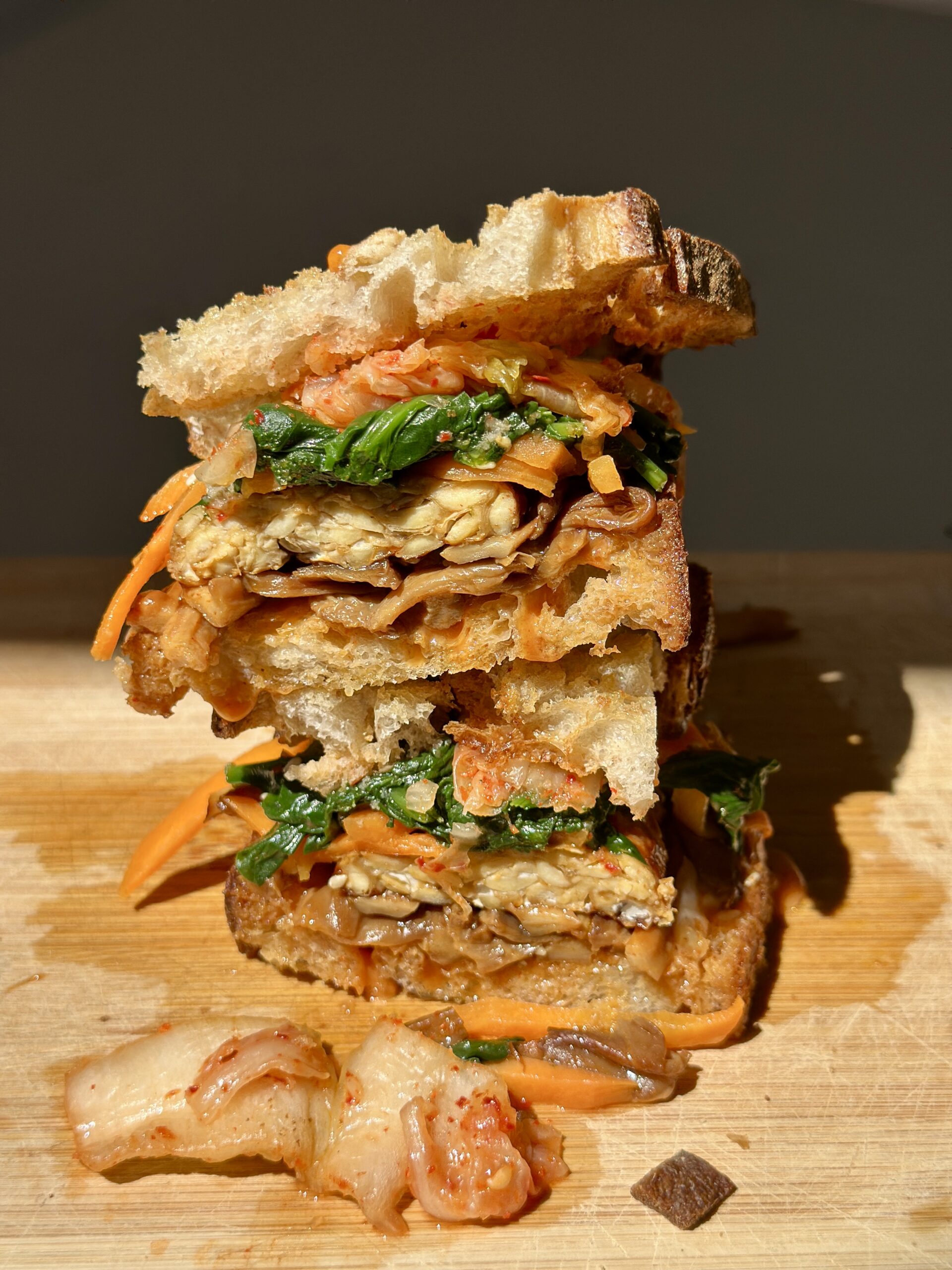
    Every bite of this Korean-inspired sandwich tastes like bibimbap – packed with colourful veggies, gochujang tempeh and vegan kimchi, all tucked between slices of sourdough.

    Bibimbap is a super popular korean dish that you may have heard of already and personally it is one of my favourite! It’s made with rice, crunchy vegetables and seasoned with a hot chili pepper paste, like gochujang. You can also add other ingredients like bulgogi tofu or braised oyster mushrooms.

    But have you ever had in the form of a sandwich? It’s packed with the exact same ingredients and flavours making it the perfect way to use up any leftovers from an actual bibimbap or literally any other basic vegetable – spinach, carrots, mushrooms. For the protein, we use gochujang glazed tempeh but you can also use extra firm tofu.

    For the bread, feel free to use anything but using sourdough makes a mean sandwich – the tanginess with the mega crisp and chewiness works so well with the more soft fillings.

    Ingredients You Need

    • bread – sourdough
    • pearl oyster mushrooms – you can be versatile with this but I always get fresh, locally harvested pearl oyster mushrooms from Mushroom Buddies.
    • protein – tempeh or tofu
    • condiments – you would need soy sauces, maple syrup, rice wine vinegar and toasted white sesame seeds throughout this recipe.
    • vegetables – spinach, carrots, cucumber, vegan kimchi
    • vegan gochujang – korean hot pepper paste
    • gochujang mayo – simply combine gochujang with vegan mayo

    There is no gluten free option for this dish since gochujang contains gluten. However, you can replace gochujang with sambal chili for a spicy kick. You can also use gluten free soy sauce and bread.

    Korean Bibimbap Sandwich

    Every bite of this Korean-inspired sandwich tastes like bibimbap – packed with colourful veggies, gochujang tempeh and vegan kimchi, all tucked between slices of sourdough.
    Prep Time30 minutes
    Cook Time30 minutes
    Total Time1 hour
    Course: Main Course
    Cuisine: Fusion, Korean
    Keyword: bibimbap, korean recipes, sandwich
    Servings: 2

    Ingredients

    Sandwich

    • 4-6 slices sourdough

    Braised Oyster Mushrooms

    • 150 g shredded pearl oyster mushrooms
    • 1 tbsp sesame oil
    • 1 tbsp light soy sauce
    • 1 tsp dark soy sauce
    • 1 tsp agave
    • 1 tsp toasted sesame seeds
    • salt if needed

    Gochujang Tempeh

    • 150 g tempeh
    • 1 tsp gochujang
    • 1 tsp light soy sauce
    • 1 tsp dark soy sauce
    • 1 tsp rice vinegar
    • 2 tsp sesame oil
    • 1 tbsp water to mix
    • olive oil for airfrying

    Sesame Spinach

    • 1 pack baby spinach 1 bag
    • 1/2 tbsp sesame oil
    • 1 tsp light soy sauce
    • 1 tsp toasted sesame seeds

    Other Toppings

    • sauteed carrots
    • vegan kimchi

    Gochujang Mayo

    • 4 tbsp vegan mayo
    • 1/2 tbsp gochujang

    Instructions

    • Air fry tempeh for 7 minutes with a drizzle of olive oil at 180C.
    • Shred oyster mushrooms or slice them very thinly. Add all sauces, sesame seeds and mix them well.
    • Add some oil to grease your pan and add oyster mushrooms. Saute until all water has evaporated and shrooms are golden brown.
    • Take our mushrooms and saute julienned carrots.
    • Meanwhile, prepare your sauce with gochujang, sesame oil, soy sauces, vinegar, maple syrup, sesame seeds and a splash of water.
    • Blanch your spinach in boiling water under softened and bright green. Take out and drain excess water.
    • Add sesame oil, soy sauce and sesame seeds to spinach. Combine with hands or a spoon.
    • Mix together gochujang and mayo to make spicy mayo.
    • Toast sourdough with a drizzle of olive oil until crispy.
    • Spread some of that spicy mayo on the sourdough. Then layer with braised mushrooms, gochujang tempeh, carrots, spinach – cover with the other slice of sourdough and slice into half. Enjoy!
  • Homemade Red Lentil Tofu

    Homemade Red Lentil Tofu

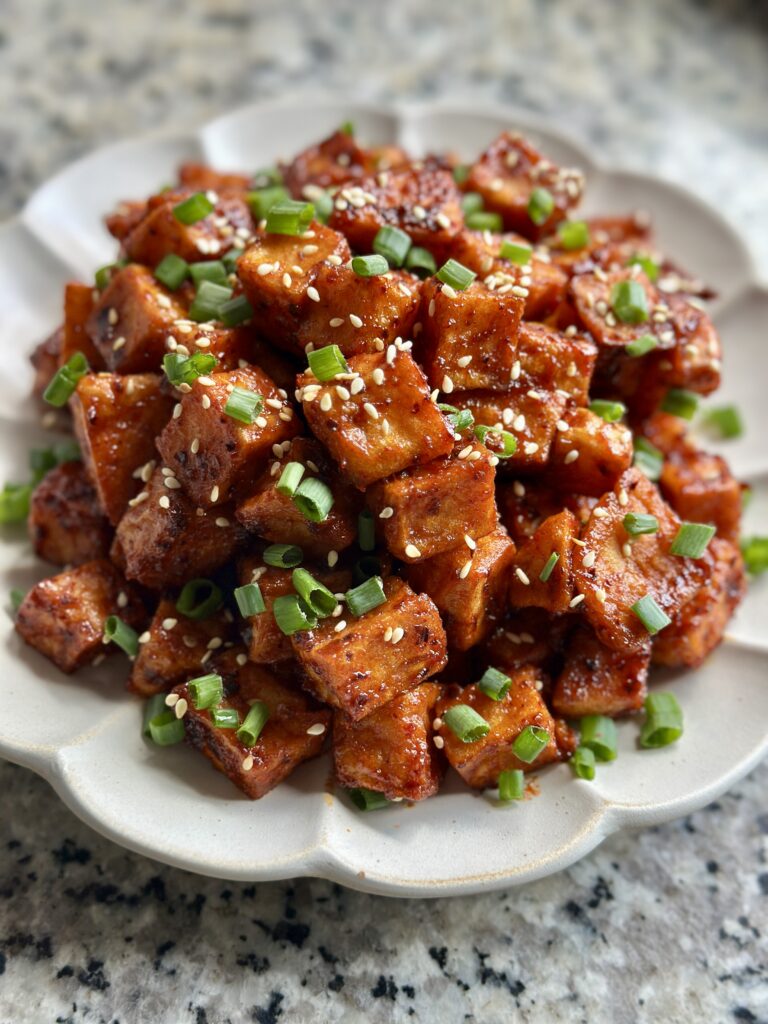
    This soy free gochujang glazed tofu is made with red lentils – they’re high in protein, gluten free, rich in fibre and most importantly, delicious!

    Red lentil tofu is a high protein soy-free tofu alternative that inherently tastes delicious – it also reminds me of my mom’s thosai (thinly toasted indian pancakes) that are made with blended lentils and rice flour. The only difference is that the batter for thosai is fermented.

    The cooking process for lentil tofu involves – soaking the lentils, blending and cooking the mixture, setting and cooling and lastly cutting them and cooking them according to your preference.

    You can bake or air fry these lentil tofu cubes and use them in stir fries. Just like tofu, you can use them in curries, salads, bowls or even sandwiches! I’ve coated them in an easy gochujang sauce.

    You can also try these with soaked lentils – like chickpeas, green lentils, etc. This red lentil tofu contains 11.3 grams of protein and 10 grams of fibre per serving.

    Ingredients You Need

    • red lentils
    • boiling water
    • normal water
    • salt
    • gochujang sauce
      • gochujang, sesame oil, mirin, soy sauce, sweetener, gochugaru

    Gluten free substitutions: Use chili paste instead of gochujang.

    Allium free substitutions: Use allium free chili paste or sambal instead of gochujang. Avoid spring onions.

    Homemade Red Lentil Tofu

    This soy free gochujang glazed tofu is made with red lentils – they're high in protein, gluten free, rich in fibre and most importantly, delicious!
    Prep Time6 hours
    Cook Time30 minutes
    Total Time6 hours 30 minutes
    Course: Main Course
    Cuisine: Fusion, Korean
    Keyword: soy free, tofu recipes
    Servings: 4

    Ingredients

    • 1 cup red lentils
    • 1.5 cups boiling water
    • 1.5 cups room temperature water
    • 1.5 tsp salt
    • olive oil for airfrying

    Gochujang Sauce

    • 1 tbsp gochujang paste
    • 1 tbsp sesame oil
    • 1/2 tbsp light soy sauce
    • 1 tbsp mirin
    • 1 tsp sweetener agave or coconut sugar
    • 2 tsp gochugaru

    Garnish

    • spring onions
    • toasted sesame seeds

    Instructions

    • Rinse 1 cup of split red lentils until the water runs clear. Add 1.5 cups boiling water and soak them for 2 hours.
    • Add the mixture to a high speed blender and blend until smooth. Pour the mixture into a saucepan.
    • Add 1.5 cups water, and cook over medium heat stirring continuously.
    • After a few minutes, the mixture will thicken and look like mashed potatoes. Cook for about 6–8 minutes until it’s thick and smooth.
    • Quickly transfer the cooked mixture into a container. Smooth the top with a spatula.
    • Let it cool to room temperature, then refrigerate for 1-2 hours. Once firm, cut into cubes or slices.
    • Air fry them for 7-8 minutes in some olive oil at 180C.
    • Mix together the ingredients for the sauce – add to a pan and coat the air fried lentil tofu in the sauce.
    • Add a splash of water if it's too dry. Garnish with spring onions and toasted sesame seeds.
  • Korean Style Multigrain Rice

    Korean Style Multigrain Rice

    This korean multigrain rice is packed with black rice, tri-quinoa and three different types of beans – inspired by heukmi bap!

    Korean Multigrain Rice is a nutritious rice dish typically made from white rice mixed with black rice, barley, millet, and sometimes beans. In this recipe, we use tri-colour quinoa, chickpeas, black beans, and edamame. This multigrain rice promotes crop diversity, as it’s more sustainable than refined white rice mono-cropping.

    The “purple” colour comes from anthocyanins released by black rice during cooking – similar to the antioxidants found in blueberries! I grew up eating black rice in the form of dessert: a famous one called Pulut Hitam which is incredibly beneficial for your health. You can also use red rice in place of black rice as they’re incredibly nutritious as well!

    You can have these with my Korean Braised Tempeh, Mayak Tofu or even Bibimbap! I actually have it with any soups or curries for a nutritious accompaniment to a meal.

    This multigrain rice adds an additional 13g of protein and 8g of fibre to your meal – wholegrains and beans do not play!

    Ingredients You Need

    • short grain white rice
    • black or red rice
    • tri-colour quinoa or regular quinoa
    • organic black beans – canned
    • organic chickpeas – canned
    • frozen edamame
    • the right amount of water

    This recipe is gluten and allium free!

    Korean Style Multigrain Rice

    This korean purple rice is packed with black rice, tri-quinoa and three different types of beans – inspired by heukmi bap!
    Prep Time15 minutes
    Cook Time25 minutes
    Total Time40 minutes
    Course: Main Course, Side Dish
    Cuisine: Korean
    Keyword: korean recipes, rice
    Servings: 4

    Ingredients

    • 1 cup short grain white rice thai rice or sushi rice
    • 1/2 cup black or red rice
    • 1/2 cup tricolour quinoa
    • 1/3 cup black beans
    • 1/3 cup chickpeas
    • 1/4 cup frozen edamame
    • 3.25 cups water

    Instructions

    • Rinse white rice and black rice thoroughly under cold water until the water runs mostly clear. This removes excess starch and helps even cooking, which will prevent stickiness.
    • Rinse canned cooked chickpeas and black beans.
    • If cooking on a stove top, add everything to a pot or deep dish pan – rice, quinoa, chickpeas and water. Bring to a boil, then reduce heat to low.
    • For rice cooker, add grains, beans and water into your rice cooker. Start on the “mixed rice” or “brown rice” setting.
    • Cover and simmer for 15 minutes and switch off heat. Let the mixed rice remain in the heat for 10 minutes.
    • Then fluff with a fork or rice paddle. Add black beans, frozen edamame and give it a good mix. The edamame should thaw and cook in the heat.
    • Serve with your favourite dish. Enjoy!
  • Korean Braised Tempeh

    Korean Braised Tempeh

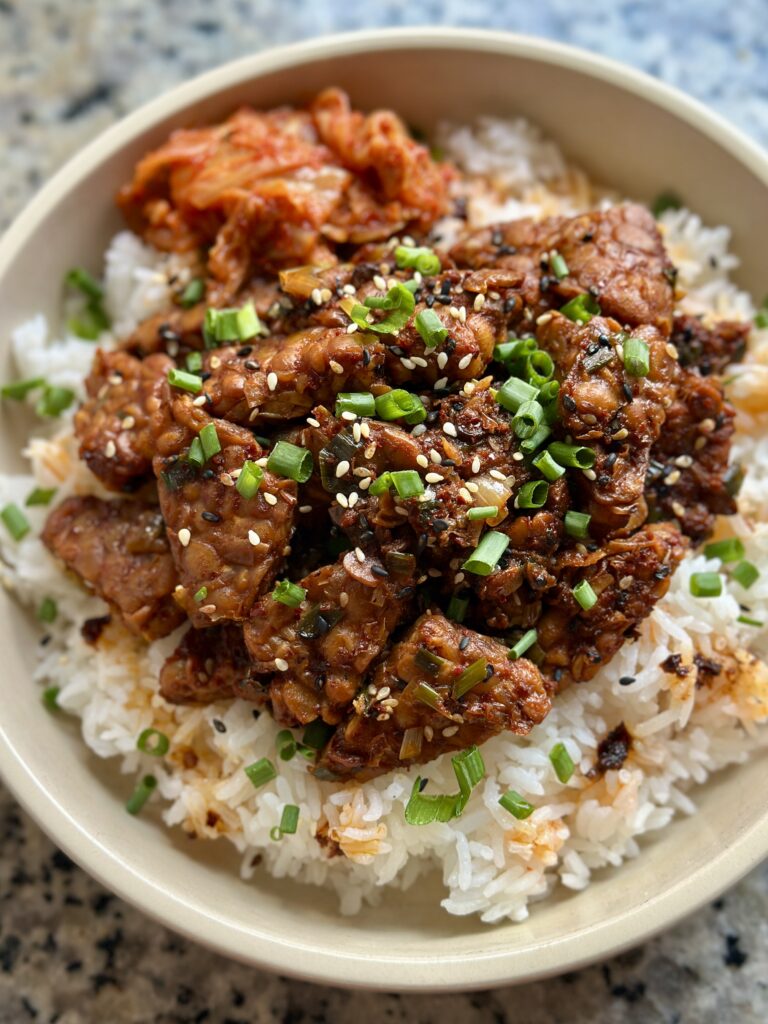
    This spicy braised tempeh dish, inspired by dubu-jorim is coated in a savoury, spicy sauce seasoned with lots of spring onions and toasted sesame seeds.

    This simple tempeh recipe will have you ACTUALLY like tempeh – it’s air fried to the perfect crisp (you can also pan fry it) and coated in a spicy soy sauce with lots of spring onions and sesame seeds for the ultimate flavour. It makes a nice pairing with rice, noodles or anything really from spring rolls to wraps and sandwiches.

    Tempeh is not commonly used in many Korean dishes but tofu is – as it soaks up all the flavour and is an amazing source of protein. Just like tofu, tempeh is also incredibly versatile, so you can add it as a substitute to most dishes while still getting the same spicy or sweet flavours. It also makes the flavour of tempeh less ‘strong’ as it’s ultimately still a fermented dish, so you can’t really tell it’s tempeh.

    One more thing about this recipe is that you can use tempeh the way you buy it – no boiling required! It involves a simple two-step process air-frying the tofu until golden brown and crispy (yes it gets crispy even without corn starch), then braising them in a spicy-soy sauce loaded with chopped scallions. The aroma is wonderful!

    Ingredients You Need

    • Tempeh: using fresh tempeh would be ideal so the flavours are maximized.
    • Spicy-soy sauce: light soy sauce, sesame oil, gochugaru and coconut sugar to balance out the spice
    • Aromatics: spring onions – add both white and green parts but reserve some of the green for later! You can also use garlic, depending on your preference.
    • Garnish: toasted sesame seeds and green onions

    Gluten free substitutions: Use gluten free light soy sauce.

    Allium free substitutions: Unfortunately, this recipe requires scallions but you can always omit it. A good substitute might be coriander – if you don’t mind the strong flavour and aroma.

    Korean Braised Tempeh

    This spicy braised tempeh dish, inspired by dubu-jorim is coated in a savoury, spicy sauce seasoned with lots of spring onions and toasted sesame seeds.
    Prep Time10 minutes
    Cook Time10 minutes
    Total Time20 minutes
    Course: Main Course
    Cuisine: Fusion, Korean
    Keyword: korean recipes, tempeh
    Servings: 2

    Ingredients

    • 450 g tempeh
    • oil for pan frying / air frying
    • 3 tbsp light soy sauce
    • 2 tbsp sesame oil
    • 1 tsp coconut sugar
    • 1 tbsp gochugaru
    • 1 tsp minced garlic
    • 2 tsp toasted sesame seeds  black and white
    • 1/3 cup scallions
    • 1/4 cup water

    Garnish

    • scallions
    • toasted sesame seeds black and white

    Instructions

    • Slice tofu into triangles and pan fry or air fry with olive oil (or any other neutral oil) until crispy.
    • Mix all the ingredients needed for the sauce – sesame oil, soy sauce, coconut sugar, gochugaru, garlic, scallions and toasted sesame seeds.
    • Pour the sauce over the fried tofu and braise it for a few minutes, letting it soak up all the flavour.
    • Garnish with spring onions and sesame seeds. Enjoy!

  • Spicy Gochujang Enoki Mushrooms

    Spicy Gochujang Enoki Mushrooms

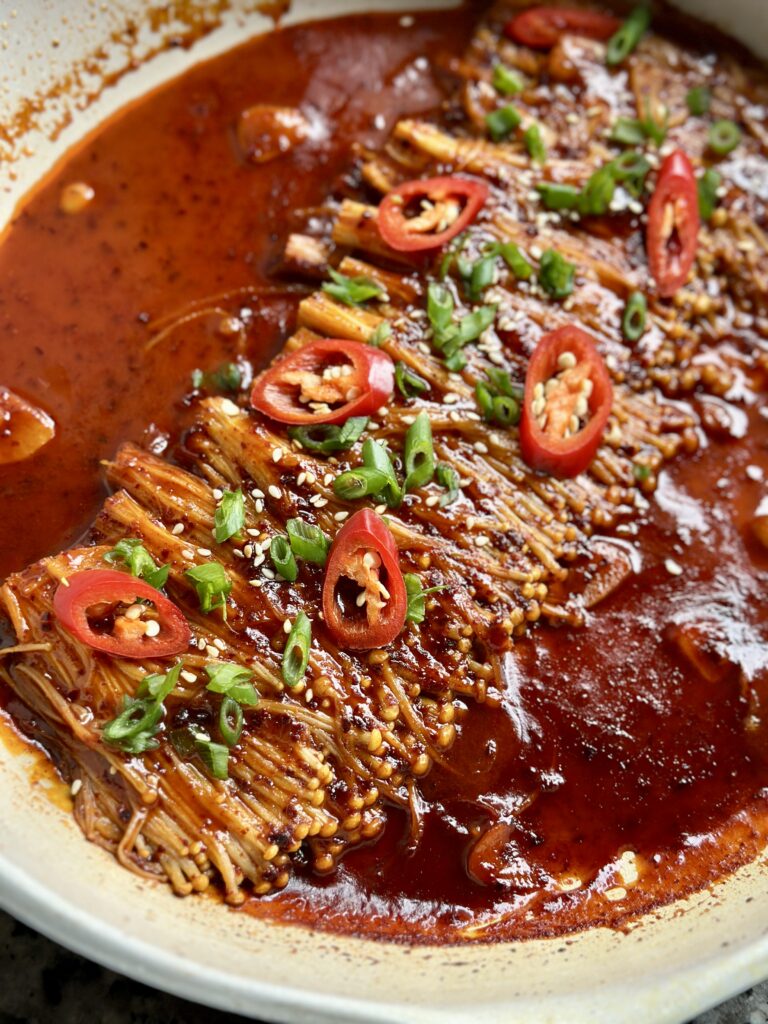
    Try these spicy enoki mushrooms – tender, umami-packed and coated in flavourful gochujang sauce. Pair these with rice for the perfect quick meal!

    These spicy enoki mushrooms are a flavourful, umami-packed dish that’s quick and easy to make. Their delicate, stringy mushrooms make it easy to absorb the sauces and the texture makes it chewy and delicious. You can pair them with rice or on top of noodle bowls for the perfect balanced meal.

    I also love how they look like noodles so they’re easy to slurp and eat by themselves too. If you can’t get enoki mushrooms, you can also use shredded oyster mushrooms, shimeji mushrooms or a mix of many different type of mushrooms for the most umami dish.

    To add some protein, you can also add in some fried extra firm tofu. Adds to the texture and flavours too! You can also add tempeh or vegetables like zucchini, potato, eggplant and sweet potato.

    Ingredients You Need

    • enoki mushrooms – but you can also use other types of mushrooms.
    • aromatics – white part of scallions, minced garlic
    • spicy sauce – gochugaru, gochujang, agave syrup, light soy sauce, rice vinegar, water, toasted sesame oil
    • garnish – green part of scallions, red chilies, toasted sesame seeds

    Gluten free substitutions: Instead of gochujang, use sambal or chili paste. Use gluten free soy sauce / tamari or coconut aminos.

    Allium free substitutions: Use allium free chili paste or sambal. Omit garlic and scallions. Instead, add a pinch of hing to the sauce.

    Spicy Gochujang Enoki Mushrooms

    Try these spicy enoki mushrooms – tender, umami-packed and coated in flavourful gochujang sauce. Pair these with rice for the perfect quick meal!
    Prep Time3 minutes
    Cook Time7 minutes
    Total Time10 minutes
    Course: Main Course, Side Dish
    Cuisine: Fusion, Korean
    Keyword: enoki mushrooms, gochujang, mushroom recipes, spicy
    Servings: 2

    Ingredients

    • 1 pack enoki mushrooms
    • 2 scallions white part
    • 3 cloves garlic
    • 1 tbsp gochujang
    • 1 tbsp gochugaru
    • 1/2 tbsp agave syrup
    • 1/2 tbsp light soy sauce
    • 1/2 tbsp rice vinegar
    • 1/3 cup water
    • 1-2 tbsp toasted sesame oil

    Garnish

    • 2 scallions green part
    • toasted sesame seeds
    • 1 red chili

    Instructions

    • Trim the root ends and separate the mushrooms. Rinse lightly and pat dry.
    • Chop garlic and scallions.
    • In a small bowl, mix gochujang, gochugaru, light soy sauce, rice wine vinegar, agave syrup and toasted sesame oil.
    • Heat oil in a pan over medium heat. Saute garlic and scallions for 1-2 minutes.
    • Pour gochujang sauce, water, mix and let it sizzle. Place enoki mushrooms neatly on the pan. Close the lid and cook enoki mushrooms for 5 minutes.
    • As they're cooking, spoon the sauce over the mushrooms. Add more water if sauce becomes too thick. Stir-fry for another 2-3 minutes until coated and slightly caramelized.
    • Sprinkle with green onions, toasted sesame seeds and red chilies. Serve hot with rice, noodles, or in lettuce wraps. Enjoy!
  • Easy Bibimbap with Bulgogi

    Easy Bibimbap with Bulgogi

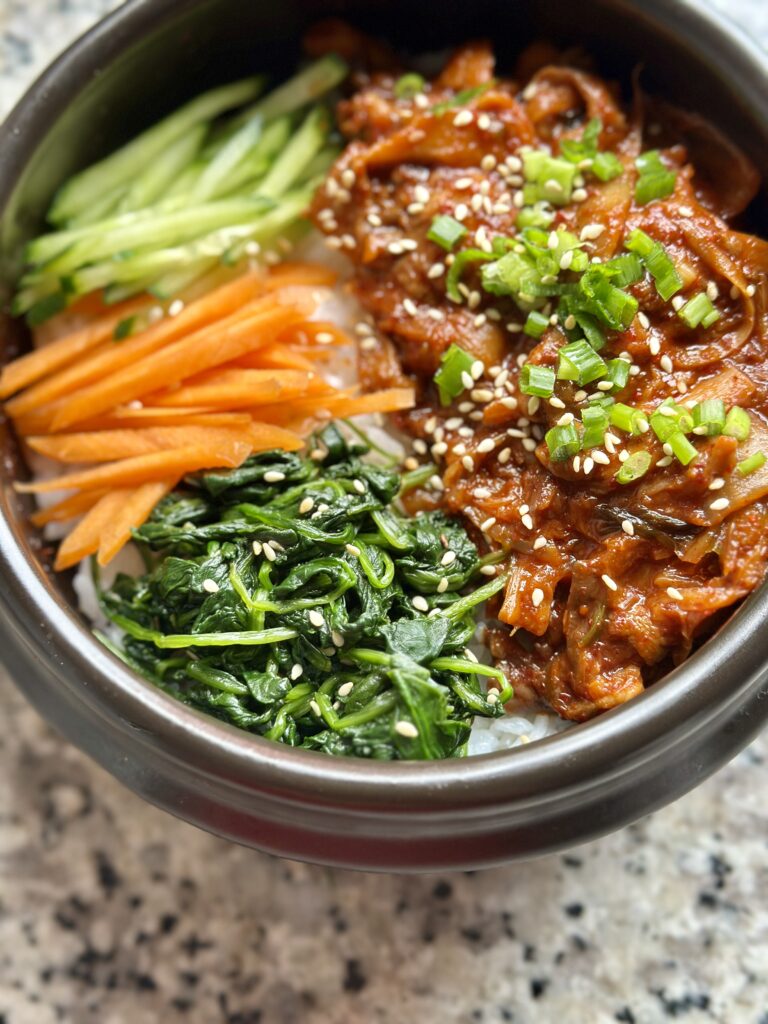
    This Korean rice and vegetable dish is packed with crunchy vegetables, spicy bulgogi oyster mushrooms cooked in sweet, spicy gochujang kimchi sauce. It’s insanely easy to make!

    Bibimbap is a super popular korean dish that you may have heard of already and personally it is one of my favourite! It’s made with rice, crunchy vegetables and seasoned with a hot chili pepper paste, like gochujang. You can also add other ingredients like bulgogi tofu or braised oyster mushrooms.

    Traditionally, it’s prepared in a stone-pot (“dolsot” in korean) to maximize the flavours of the dish. It enables a nice crispy layer of rice for that extra crunch! You can taste the difference in smokiness and flavours too!

    There are many variations of this dish – my version consists of thinly sliced cucumbers, carrots, bulgogi oyster mushrooms to replace the meat and kimchi for an extra tang. Once you prepare the dishes (full recipe below), don’t forget to mix them together before eating! It brings all the flavours together.

    Ingredients You Need

    • pearl oyster mushrooms – you can be versatile with this but I got fresh, locally harvested pearl oyster mushrooms from Mushroom Buddies.
    • bulgogi marinade – soy sauce, coconut sugar, garlic and ginger, gochujang, sesame oil, vegan kimchi
    • aromatics – scallions (both white and green parts)
    • vegetables – spinach, carrots, cucumber

    There is no gluten free option for this dish since gochujang contains gluten. However, you can replace gochujang with sambal chili for a spicy kick.

    Gluten free substitutions:

    • Use gluten free soy sauce, tamari or coconut aminos.
    • Omit gochujang – use gluten free and vegan kimchi instead.

    Allium free substitutions (no onion, no garlic):

    • Omit gochujang and use vegan & allium free kimchi instead. You can also choose not to add both.
    • Omit garlic and add a pinch of hing.
    • Instead of stalks of scallions, use thinly sliced fennel or celery.

    Easy Bibimbap with Bulgogi

    This Korean rice and vegetable dish is packed with crunchy vegetables, spicy bulgogi oyster mushrooms cooked in sweet, spicy gochujang kimchi sauce. It’s insanely easy to make!
    Prep Time10 minutes
    Cook Time15 minutes
    Total Time25 minutes
    Course: Main Course
    Cuisine: Korean
    Keyword: bibimbap, bulgogi
    Servings: 2

    Ingredients

    Mushroom Bulgogi

    • 150 g pearl oyster mushrooms sub with any other mushrooms
    • 1 tsp minced garlic
    • 1 tsp minced ginger
    • 1 tsp gochujang
    • 1.5 tbsp light soy sauce
    • 1 tbsp coconut sugar sub with agave or maple syrup
    • 2 tsp gochugaru
    • 1 tbsp toasted sesame oil
    • 1/2 cup vegan kimchi

    Sesame Spinach

    • 150 g spinach
    • 1 tsp toasted sesame oil
    • 1 tsp light soy sauce
    • 1/2 tsp toasted sesame seeds

    Bibimbap

    • julienned carrots
    • julienned cucumber
    • chopped spring onions
    • toasted sesame seeds
    • 2 servings white or mixed grain rice cooked

    Instructions

    • Shred oyster mushrooms or slice them very thinly.
    • To a bowl, add all the ingredients for your marinade: coconut sugar, soy sauce, garlic, ginger, gochujang, kimchi, sesame oil, gochugaru and white part of scallions (you can trim them).
    • Transfer to a claypot or a pot and cook for 5-8 minutes until the mushrooms are fully cooked and the dish is sizzling. Take it out.
    • Blanch your spinach in boiling water under softened and bright green. Take out and drain excess water.
    • Add sesame oil, soy sauce and sesame seeds to spinach. Combine with hands or a spoon.
    • Add rice to dolsot (stone pot) and keep under heat until the bottom layer turns crispy.
    • Assemble your bibimbap: mushroom bulgogi, sliced cucumbers, carrots, and spinach.
    • Give the ingredients a good mix and top with more sesame seeds. Enjoy!

  • Gochujang Glazed Sticky Tofu Knots

    Gochujang Glazed Sticky Tofu Knots

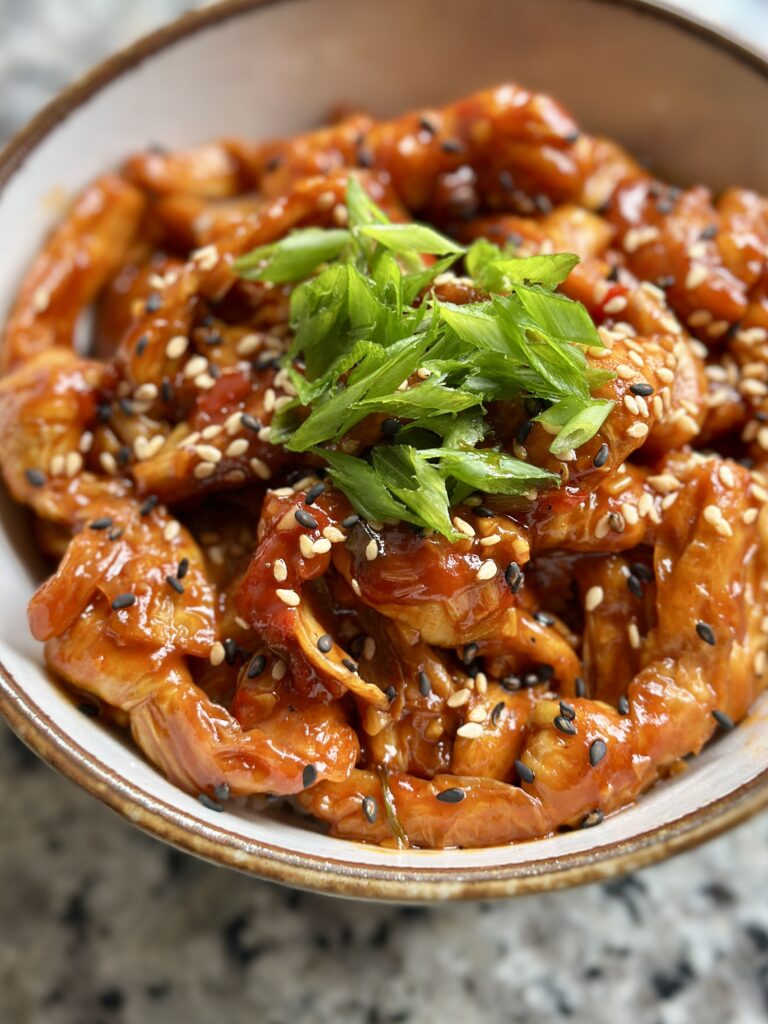
    These spicy, chewy and addictive gochujang glazed tofu knots is the perfect high protein snack or meal that can be made in just 10 minutes!

    Tofu can be prepared in so many creative ways and one of my favourite ways to make them is by glazing them with a gochujang sauce! It’s a fun way to eat them but this time instead of tofu, we’re going to be using TOFU KNOTS! They’re basically rolled up beancurd skin that is high in protein, just like tofu.

    Ingredients You Need

    • frozen or dried tofu knots – also known as tofu ‘ribbons or ties’. You can find these in asian supermarkets or amazon.
    • aromatics – minced garlic, red chilies, scallions
    • gochujang glaze – gochujang paste, tomato ketchup, light soy sauce, rice wine vinegar, sweetener like agave, toasted sesame oil, corn starch slurry
    • garnish – scallions, white and black toasted sesame seeds

    Gluten free substitutions: Use gluten free light soy sauce or tamari or coconut aminos instead of regular soy sauce. Instead of gochujang, use sambal paste.

    Allium free substitutions: Omit fresh garlic and use a pinch of asafoetida (hing). Substitute scallions with chopped coriander.  Substitute gochujang with an allium free chili paste. 

    Gochujang Glazed Sticky Tofu Knots

    These spicy, chewy and addictive gochujang glazed tofu knots is the perfect high protein snack or meal that can be made in just 10 minutes!
    Prep Time5 minutes
    Cook Time5 minutes
    Total Time10 minutes
    Course: Main Course
    Cuisine: Korean
    Keyword: gochujang, tofu knots, tofu skin
    Servings: 2

    Ingredients

    • 2 cups frozen tofu knots
    • olive oil for frying
    • 2 servings steamed rice
    • 1 tsp minced garlic
    • 1 large red chili finely diced
    • 2 scallions white and green parts separated
    • 1 tbsp gochujang
    • 1 tsp agave
    • 1 tbsp light soy sauce
    • 1 tsp tomato ketchup
    • 1 tbsp toasted sesame oil
    • 1/2 tbsp rice wine vinegar
    • 1 tsp corn starch
    • 1/3 cup water
    • 1/2 tsp lime juice
    • 1 tsp dark soy sauce

    Garnish

    • scallions green part
    • 2 tsp toasted white sesame seeds
    • 2 tsp toasted black sesame seeds

    Instructions

    • Defrost your tofu knots but this is optional. If using dried knots, soak them in hot water for 5 minutes. Chop up your aromatics.
    • In a small bowl, mix together gochujang, light soy sauce, rice wine vinegar, ketchup, agave, corn starch and water. Whisk together until smooth.
    • Fry the tofu knots in olive oil until browned. Take them out.
    • Saute the white part of scallions in toasted sesame oil. Add chilies and minced garlic. Saute for a minute.
    • Add in your sauce and let it thicken for a few seconds. Then add in your pan fried tofu knots and coat it in the sauce.
    • Squeeze lime and add dark soy sauce towards the end for a brighter colour. Mix well.
    • Garnish tofu knots with chopped green onions and toasted sesame seeds and serve it alongside white rice. Enjoy!

  • Kongguksu (Korean Cold Soy Milk Noodles)

    Kongguksu (Korean Cold Soy Milk Noodles)

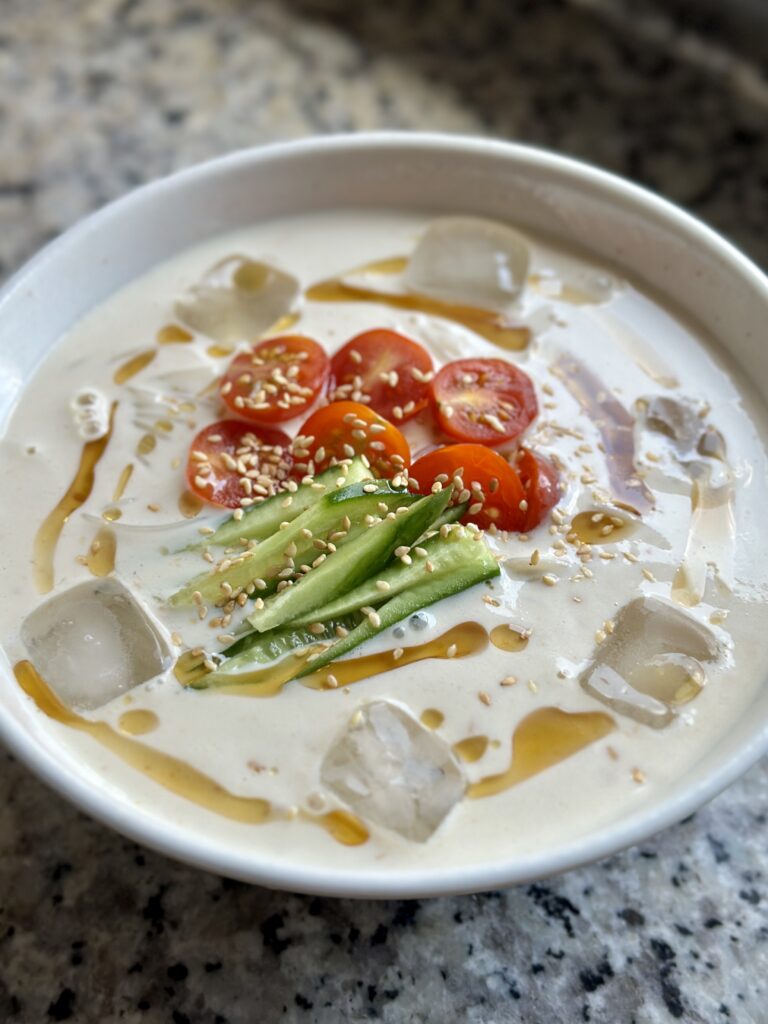
    This creamy soy milk noodles is a cold, refreshing korean dish that can be put together in just 10 minutes! High in protein and gluten free.

    Kongguksu (콩국수) is a popular Korean dish in the summer and it usually features thin wheat noodles served in a chilled, creamy soy milk broth. It has a nutty flavour profile with a silky texture, making it the perfect slurp-able goodness of a dish.

    The best part is that it also includes blended silken tofu in the broth which means this noodle soup is protein rich – you can get up to 20.3g of protein per meal.

    This is one of the most minimal but satisfying dishes I’ve ever eaten. Partly, I was inspired by the making of this dish in Culinary Class Wars – the thick soybean broth was tempting to say the least!

    Ingredients You Need

    Kongguksu’s beauty lies in its minimalism. The dish requires just a few ingredients:

    • soy milk – this would make the base of the creamy broth.
    • thin wheat noodles – you can somyeon (소면) which is traditionally used in kongguksu
    • protein – silken tofu, unsweetened peanut butter
    • seasonings – salt, sugar, toasted sesame oil, toasted sesame seeds
    • garnish – cucumber, cherry tomatoes, sesame seeds, and toasted sesame oil

    Gluten free substitutions: Use rice vermicelli noodles instead of wheat noodles.

    Allium free substitutions: This recipe is 100% alliums free!

    Kongguksu (Korean Cold Soy Milk Noodles)

    This creamy soy milk noodles is a cold, refreshing korean dish that can be put together in just 10 minutes! High in protein and gluten free.
    Cook Time10 minutes
    Total Time10 minutes
    Course: Main Course, Soup
    Cuisine: Korean
    Keyword: cold noodles, korean recipes, noodles
    Servings: 2

    Ingredients

    • 300 g silken tofu
    • 2 tbsp unsweetened peanut butter
    • 2 tbsp toasted sesame seeds
    • 1.5 cups unsweetened soy milk
    • 1/2 cup water
    • 1 tsp sweetener
    • 1 tsp salt
    • 2 servings thin wheat noodles

    Toppings

    • 6 cherry tomatoes
    • julienned cucumbers
    • toasted sesame oil
    • toasted sesame seeds
    • ice cubes

    Instructions

    • Cook the somyeon noodles according to package instructions. Rinse under cold water to stop cooking and remove excess starch. Drain well.
    • Blend soy milk, sesame seeds, unsweetened peanut butter, sweetener, salt and water until you get a smooth and creamy broth.
    • Divide the noodles into serving bowls. Pour the soy milk broth over the noodles.
    • Garnish with halved cherry tomatoes, julienned cucumbers, toasted sesame seeds and sesame oil. Place a few ice cubes in the broth and serve the chilled soy milk noodles.

  • 5-Minute Microwaveable Hotpot

    5-Minute Microwaveable Hotpot

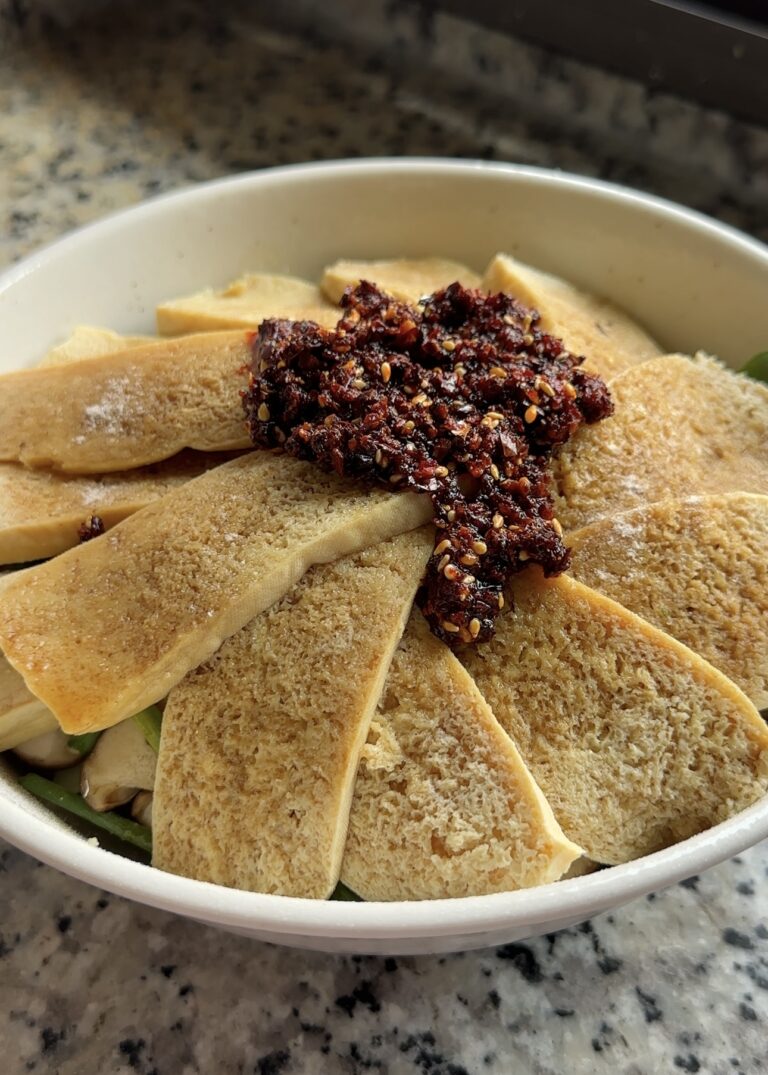
    This viral mini microwaveable hotpot is quick to make & packed with vegetables, protein and sauce to make for the most convenient and delicious meal!

    Screenshot

    This comforting viral 5-minute Microwaveable Hotpot has become increasingly popular due to its convenience with minimal prep and cooking time. When prepped and ready to go, all you have to do is microwave this for 5 minutes and you have your own mini hotpot for a quick lunch or dinner.

    This “instant” version of the traditionally labor-intensive dish is just much easier for busy people like me or beginners to cooking.

    Ingredients You Need

    This hotpot is also incredibly versatile, you can add ingredients that take a shorter time to cook like…

    • leafy greens – spinach, kale, cabbage, lettuce, kai lan, chye sim, bok choy and more…
    • water-based vegetables – zucchini, tomatoes, bell peppers, broccoli, mushrooms, bittergourd
    • protein – silken tofu, firm tofu, tempeh, seitan, plant-based meat substitutes, beancurd skin, edamame
    • noodles that only require soaking – rice vermicelli
    • herbs and aromatics – cilantro, thai basil, mint, scallions, chilies
    • sauces – chili oil, peanut dipping sauce
    • rice – the perfect accompaniment to a hot soup!
    • seasonings – light soy sauce, mirin, sesame oil, mushroom seasoning
    Screenshot

    Gluten free substitutions: Substitute soy sauce to gluten free soy sauce / tamari / coconut aminos. Use rice-based gluten free noodles if using. Ensure mushroom seasoning is gluten free.

    Allium free substitutions: Use allium free chili oil.

    5-Minute Microwaveable Hotpot

    This viral mini microwaveable hotpot is quick to make & packed with vegetables, protein and sauce to make for the most convenient and delicious meal!
    Prep Time10 minutes
    Cook Time5 minutes
    Total Time15 minutes
    Course: Main Course, Soup
    Cuisine: Fusion, Korean
    Keyword: hotpot, soup
    Servings: 2

    Ingredients

    • 1/2 cup beansprouts
    • 3-4 small bok choy
    • 3-4 king oyster mushrooms
    • 2 scallions
    • thinly sliced tofu
    • 1 tbsp tsuyu or soy sauce
    • 1 tbsp mirin
    • 1 tbsp sesame oil
    • 1 tsp mushroom seasoning
    • 1 tbsp chili crisp
    • 1/2 cup water
    • 2-3 napa cabbage leaves

    Dipping Sauce

    • 2 tbsp sesame paste or unsweetened smooth peanut butter
    • 2 tsp chili oil
    • 2 tbsp sesame oil
    • 2 tbsp light soy sauce
    • 1 tbsp toasted sesame seeds
    • 2 tbsp scallions
    • broth to loosen the sauce

    Instructions

    • Slice your ingredients thinly to ensure they cook quickly and evenly in the hotpot – especially tofu and king oyster mushrooms.
    • Layer your bowl with beansprouts, bok choy, king oyster mushrooms, scallions and sliced tofu.
    • Add tsuyu / soy sauce, mirin, sesame oil, mushroom seasoning, chili crisp and water. Cover with napa cabbage leaves.
    • Microwave for 5 minutes. Cut the cabbage and mix into the soup.
    • Serve hotpot with rice and creamy dipping sauce. Enjoy!

  • 5-Minute Bibim Guksu

    5-Minute Bibim Guksu

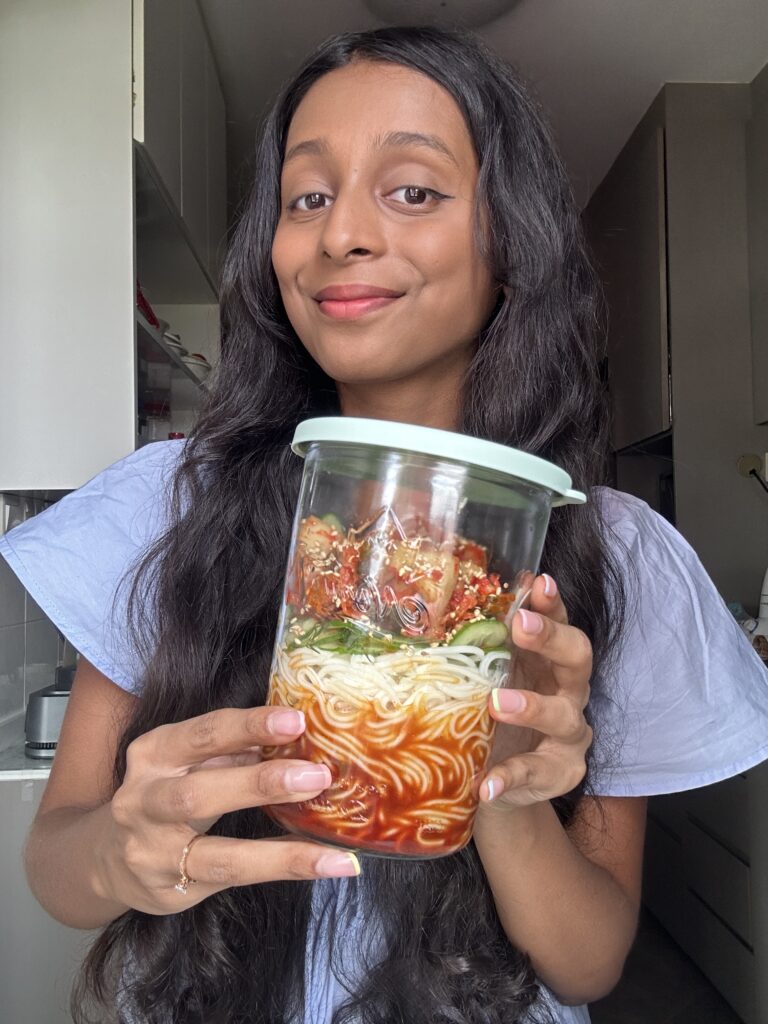
    This super quick & easy Bibim Guksu is a cold noodle dish, coated in a sweet & spicy gochujang sauce with kimchi, cucumbers tossed in a jar.

    I never thought I’ll think cucumbers are NOT boring….this actually SLAPS so hard! I love Bibim Guksu but having it in a jar just makes it easier to put together and for some reason, more delicious.

    Bibim Guksu (비빔국수) is a popular Korean dish that includes cold noodles mixed in a sweet, spicy and tangy sauce! This dish is a staple during the hot summer months because it cold and refreshing.

    Bibim Guksu is thought to have emerged as a variation of traditional bibimbap, a popular Korean dish that involves serving and mixing rice with various sautéed vegetables, protein and spicy gochujang. Guksu (국수) means “noodles” in Korean, and bibim (비빔) refers to “mixing” or “tossing.” Therefore, the dish literally translates to “mixed noodles.”

    Traditionally, the sauce is poured over the noodles and kimchi, egg and cucumbers are added as garnish. In this recipe, we mix together the sauce, add noodles, slice cucumbers directly into the jar (thanks Logan!), add vegan kimchi and toasted sesame seeds. Once we give that a good shake, you can have these refreshing noodles anywhere, anytime!

    Ingredients You Need

    The dish usually consists of:

    • thin wheat noodles – also known as somen or somyeon noodles. You can also use buckwheat noodles as a substitute.
    • gochujang – korean red pepper paste, make sure to get a vegan version! Unfortunately gochujang is not gluten free.
    • light soy sauce – you can also use gluten free soy sauce, tamari or coconut aminos.
    • rice wine vinegar – mirin is a good substitute!
    • toasted sesame oil – for aroma and flavour. I would definitely consider this as a pantry staple!
    • sweetener of choice – agave and maple syrup are great refined sugar free options!
    • garnish – sliced cucumbers, vegan kimchi and toasted sesame seeds

    Gluten free substitutions: Use a gluten free chili paste and a gluten free soy sauce / tamari / coconut aminos.

    Allium free substitutions: Use an allium free chili paste like sambal or chili oil instead of gochujang. You could also omit gochujang in this recipe. Use alliums free kimchi as well. FoodPeople is a good brand!

    5-Minute Bibim Guksu

    This super quick & easy Bibim Guksu is a cold noodle dish, coated in a sweet & spicy gochujang sauce with kimchi, cucumbers tossed in a jar.
    Cook Time5 minutes
    Total Time5 minutes
    Course: Main Course
    Cuisine: Korean
    Keyword: cold noodles, korean recipes, noodles
    Servings: 1

    Equipment

    • 1 Jar

    Ingredients

    • 1 serving thin wheat noodles
    • ice
    • 1 mini cucumber
    • 1 tbsp gochujang
    • 1.5 tbsp light soy sauce
    • 1 tbsp rice wine vinegar
    • 1 tbsp sesame oil
    • 1 tsp agave syrup
    • 3 tbsp vegan kimchi
    • 1/2 tbsp toasted sesame seeds

    Instructions

    • Bring a pot of water to a boil. Add the noodles and cook according to the package instructions, usually around 3 minutes for thin noodles.
    • Once cooked, drain the noodles and rinse them thoroughly under cold running water to cool them down quickly. This step helps remove excess starch and makes the noodles firm and separate.
    • Leave noodles in water and add a few ice cubes to let them cool down even more quickly. Drain the noodles well and set aside.
    • While the noodles are cooking, you can make the gochujang sauce: mix together gochujang, soy sauce, rice wine vinegar, sesame oil and agave. Stir well until the sauce is smooth and all the ingredients are combined.
    • Place the noodles inside the jar.
    • Using a handheld slicer, carefully slice your cucumber directly into the jar. Add vegan kimchi and toasted sesame seeds.
    • Close the lid and shake the jar until all the ingredients are well-combined and the noodles evenly coated in the sauce. Enjoy!