Category: Korean

  • Gochujang Rose Pasta with Mushrooms

    Gochujang Rose Pasta with Mushrooms

    This silky, smooth and creamy gochujang pasta paired with smoky, spicy oyster mushrooms is the ultimate pasta that comes together in under 30 minutes!

    Korean food trends are an absolute must try in my opinion. This creamy gochujang pasta is delicious and comes together in just under half an hour. This pasta is inspired by rose shrimp pasta and we’ll use king oyster mushrooms to substitute the shrimp!

    What Do I Need?

    • pasta: you can use any type of pasta for this recipe, I used Fusilli Corti Bucati because it absorbs the flavours so well!
    • gochujang: this is a korean spicy paste, and it’s pretty spicy with some notes of sweetness. You can reduce the amount of gochujang if you are sensitive to spice – you could also substitute with ssamjang paste which is a less spicy korean paste similar to gochujang.
    • tomato paste: adds a nice red hue to the sauce!
    • cream: using cream gives it that nice pink colour, but you can also use full-fat coconut milk for a delicious .
    • vegan ‘shrimp’ alternative: king oyster mushrooms are perfect for a shrimp substitute and they taste amazing in the smoky, spicy marinade

    Gochujang Rose Pasta with Mushrooms

    This silky, smooth and creamy gochujang pasta paired with smoky, spicy oyster mushrooms is the ultimate pasta that comes together in under 30 minutes!
    Prep Time10 minutes
    Cook Time20 minutes
    Total Time30 minutes
    Course: Main Course
    Cuisine: Fusion
    Keyword: gochujang, pasta, pasta recipes
    Servings: 2

    Ingredients

    Rose Pasta

    • 2 cups dry pasta
    • 1 tbsp olive oil
    • 2 tbsp gochujang paste
    • 1 tsp gochugaru
    • 1 tbsp tomato paste
    • 1/2 veggie boullion cube
    • 1/2 cup vegan cream (sub with full fat coconut milk)
    • 1/2-1 cup pasta water
    • 2 tsp garlic powder
    • salt (if needed)

    Vegan Mushroom 'Shrimp'

    • 2 king oyster mushrooms
    • 1 tbsp gochugaru
    • 1 tbsp soy sauce
    • 1/4 tsp liquid smoke (optional)
    • 1 tsp garlic powder
    • 1 tsp onion powder
    • 1/4 tsp black pepper
    • salt (as needed)
    • olive oil
    • splash of water

    Garnish

    • fresh parsley or coriander
    • gochugaru

    Instructions

    • Slice your mushrooms into circular pieces. Make your marinade with the ingredients listed above. Add a splash of water if the mixture is too thick.
    • Heat up a pan with olive oil. Place mushrooms and pan fry them until they release all water and are cooked.
    • Brush the marinade on both sides of the mushrooms and cook until they are browned.
    • Boil pasta according to the package instructions. Keep the pasta water.
    • On another pan, add some oil and add in your gochujang paste, gochugaru and tomato paste. Stir for a few minutes on a low flame.
    • Add paste water to the mixture, followed by the boullion cube and garlic powder.
    • Mix well and add in your vegan cream before giving it a good mix. Add in your pasta.
    • Give it a good mix and serve with mushrooms and chopped parsley, sprinkle of gochugaru and coriander. Enjoy!
  • Chili Oil Mayak Tofu

    Chili Oil Mayak Tofu

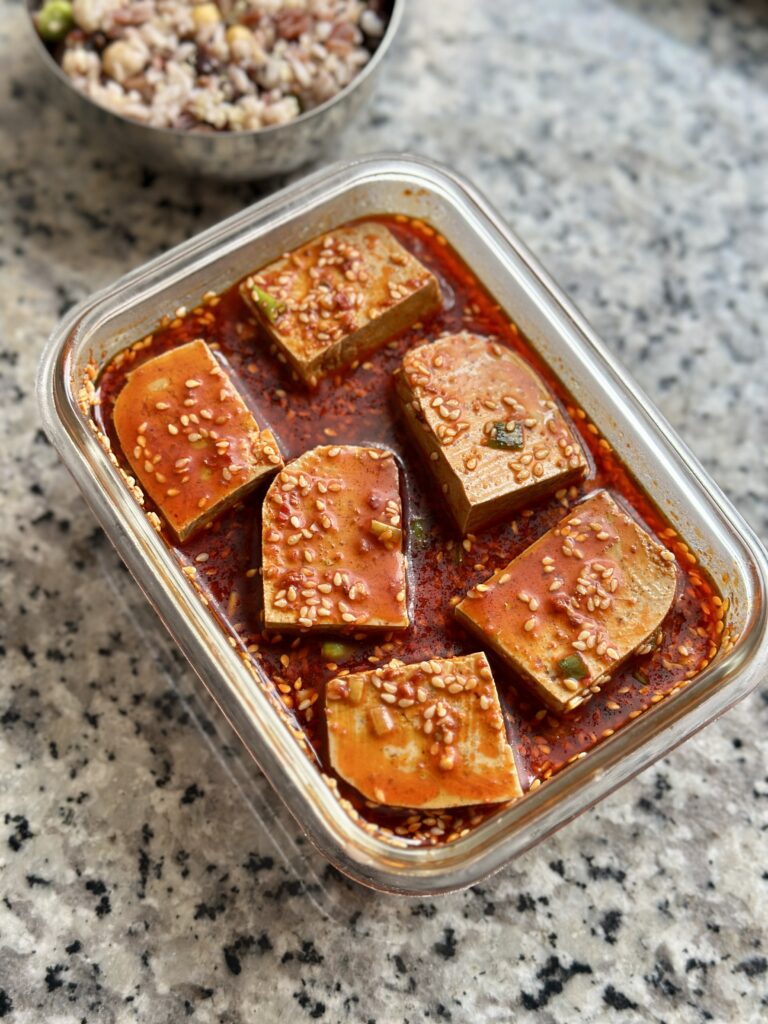
    This vegan version of korean marinated eggs will literally blow your mind – I’ve added a spicy twist to it with my 5-minute homemade chili oil!

    This easy Mayak tofu recipe involves the marination of extra firm tofu in a spicy but slightly sweet sauce made with pantry friendly ingredients like toasted sesame seeds, soy sauces, rice vinegar, bird’s eye chillies, and spring onions. For this spicy version, I also use my Homemade Chili Oil for an extra punch of flavour.

    The “mayak” (마약) actually translates to “drug” in Korean language, and this name apparently came about due to the addictive nature of this delicious dish (I finished an entire tofu by myself in 2 meals, I kid you not!).

    They can be easily made gluten free too by swapping out the soy sauces for gluten free soy sauce, tamari or coconut aminos. It can also be easily made allium free by omitting the garlic.

    My original recipe was created with @bakeyvakey to make the original mayak tofu without the chili oil addition.

    Chili Oil Mayak Tofu

    This vegan version of korean marinated eggs will literally blow your mind – I've added a spicy twist to it with my 5-minute homemade chili oil!
    Prep Time5 minutes
    Course: Main Course, Side Dish
    Cuisine: Fusion, Korean
    Keyword: korean, tofu, tofu recipes
    Servings: 2

    Ingredients

    • 1/3 cup light soy sauce
    • 1/2 cup water
    • 1.5 tbsp toasted sesame seeds
    • 2 tbsp spring onions
    • 1 chili padi
    • 1/2 green chili (or 1 whole if you can tolerate it)
    • 1 tbsp rice wine vinegar
    • 1 tbsp maple syrup
    • 1 tbsp sesame oil
    • 1/2 tbsp garlic powder
    • 2 tbsp chili oil with crisp
    • 2 blocks extra firm tofu (about 450g)

    Instructions

    • Mix the ingredients in a bowl thoroughly. Slice the tofu into 4 cubes or you can also slice them more thinly if you prefer it.
    • Place the tofu in a tupperware and pour the sauce over the tofu. Coat well and refrigerate overnight.
    • You can have the tofu with rice or noodles the next day. You can keep this for about 3-5 days in fridge if meal prepping.
    • Use the remaining marinade in stir fries, noodle sauces or fried rice. Enjoy!

  • Vegan Jjajangmyeon (Korean Black Bean Noodles)

    Vegan Jjajangmyeon (Korean Black Bean Noodles)

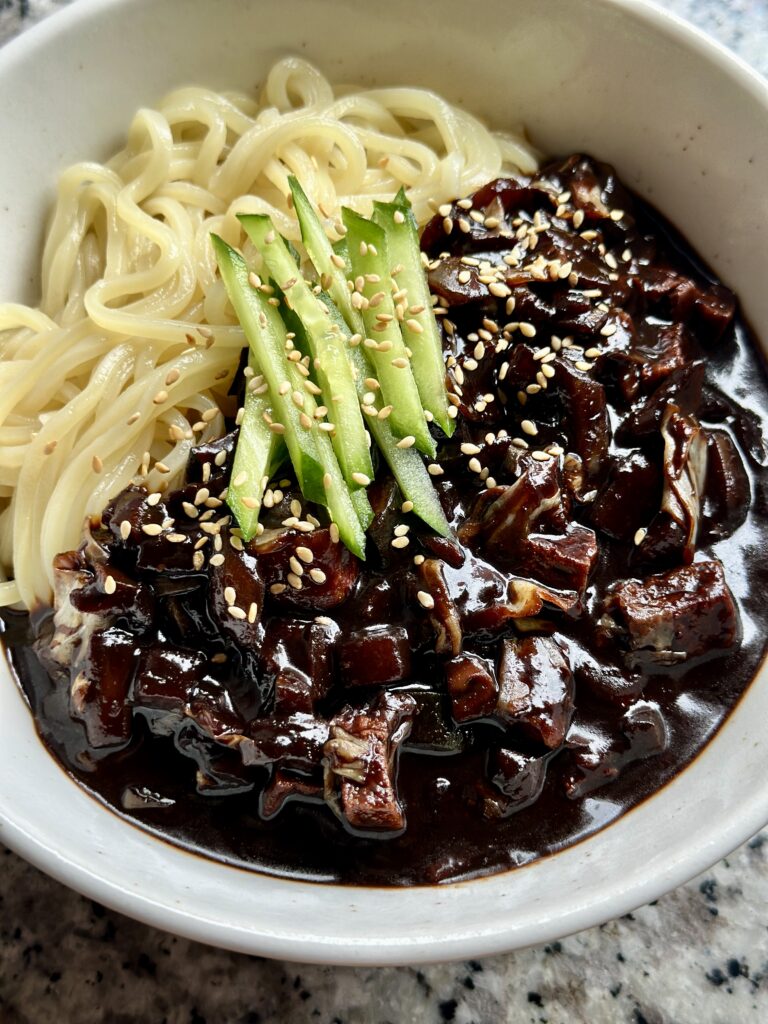
    These Korean Noodles are thick, chewy, drenched in a comforting black bean sauce and topped with fresh cucumbers. You can make this in less than 30 minutes!

    Have you ever tried these less-heard-of Korean Black Bean Noodles? They are super comforting and are made easily if you’re able to find the right ingredients.

    These noodles are made with a salted black bean paste (called chunjang), diced meat and vegetables. I first had this dish at a Korean vegetarian restaurant called The Boneless Kitchen and it was a really good noodle dish. The chewiness of the noodles paired perfectly with the thick luscious black bean sauce.

    What do I need for this recipe?

    The most important thing you need in chunjang, the salted black bean paste. This can be hard to find, but you should be able to spot them as Korean Marts or Asian stores. This is the exact brand of paste I used:

    Chinese Black Bean Paste for Jjangmyeon

    You would need either a protein substitute like minced plant-based meat or crumbled tofu as well as vegetables. The vegetables that are mostly commonly use are zucchini, potatoes, and carrots.

    Ingredients I used:

    • Jajangmyeon Noodles – I used frozen ones. You can also use ramen, udon or knife-cut noodles.
    • Chunjang Paste – salted black soybean paste. You can find this in korean marts and they generally tend to be vegan (double check still!)
    • Aromatics – white onion
    • Vegetables – diced potatoes, zucchini, cabbage
    • Protein – extra firm tofu or plant-based substitute

    Unfortunately, I have not found a gluten-free black bean paste, so this recipe cannot be made gluten free.

    Allium free substitutions: Omit white onion.

    Print Recipe
    2 from 1 vote

    Vegan Jjajangmyeon (Korean Black Bean Noodles)

    These Korean Noodles are thick, chewy, drenched in a comforting black bean sauce and topped with fresh cucumbers. You can make this in less than 30 minutes!
    Prep Time10 minutes
    Cook Time15 minutes
    Total Time25 minutes
    Course: Main Course
    Cuisine: Korean
    Keyword: noodles
    Servings: 2

    Ingredients

    • 2 servings fresh or frozen vegan jajangmyeon (udon/knife cut)
    • 1/2 white onion
    • 1/2 cup chopped cabbage
    • 1/4 cup chopped zucchini (boiled)
    • 1/2 cup diced shitake mushrooms
    • 2.5 tbsp chunjang (black bean paste)
    • 1 tbsp vegan oyster sauce
    • 1 tbsp sesame oil
    • 1 tsp sweetener agave / maple syrup
    • 1 cup water
    • 1/2 tbsp corn starch + 1/4 cup water

    Fried Tofu

    • 150 g extra firm tofu
    • olive oil for frying
    • 1/2 tsp minced ginger
    • 1/2 tbsp soy sauce
    • 1 tbsp rice wine vinegar
    • salt if needed

    Garnish

    • julienned cucumber
    • toasted sesame seeds

    Instructions

    • Dice your vegetables – onion, cabbage and zucchini into small pieces. Cut up your tofu into small cubes.
    • Add tofu to a pan with olive oil and fry until golden brown and crispy. You can also do this in an air fryer. Air fry at 200°C for 10 minutes, shaking the basket or flipping the tofu halfway through to ensure even crisping.
    • Add soy sauce, rice wine vinegar, and minced ginger. Saute the tofu together. Push them aside.
    • Add sesame oil to the other half of the pan. Add white onion and saute. Mix all ingredients together, add zucchini, shitake mushrooms, and lastly cabbage. Saute for 3-4 minutes until half cooked.
    • Add in black bean paste, vegan oyster sauce, sweetener, mix well and add a cup of water. Bring to a boil.
    • Add your corn starch slurry and let the sauce thicken.
    • Meanwhile, cook your noodles according to packaging instructions and drain excess water. Rinse your noodles in water to separate them.
    • Serve the noodles, alongside the sauce and garnish with julienned cucumber and toasted sesame seeds on top!
  • Spicy Kimchi Udon

    Spicy Kimchi Udon

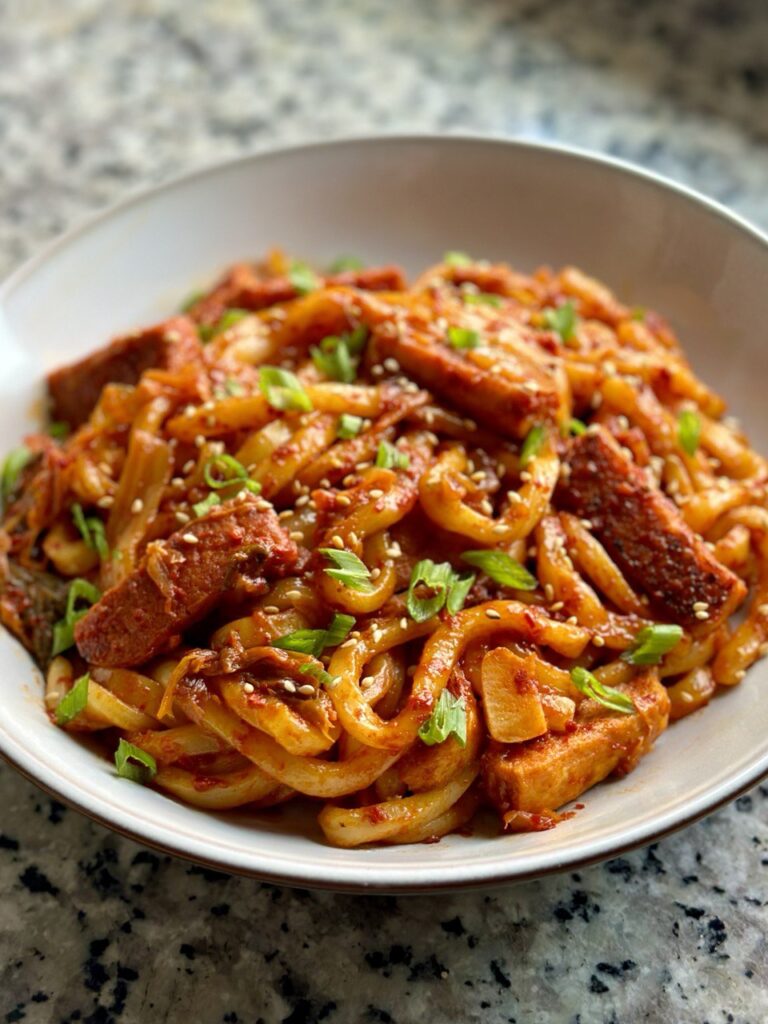
    This fiery duo of kimchi and gochujang is enough to make you addicted to these spicy & slurpy 15-minute udon noodles!

    This udon noodles can be made in 15 minutes!

    I find kimchi to be one of those foods I always turn to when I’m busy and wanted to prepare something quick. While being so flavourful on its own, it makes an even better meal when it’s paired with spices and gochujang. Kimchi is usually a mix of salted and fermented vegetables with a wide range of seasonings.

    This sauce based paired with thick and chewy udon noodles are to die for! You might find yourself coming back to this dish because it’s that easy to make.

    Ingredients You Need

    • Vegan Kimchi – I used bottled vegan kimchi that is perfect for one or two servings.
    • Gochujang & Gochugaru – these are korean food staples that I always have stocked in my pantry because they can be used in many dishes. Furthermore, I use gochugaru that are mild pepper flakes so I’m pretty generous with the amount I use in all my dishes.
    • Noodles – this recipe used udon noodles but you could also use instant ramen noodles or a gluten free option like rice noodles.

    Gochujang & Gochugaru are staples in Korean cooking!

    You can make this gluten free by substituting the noodles to your favourite gluten free ones. Gochujang is also not gluten free, so you can substitute it with a chili paste of your choice.

    Spicy Kimchi Udon

    This fiery duo of kimchi and gochujang is enough to make you addicted to these spicy & slurpy 15-minute udon noodles!
    Prep Time5 minutes
    Cook Time10 minutes
    Total Time15 minutes
    Course: Main Course
    Cuisine: Fusion, Korean
    Keyword: kimchi, korean, udon
    Servings: 2

    Ingredients

    • 2 packs udon noodles (save the noodle water)
    • 3/4 cup kimchi (with juice)
    • 2 tsp gochujang
    • 1 tbsp gochugaru
    • 1/2 tbsp light soy sauce
    • 1 tsp dark soy sauce
    • 1 tsp maple syrup
    • 1 garlic clove
    • 2 tbsp sesame oil
    • 200g extra firm tofu

    Garnish

    • spring onions
    • toasted sesame seeds

    Instructions

    • Soak udon noodles in hot water and separate them with chopsticks. You can also boil them for a few minutes until they separate.
    • Drain and save the excess water. Rinse the noodles with cold water.
    • Slice tofu into strips and pan fry in olive oil until crispy.
    • In a bowl, combine gochugaru, gochujang, soy sauces, maple syrup and a splash of noodle water.
    • Add sesame oil to a pan and add chopped or minced garlic. Saute for a minute and add kimchi with juice. Saute for a few minutes.
    • Add udon noodles, the sauce and give it a good stir.
    • Transfer to a plate and serve with spring onions and toasted sesame seeds.
  • Vegan Korean Bibimbap

    Vegan Korean Bibimbap

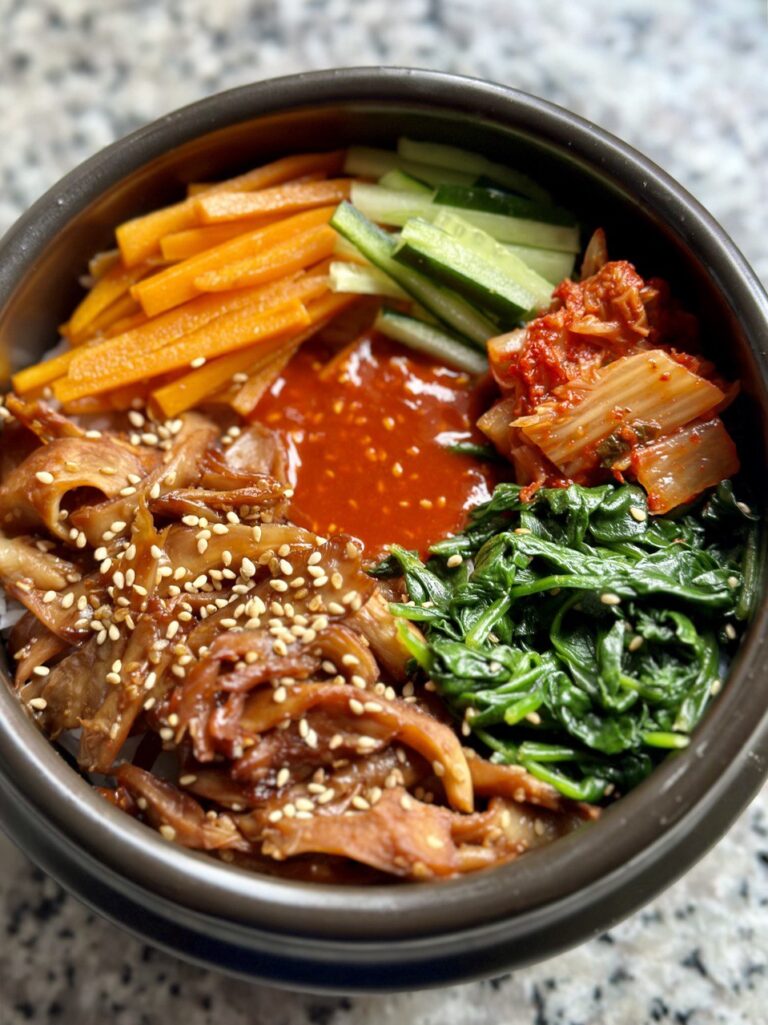
    This Korean rice and vegetable dish is packed with crunchy vegetables, braised oyster mushrooms and a sweet, spicy gochujang sauce. It’s insanely easy to make!

    Bibimbap is a super popular korean dish that you may have heard of already and personally it is one of my favourite! It’s made with rice, crunchy vegetables and seasoned with a hot chili pepper paste, like gochujang. You can also add other ingredients like bulgogi tofu or braised oyster mushrooms.

    Traditionally, it’s prepared in a stone-pot (“dolsot” in korean) to maximize the flavours of the dish. It enables a nice crispy layer of rice for that extra crunch! You can taste the difference in smokiness and flavours too!

    There are many variations of this dish – my version consists of thinly sliced cucumbers, carrots, oyster mushrooms to replace the meat and kimchi for an extra tang.

    Once you prepare the dishes (full recipe below), don’t forget to mix them together before eating! It brings all the flavours together. I like to top it off with more toasted sesame seeds, sesame oil and seaweed flakes.

    Ingredients You Need

    • pearl oyster mushrooms – you can be versatile with this but I got fresh, locally harvested pearl oyster mushrooms from Mushroom Buddies.
    • condiments – you would need soy sauces, maple syrup, rice wine vinegar and toasted white sesame seeds throughout this recipe.
    • vegetables – spinach, carrots, cucumber, vegan kimchi
    • vegan gochujang – korean hot pepper paste

    There is no gluten free option for this dish since gochujang contains gluten. However, you can replace gochujang with sambal chili for a spicy kick.

    For all my gluten free recipes and recipes with gluten free options, visit this page.

    15-min Korean Vegan Bibimbap

    This Korean rice and vegetable dish is packed with crunchy vegetables, braised oyster mushrooms and a sweet, spicy gochujang sauce. It's insanely easy to make!
    Prep Time10 minutes
    Cook Time5 minutes
    Total Time15 minutes
    Course: Main Course
    Cuisine: Fusion, Korean
    Keyword: bibimbap, korean, vegan
    Servings: 2

    Equipment

    • 1 Pan

    Ingredients

    Braised Oyster Mushrooms

    • 150 g shredded pearl oyster mushrooms
    • 1 tbsp sesame oil
    • 1 tbsp light soy sauce
    • 1 tsp dark soy sauce
    • 1 tsp maple syrup
    • 2 tsp toasted white sesame seeds
    • salt if needed

    Sesame Spinach

    • 150 g baby spinach
    • 1/2 tbsp sesame oil
    • 1 tsp light soy sauce
    • 1 tsp toasted white sesame seeds

    Gochujang Sauce

    • 1 tbsp gochujang
    • 2 tsp sesame oil
    • 1 tbsp rice wine vinegar
    • 1 tsp maple syrup
    • 1 tsp toasted white sesame seeds
    • 1-2 tbsp hot water

    Bibimbap

    • 2 cups white rice
    • 1/2 cup sliced cucumbers
    • 1/2 cup sliced carrots
    • 1/4 cup vegan kimchi

    Instructions

    • Shred oyster mushrooms or slice them very thinly.
    • Add some oil to grease your pan and add oyster mushrooms. Season with soy sauces and maple syrup. Pan fry until browned.
    • Add some sesame seeds and mix them together.
    • Meanwhile, prepare your sauce with gochujang, sesame oil, vinegar, maple syrup, sesame seeds and a splash of water.
    • Blanch your spinach in boiling water under softened and bright green. Take out and drain excess water.
    • Add sesame oil, soy sauce and sesame seeds to spinach. Combine with hands or a spoon.
    • Add rice to dolsot (stone pot) and keep under heat until the bottom layer turns crispy.
    • Assemble your bibimbap: sliced cucumbers, carrots, kimchi, spinach and oyster mushrooms. Pour gochujang sauce in the middle.
    • Give the ingredients a good mix and top with more sesame seeds. Enjoy!

  • Vegan Korean Army Stew (Budae-jjigae)

    Vegan Korean Army Stew (Budae-jjigae)

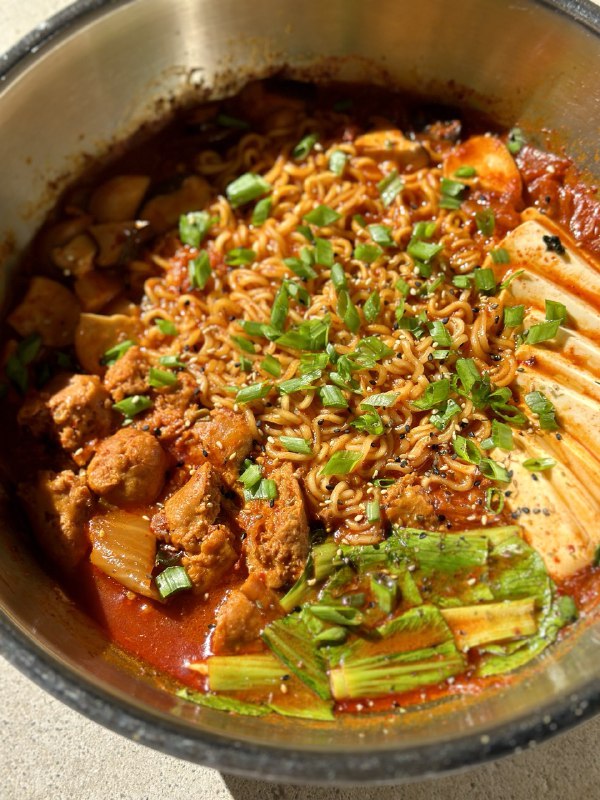
    This beginner-friendly one-pot Vegan Army Stew with Ramen is made with greens, king oyster mushrooms, soft tofu and plant-based links!

    Did you know this Army Stew with Ramen (also known as Budae Jjigae) is only made in one-pot and is super duper beginner friendly?

    This Vegan Army Stew is made with vegetables, mushrooms, soft tofu and a plant-based sausage to mimic the traditional version. You can also add a slice of vegan cheese on top and cover it for a few minutes until melts. I first tried Budae-Jjigae at Woorinara, a Korean Restaurant that I would visit after school with some of my closest friends to share a delicious meal. Having this reminds me of the bond and memories that we shared about 7 years ago. That’s the power of sharing a meal together!

    In general, Kimchi stews came about when the kimchi variant made with chili peppers grew popular in the peninsula mid-era. My two favourite type of stews are Soondubu-Jjigae (soft tofu stew) and Army Stew!

    Important Notes:

    Traditional kimchi is NOT vegan as it might contain anchovies or fish sauce. Kimchi is commonly made with Korean fish sauce to quicken the fermentation process.

    Remember to check for a vegan label or certification. This is the brand of kimchi I use – it’s not very spicy and has a slight sweet kick to it. It’s also allium free (no onions and garlic) so it’s friendlier recipe to those with gut sensitivities.

    Wanting Kimchi also has a vegan kimchi – you can check them out here.

    Food People Korean Kimchi

    Remember to look for a vegan kimchi brand that has a ‘vegan-friendly’ certification!

    Gluten Free Option

    For gluten free option, replace regular ramen with brown rice ramen or rice noodles. These substitutes work best because they cook fast, just like ramen noodles.

    You also have to replace gochujang with a gluten-free chili paste.

    Remember to also replace the soy sauce with gluten free soy sauce, tamari or coconut aminos for a gluten free version of this dish.

    I really like the ones below by Lee Kum Kee and Kikkoman. I have also attached the images of other gluten free soy sauce alternatives like Tamari and Coconut Aminos below. You can get them at Amazon or your local Asian grocery store.

    Vegan Kimchi Stew (Kimchi-jjigae) with Ramen

    This beginner-friendly one-pot Vegan Army Stew with Ramen is made with greens, king oyster mushrooms, soft tofu and plant-based links!
    Prep Time10 minutes
    Cook Time20 minutes
    Total Time30 minutes
    Course: Main Course
    Cuisine: Fusion, Korean
    Keyword: kimchi, ramen
    Servings: 2

    Equipment

    • 1 Pot

    Ingredients

    • 2 instant ramen cakes
    • 1 cup vegan kimchi
    • 1/4 cup kimchi juice
    • 2 tsp kombu dashi
    • 1 tbsp gochujang
    • 1 tbsp gochugaru
    • 1 tbsp sesame oil
    • 1 tbsp soy sauce
    • 1 tbsp rice wine vinegar
    • 1/2 tbsp agave syrup
    • 3 cups water
    • black pepper
    • salt (adjust as necessary)
    • 2 cup plant based sausages

    Vegetable Toppings

    • king oyster mushrooms
    • shitake mushrooms
    • 150 g soft tofu
    • greens (Spinach / Kailan / Chye Sim)
    • toasted sesame seeds (for garnish)
    • scallions (for garnish)
    • sesame oil (for garnish)

    Instructions

    • Mix together gochujang, gochugaru, rice wine vinegar, soy sauce and agave syrup.
    • Add sesame oil to pot, followed by kimchi and saute for 3 minutes.
    • Add remaining kimchi juice, and 1 cup of water. Add the gochujang sauce and mix until well-combined.
    • Add 1 more cup of water and bring to a boil. Place mushrooms and sausage & close the lid for 2-3 minutes.
    • Add ramen and silken soft tofu. Add 1 cup of water and let the ramen cook for 5 minutes (or according to package instructions). Add more water if required.
    • Add fast cooking greens, cover the lid for a minute and take the pot off the heat. You add the vegan cheese at this step as well.
    • Serve with toasted sesame seeds, scallions and sesame oil.

    Notes

    1. This recipe serves 2 people – double the recipe for a more hearty serving.
    2. Do note that many kimchi brands found in store is not vegan as it contains anchovies or fish sauce. Look for a vegan kimchi brand that has a ‘vegan-friendly’ certification!
    3. For gluten free option, replace regular ramen with brown rice ramen and gochujang with chili paste. You can also serve the stew in the traditional way, with rice
  • Spicy Kimchi Fried Rice (10-min)

    Spicy Kimchi Fried Rice (10-min)

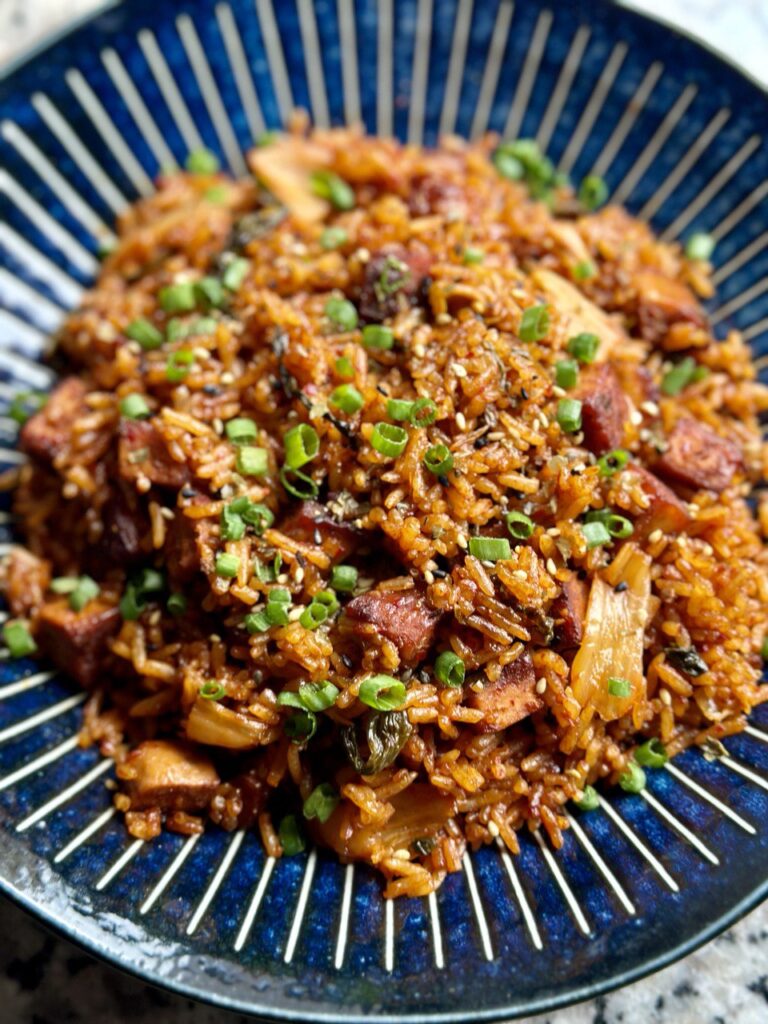
    This 10-minute easy kimchi fried rice recipe is a must-try! Kimchi stir fried with smoky plant-based luncheon meat and spicy kimchi juice is the perfect addition to leftover rice.

    Vegan Kimchi Fried Rice made in just 10 minutes!

    I have been on a Korean food kick lately and I just had to share this classic kimchi fried rice I’ve been making for years with leftover rice! There’s just something about taste of the dish when made with leftover rice – the rice is firmer and separates easily making it the perfect ingredient for this Kimchi Fried Rice.

    The sauce base is very simple – I used a mixture of gochujang, rice wine vinegar, light soy sauce, dark soy sauce, sesame oil and toasted sesame seeds as a garnish. These are staples in many Korean dishes so if you love Korean food, you can invest in these condiments. I also invested in a big tub of pre-toasted sesame seeds so that really comes in handy. Seaweed flakes are another topping that I love to use for many Asian dishes!

    You can check out my other Korean Recipes that use similar condiments: Korean BBQ Popcorn Tofu Bites, Kimchi-Jjigae (Army Stew) and 15-min Korean Bibimbap.

    For the meat substitute, I used unMEAT’s Plant-Based Luncheon Meat. Luncheon Meat is used in many Korean dishes too! This was the closest substitute I’ve tasted so far.

    unMEAT’s Plant-Based Luncheon Meat

    So…Kimchi Fried Rice is not vegan?

    Traditional kimchi is NOT vegan as it might contain anchovies or fish sauce. Kimchi is commonly made with Korean fish sauce to quicken the fermentation process.

    Remember to check for a vegan label or certification. This is the brand of kimchi I use – it’s not very spicy and has a slight sweet kick to it. It’s also allium free (no onions and garlic) so it’s friendlier recipe to those with gut sensitivities.

    Food People Korean Kimchi

    Gluten Free Option

    Unfortunately, there is no gluten free option using gochujang as gochujang is not gluten free. However, you can substitute it with regular chili paste and replace the soy sauce with tamari for a gluten free version of this dish.

    I really like the ones below by Lee Kum Kee and Kikkoman. I have also attached the images of other gluten free soy sauce alternatives like Tamari and Coconut Aminos below. You can get them at Amazon or your local Asian grocery store.

    Vegan Kimchi Fried Rice

    Classic Kimchi Fried Rice I've been making for years with leftover rice!
    Cook Time10 minutes
    Total Time10 minutes
    Course: Main Course
    Cuisine: Asian, Korean
    Keyword: fried rice, kimchi, quick
    Servings: 2

    Equipment

    • 1 Large Pan

    Ingredients

    • 2 cups cooked leftover rice
    • 1/2 cup vegan kimchi
    • 1/4 cup kimchi juice
    • 1/2 block plant based luncheon meat or 150g extra firm tofu

    Sauce

    • 1 tsp gochujang
    • 1 tsp rice wine vinegar
    • 1/2 tbsp light soy sauce
    • 1/2 tbsp dark soy sauce
    • 1 tbsp sesame oil

    Toppings

    • 1 tsp sesame oil (final step)
    • Spring Onion
    • Toasted Sesame Seeds

    Instructions

    • Chop the plant-based luncheon into cubes. Add sesame oil and stir-fry the vegan meat.
    • Add kimchi and saute for 3 minutes. Mix in the kimchi juice.
    • Add leftover rice, sauce mixture and give it a good mix. Adjust with salt if required.
    • Let the rice roast in the heat for a few minutes and mix in 1 tsp sesame oil.
    • Serve and top with spring onions and toasted sesame seeds. You can also serve it with slices of seasoned seaweed for extra flavour.

    Notes

    1. This recipe can be made gluten tree if the gochujang is replaced with chili paste and the soy sauces are replaced with tamari. 
    2. This recipe works best with leftover rice due to the non-sticky texture of the rice. If you are pressed for time, you can keep your freshly cooked rice in the freezer until it chills. 
    3. Note that many store bought kimchi brands are NOT vegan as they contain anchovies or fish sauce. Remember to check for the vegan certification!