Category: Noodles

  • Penang Char Kway Teow

    Penang Char Kway Teow

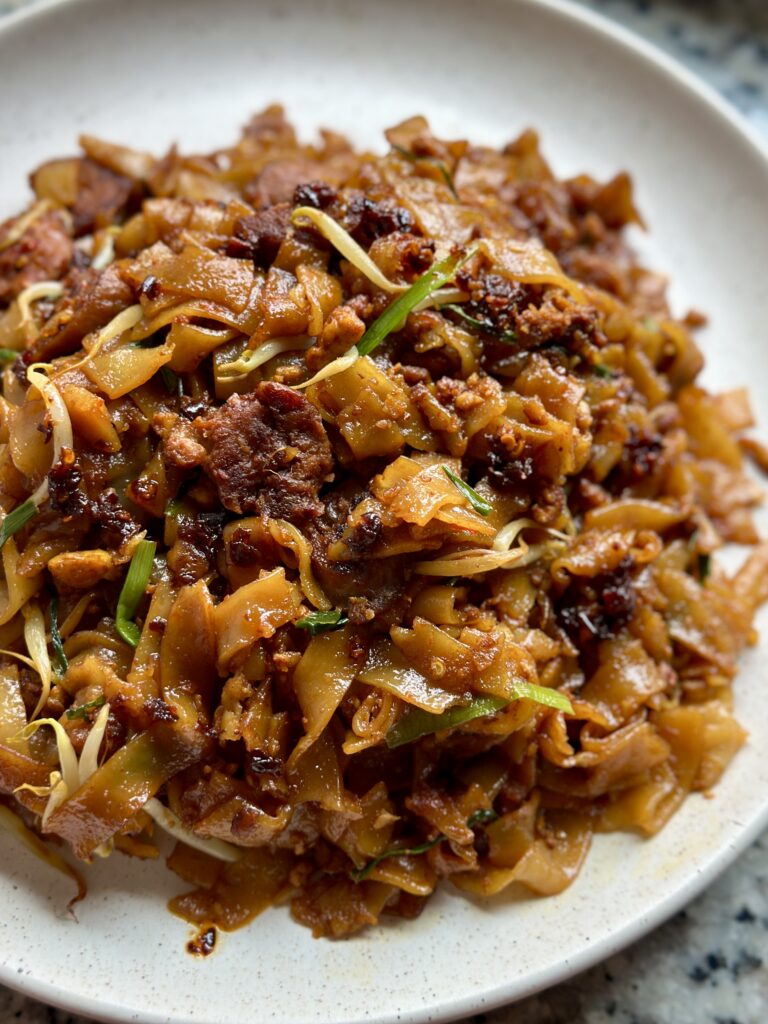
    This vegan penang char kway teow stir fry is packed with fresh chewy rice noodles, fresh vegetables, egg doused in a smoky and savoury sauce.

    Penang Char Kway Teow is a famous Malaysian street food made with stir-fried flat rice noodles, seafood or meat, and vegetables. It’s signature flavour is ‘wok hei’ that directly translates to the ‘breath of the wok’ which gives this noodle dish its smokey and charred aroma.

    It originated in Penang and you can find this cheap street food anywhere – back when I was not vegan I’ve tried this dish several times and it’s very addictive!

    But now you and I can enjoy this speedy, plant-based twist on this classic noodle dish that can be ready in 15 minutes. I particularly love this vegan stir-fry because it’s made with fresh rice noodles, vegetables and has its dose of protein.

    Tips to Make the Perfect Char Kway Teow

    I’ve been disappointed by many vegan versions of char kway teow I’ve tried so here are some tips you can use at home to perfect it:

    1. Use a seasoned wok. It’s okay if you don’t have a wok like me, I used a non-stick pan – what is important is high heat to achieve that deliciously smoky “wok hei” flavour.

    2. The balance of salty, sweet, savory, and spicy flavours in the sauce makes this dish ultra tasty with none of the meat.

    3. Incorporate vegan egg or sausage to make it close to the authentic char kway teow, giving you the perfect bite!

    Ingredients You Need

    • dried wide flat rice noodles – these are naturally gluten free, you can also use dried rice noodles!
    • vegan sausage – fry it in agave to mimic taiwanese sausage!
    • stir fried ‘egg’ tofu – garlic and onion powder, nutritional yeast and black salt
    • vegetables – mung bean sprouts, garlic chives or spring onions
    • aromatics – minced garlic, vegan sambal
    • sauce (not gluten free) – light soy sauce, dark soy sauce, kecap manis, vegan oyster sauce

    Gluten free substitutions: Use gluten free sausage. Here are some gluten free sauce substitutes

    • light soy sauce = gluten free soy sauce, tamari, coconut aminos
    • dark soy sauce = gluten free soy sauce, tamari, coconut aminos
    • kecap manis = agave syrup or coconut sugar
    • vegan oyster sauce = gluten free mushroom seasoning

    Allium free substitutions: Omit minced garlic, garlic powder and substitute with asafoetida (hing) in both. Omit garlic chives. Use allium free sambal or chili paste.

    Penang Char Kway Teow

    This vegan penang char kway teow stir fry is packed with fresh chewy rice noodles, fresh vegetables, egg doused in a smokey and savoury sauce.
    Prep Time10 minutes
    Cook Time10 minutes
    Total Time20 minutes
    Course: Main Course
    Cuisine: Fusion, Malaysian, Singaporean
    Keyword: gluten free, noodles, street food
    Servings: 2

    Ingredients

    • 200 g cooked flat rice noodles
    • 3 tbsp olive oil or neutral oil
    • 1 vegan sausage
    • 1 tsp agave
    • 1/2 cup mung bean sprouts
    • 1/2 cup garlic chives or spring onions
    • 3 cloves garlic minced
    • 1 tbsp sambal paste
    • 1/4 tsp liquid smoke optional for extra smokiness
    • 2-4 tbsp noodle water

    Sauce

    • 1 tbsp light soy sauce
    • 1 tbsp dark soy sauce
    • 1 tsp kecap manis
    • 1 tbsp vegan oyster sauce

    Stir Fried 'Egg' Tofu

    • 1/2 block extra firm tofu around 100-120g
    • 1 tsp garlic powder
    • 1 tsp onion powder
    • 1/4 tsp turmeric
    • 1/2 tsp black salt
    • 1 tbsp nutritional yeast

    Instructions

    • In a small bowl, mix together the light soy sauce, dark soy sauce, vegan oyster sauce, kecap manis and noodle water (if using). Set the sauce aside.
    • Heat 1 tablespoon of oil in a wok or large frying pan over medium-high heat. Add the sliced vegan sausage, brush with agave and stir-fry for 1-2 minutes until it becomes slightly crispy. Set aside.
    • Crumble tofu and add all your seasonings. Mix together and stir fry for 1-2 minutes on a pan.
    • Add 2 tbsp oil to the pan, then saute minced garlic. Add 1/4 cup beansprouts and saute for a minute.
    • Add in eggs, sausage and cooked rice noodles. Drizzle the sauce and mix well. Add sambal paste, liquid smoke and mix again.
    • Saute the rice noodles for 2-3 minutes. Add in remaining 1/4 cup beansprouts, garlic chives and give it a good mix until they are half cooked. The vegetables should be slightly tender but still crunchy.
    • Drizzle over some chili oil and enjoy!
  • Liang Fen (Mung Bean Jelly Noodles)

    Liang Fen (Mung Bean Jelly Noodles)

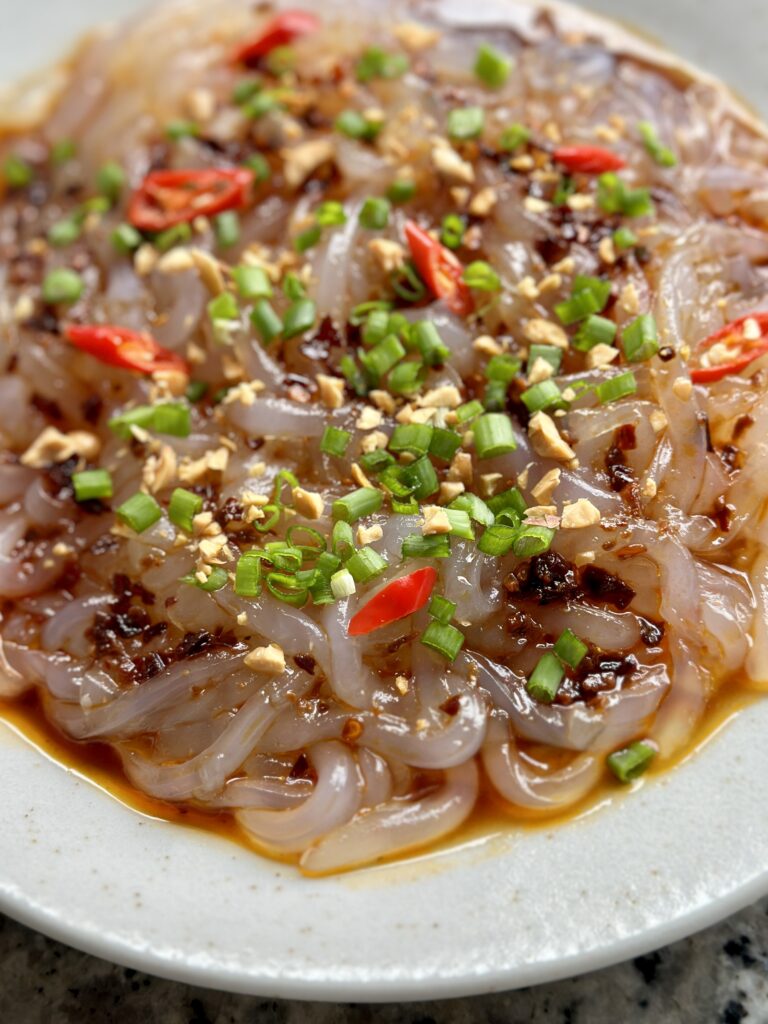
    These naturally vegan and gluten free jelly noodles made with mung bean starch and tossed in a refreshing cold chili oil dressing.

    Liang Fen (凉粉) is a traditional Chinese noodle dish known for its refreshing and jelly-like texture – it can be served as a cold appetizer or a quick snack. It is a popular dish in many regions of China, particularly in Sichuan, Chongqing, and other parts of southwestern China.

    Liang Fen is primarily made from starch, which is then processed into jelly-like noodles. The starch used can vary, and it is commonly made from: mung bean starch, sweet potato starch, pea starch or even tapioca starch! The starch is mixed with water, then boiled and set to form a jelly-like texture when cooled.

    I love how refreshing Liang Fen is – it’s also low in calories if you pair it with a low-calorie and simple dressing combinations like lime-soy or soy-vinegar! You can also add chili flakes for a spicy kick.

    Making the Jelly

    Half of the starch is dissolved in water first and boiled with the rest of the water until it thickens into a translucent gel. Once cooked, it’s typically poured into a bowl or a flat dish to cool and solidify. After cooling for about 3-4 hours, the gelatinous mass is cut into thin strips or square blocks.

    The texture of liang fen is slippery, chewy, and somewhat gelatinous – the flavour of liang fen itself is quite neutral and versatile, which makes it an excellent base for absorbing the bold, spicy, and tangy flavours of the sauces.

    Screenshot

    Getting real sauc-ey!

    Common dressings and toppings include:

    • Garlic sauce: Crushed garlic mixed with soy sauce, vinegar, and sometimes chili oil or sesame oil.
    • Chili oil: For a spicy kick, especially in Sichuan-style liang fen, which is known for its bold and spicy flavours – we will be doing a rendition of this for this recipe!
    • Vinegar & soy sauce: Adds a sour note that balances out the richness of the chili oil, while adding some salty umaminess
    • Sesame paste: Adds a nutty, rich flavour. Instead of this you can also use unsweetened smooth peanut butter.
    • Garnish: Chopped peanuts, sesame seeds can be sprinkled on top for crunch and texture. Elevate the flavours even more with fresh herbs like coriander or green onions

    Gluten free substitutions: Use gluten free soy sauce like tamari, coconut aminos, or gluten free soy sauce. Use gluten free chili oil.

    Allium free substitutions: Garnish with chopped coriander instead of spring onions.

    Liang Fen (Mung Bean Jelly Noodles)

    These naturally vegan and gluten free jelly noodles made with mung bean starch and tossed in a refreshing cold chili oil dressing.
    Prep Time3 hours
    Cook Time5 minutes
    Total Time3 hours 5 minutes
    Course: Appetizer, Main Course, Side Dish
    Cuisine: Chinese
    Keyword: chili oil, cold noodles, gluten free, noodles
    Servings: 2

    Equipment

    • 1 Noodle Slicer or Knife

    Ingredients

    Mung Bean Noodles

    • 1/2 cup mung bean starch
    • 3.5 cups water

    Chili-Oil Dressing

    • 1 tbsp light soy sauce
    • 1 tsp black vinegar
    • 1 tsp chili oil more if you want it more spicy
    • 1 tsp toasted sesame oil
    • pinch asafoetida (hing)

    Garnish

    • spring onions
    • crushed peanuts

    Instructions

    • In a bowl, dissolve the mung bean starch in 1 cup of water, stirring until the starch is completely dissolved with a whisk. There should be no lumps.
    • Add the remaining 2.5 cups of water into a saucepan and pour the starch mixture over medium heat. Stir constantly to prevent lumps from forming.
    • Keep stirring for about 5–7 minutes. The mixture will start to thicken after a few minutes and eventually turn into a gel-like consistency.
    • Once the mixture has thickened, pour it into a flat dish or a bowl. Let it cool to room temperature, then refrigerate for at least 1-2 hours until it firms up completely.
    • Once the jelly is firm, either use a noodle slicer to carve out noodles or use a knife to cut it into thin strips.
    • Mix all the ingredients needed for the chili oil dressing. Pour over the noodles.
    • Garnish with spring onions and crushed peanuts. Enjoy!

  • Hoisin Shredded Tofu ‘Duck’ Udon

    Hoisin Shredded Tofu ‘Duck’ Udon

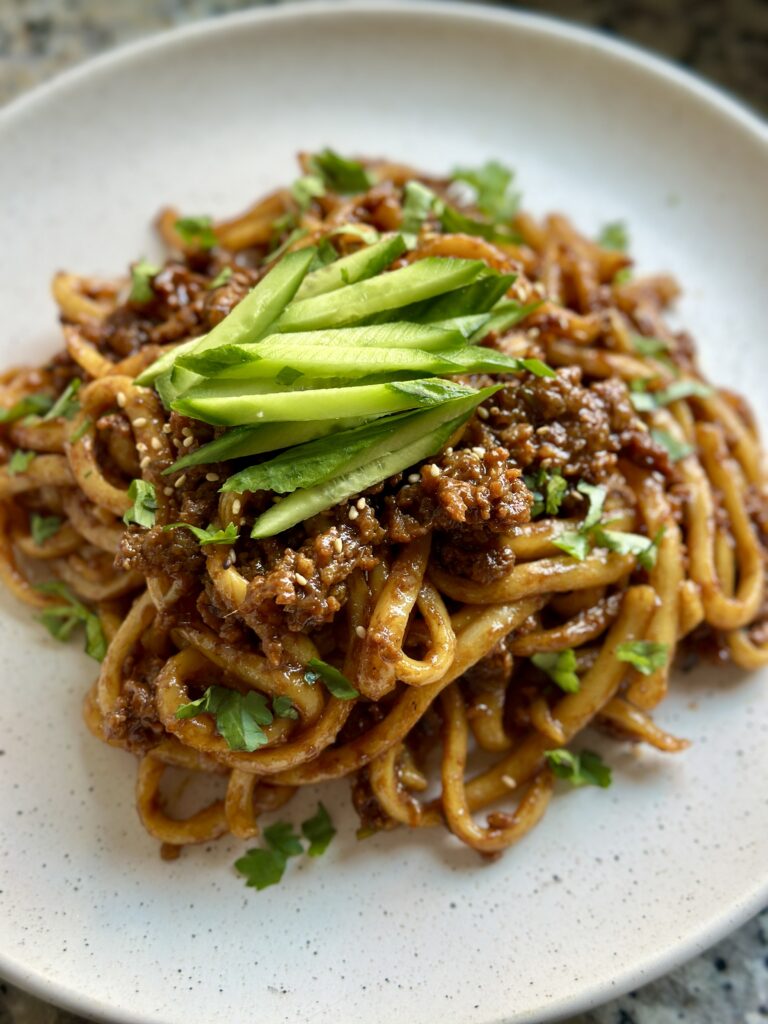
    This 10-minute quick and easy stir fried udon with hoisin shredded tofu ‘duck’ is all you need for a delicious meal if you’re not in the mood to cook!

    This udon stir fry is one of my go-to meals when I have no energy to cook but craving an easy and delicious meal. Shredding tofu is always one of my favourite ways to prepare tofu as it gives a nice and crisp texture when pan fried. When combined with these thick and chewy udon noodles, they make the perfect pair!

    You might have heard of hoisin duck pancakes – Hoisin Duck is a popular dish that is incorporate a lot in Cantonese and Beijing-style cooking. It usually consists of tender duck meat, served with a sweet, savoury hoisin sauce. Hoisin sauce is usually vegan but it would be best to double check the ingredients. I use the one by Lee Kum Kee.

    Hoisin sauce is a sweet, salty, and umami-rich condiment that is commonly used in Chinese cuisine. The sauce is made with fermented soybeans, garlic, vinegar, sugar, and spices. It’s often used to season duck, pork, and other roasted meats. But here, we’ll be using it to season and roast shredded TOFU!

    Ingredients You Need

    • extra firm tofu – drained of excess water
    • fresh udon noodles – you can also use frozen if you can’t find fresh. For gluten free option, use flat rice noodles or thick rice vermicelli noodles instead
    • condiments – vegan hoisin sauce, dark soy sauce, rice wine vinegar, toasted sesame oil
    • aromatics – minced garlic, ginger, spring onions
    • spices – ground 5-spice, white pepper, ground sichuan pepper
    • garnish – toasted sesame seeds, julienned cucumbers, coriander

    Gluten free substitutions: Use gluten free Hoisin Sauce. I use Lee Kum Kee. Substitute dark soy sauce with gluten free light soy sauce, tamari or coconut aminos. For the noodles, use flat rice noodles or thick rice vermicelli noodles instead.

    Allium free substitutions: Omit minced garlic and substitute with a pinch of hing (asafoetida).

    This 10-minute quick and easy stir fried udon with hoisin shredded tofu 'duck' is all you need for a delicious meal if you're not in the mood to cook!
    Prep Time2 minutes
    Cook Time8 minutes
    Total Time10 minutes
    Course: Main Course
    Cuisine: Chinese, Fusion
    Keyword: noodles, tofu, tofu recipes, udon
    Servings: 2

    Equipment

    • 1 grater

    Ingredients

    • 150 g extra firm tofu 1 block
    • oil
    • 2 servings fresh udon
    • 3 tbsp hoisin sauce
    • 2 tsp minced garlic
    • 1 tsp minced ginger
    • 2 spring onions white part only
    • 1 tbsp dark soy sauce
    • 1 tsp 5-spice
    • 1 tbsp toasted sesame oil
    • 1 tbsp rice wine vinegar
    • 1/4 tsp white pepper
    • 1/4 tsp sichuan pepper

    Garnish

    • toasted sesame seeds
    • julienned cucumbers
    • chopped coriander

    Instructions

    • Prepare your udon noodles according to package instructions. Let them soak in ice water to prevent any further cooking.
    • Grate tofu and pan fry them in olive oil until crispy. Set them aside.
    • To the same pan, add minced ginger, garlic, and saute. Add the white part of spring onions.
    • Add 5-spice and saute for a minute. Add hoisin sauce, dark soy sauce, rice wine vinegar, sichuan pepper, white pepper and saute for a minute.
    • Add back in your shredded tofu, a splash of water and continue cooking the tofu in the sauce. Add back in your udon noodles. Mix until well combined.
    • Garnish with toasted sesame seeds, julienned cucumbers and chopped coriander. Enjoy!
  • Vietnamese Tomato ‘Crab’ Noodle Soup  (Bún Riêu)

    Vietnamese Tomato ‘Crab’ Noodle Soup (Bún Riêu)

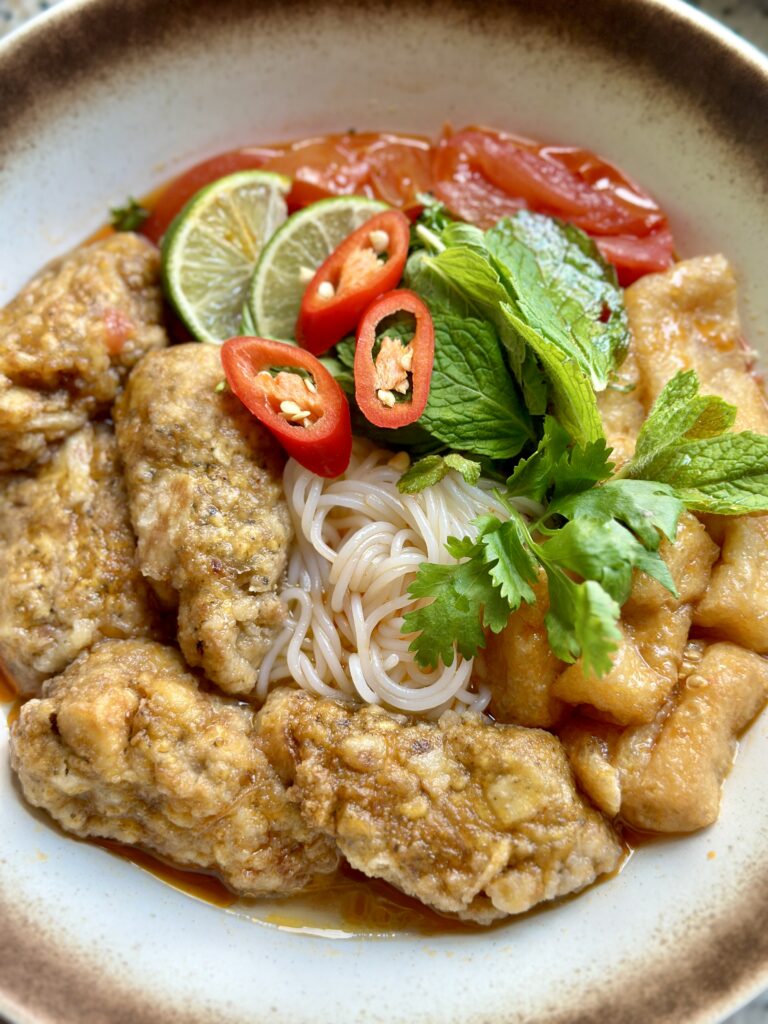
    This comforting and flavourful noodle soup dish features a sweet and tangy tomato broth, vegan ‘crab cakes’, herbs and tofu puffs.

    Vietnamese Crab Noodle Soup features a rich, flavourful and tangy broth made with crab, often served with thick rice vermicelli, and topped with crab meat, herbs, and fried shallots. The soup is a popular dish in central and southern Vietnam, especially in coastal areas where crab is abundant!

    In this version, we’ll be making a plant based rendition of this dish by making vegan ‘crab’ cakes using hearts of palm and extra firm tofu. Hearts of palm is one of my favourite seafood substitutes due to its versatile flavour and flaky fish-like texture. It comes together nicely for these vegan crab cakes that we will be serving in this dish.

    This noodle soup is the definition of comfort food and the broth itself only takes about 15 minutes to make. If you have ‘crab’ cakes prepared and frozen, you can whip up this meal in under 25 minutes – it’s always the prep that takes more time but your past self will definitely thank you future self with this one.

    Ingredients You Need

    • aromatics – white onion or shallots, ginger, garlic
    • fruits – tomatoes
    • toppings – tofu puffs
    • noodles – rice stick noodles but you can’t find these, thick rice noodles or udon noodles can be substituted!
    • condiments – sweetener like agave or maple syrup, vegan fish sauce (substitute with gluten free light soy sauce)
    • vegan crab and shrimp mixture
      • hearts of palm
      • extra firm tofu
      • lemon juice
      • roasted nori sheets or flakes or powder
      • aromatics – garlic and shallots
      • old bay seasoning – you can also use separate spices if you have them!
      • flaxseed meal – for binding the mixture

    Gluten free substitutions: Use gluten free soy sauce.

    Allium free substitutions: Substitute onion and garlic with a pinch of asafoetida (hing).

    Vietnamese Tomato ‘Crab’ Noodle Soup (Bún Riêu)

    This comforting and flavourful noodle soup dish features a sweet and tangy tomato broth, vegan 'crab cakes', herbs and tofu puffs.
    Prep Time30 minutes
    Cook Time30 minutes
    Total Time1 hour
    Course: Main Course
    Cuisine: Vietnamese
    Keyword: noodle soup, noodles, soup
    Servings: 4

    Ingredients

    Vegan Crab and Shrimp Cakes

    • 1 can hearts of palm 450g or 5 sticks
    • 450 g extra firm tofu
    • 1 tsp lemon juice
    • 2 tsp minced garlic
    • 2 shallots chopped
    • 1 nori sheet toasted and ground
    • 1.5 tbsp old bay seasoning
    • 1 tbsp flaxseed meal
    • 3 tbsp water
    • 5 tbsp corn starch

    Tomato Broth

    • 3 medium tomatoes
    • 1 white onion sub 6 shallots
    • 3 slices ginger
    • 6 cups water
    • 1 pack tofu puffs
    • 1 sheet dried kelp
    • 1 tbsp agave
    • 2 tbsp vegan fish sauce
    • 2 tsp anatto powder optional, for colour
    • salt if required

    Toppings

    • 3-4 servings rice noodles
    • chopped mint leaves
    • chopped coriander
    • 2 limes
    • 1 red chili
    • chili oil

    Instructions

    • Combine flaxseed meal with water and let it sit for 5 minutes to thicken. This would be our 'egg' substitute.
    • Start by making vegan 'crab' cakes – shred hearts of palm and crumble tofu. Add toasted and ground nori sheet flakes/powder and combine well.
    • Add old bay seasoning, lemon juice, minced garlic, shallots and flaxseed meal. Mix well.
    • Form your desired shape of the crab cakes and coat them in corn starch. Deep fry or air fry until golden brown.
    • Chop tomatoes in 8 wedges each. To a pan, add olive oil and saute your aromatics – onion and ginger. Add in your tomatoes.
    • Add water, all seasonings and kelp. Bring to a boil and simmer for 5-10 minutes. Remove the kelp and add in your tofu puffs.
    • In a separate pot, cook the bánh canh noodles or substitute rice noodles according to package instructions. Drain and set aside.
    • In serving bowls, place a portion of noodles.Pour the hot tomato broth over the noodles.
    • Top with crab cakes, fresh herbs. Garnish with lime wedges, sliced chili, and chili oil if desired. Enjoy!
  • Sichuan Malatang Hotpot

    Sichuan Malatang Hotpot

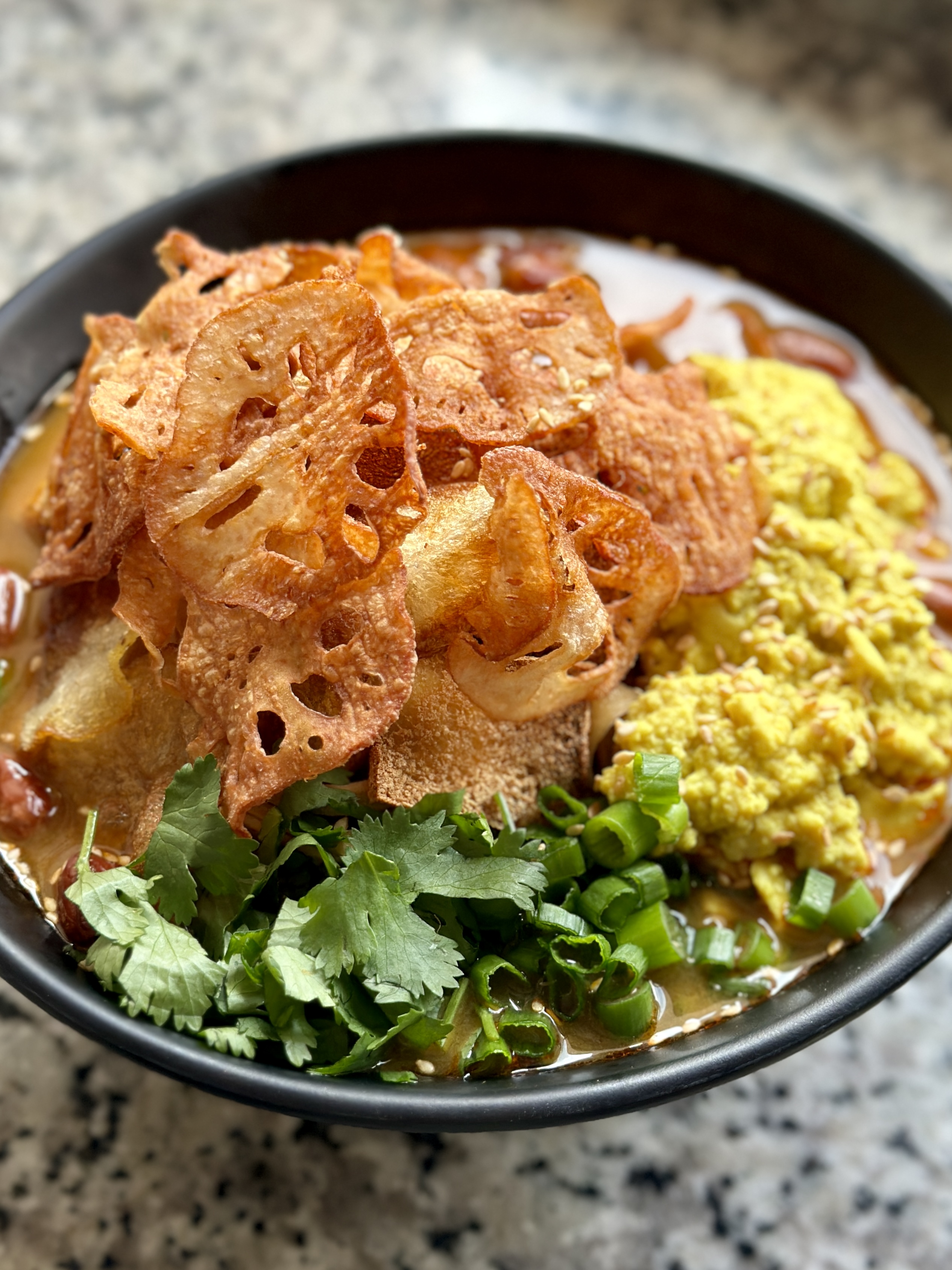
    This DIY Malatang Hotpot brings you one step closer to building your own personal customised hotpot experience with a spicy, numbing broth and crispy toppings.

    Malatang is probably a dish you may have not tried before but if you have, you would probably love it. It’s highly customisable which means you can choose what goes into it. Anything mala-flavoured is intriguing to me and the flavour profile can somewhat be described as spicy, numbing and tangy.

    麻 (má): Refers to the numbing sensation from Sichuan peppercorns (also called “prickly ash”). These peppercorns contain compounds like hydroxy-alpha-sanshool that create a tingling, numbing sensation in the mouth. They sell these in whole and powdered forms.

    辣 (là): Refers to the spicy heat, usually derived from dried red chilies or chili oil. This element gives the dish its signature fiery kick.

    There is regular malatang and then there is mala milk hotpot that adds some richness and creaminess to the broth. We will be making a milky version today with plant milk to add that same richness to this vegan version.

    This Malatang was inspired by a popular place known as Hot Hideout in Singapore – their signature Mala Collagen Soup is served with crispy fried toppings and their popular scrambled eggs. I mean who would have thought to add scrambled eggs to Malatang?! I can only assume it tastes as good as it looks – so it was again time to recreate that exact version but make it plant based.

    Ingredients You Need

    Here are some ideas of what you can include in your Malatang:

    • leafy greens – spinach, cabbage, lettuce, kai lan, chye sim, bok choy and more…
    • water-based vegetables – tomatoes, broccoli, different varieties of mushrooms, bittergourd
    • crispy toppings – thin slices of lotus root, potatoes, tofu, plant based spam
    • protein – silken tofu, firm tofu, tempeh, seitan, plant-based meat substitutes, different types of beancurd skin, edamame
    • noodles – ramen or rice noodles if you’re gluten free!
    • herbs and aromatics – shallots, garlic, ginger, cilantro, scallions
    • whole spices – bay leaves, cinnamon, cloves, star anise, dried red chilies, fennel seeds, sichuan peppercorns
    • sauces and seasonings – hot bean paste (gluten free option – chili oil), light soy sauce, shao xing wine, toasted sesame oil
    • milk – soy milk gives the thickest texture but you can also use oat milk, cashew milk or bamnut milk!
    • rice – the perfect accompaniment to a hot soup!

    Gluten free substitutions: Use gluten free chili oil instead of hot bean paste and gluten free soy sauce / tamari / coconut aminos instead of regular soy sauce. You can have the soup with rice instead of wheat noodles or use rice vermicelli / flat rice noodles.

    Allium free substitutions: Omit shallots, garlic and substitute with a pinch of hing (asafoetida). You can also omit scallions.

    Sichuan Malatang Hotpot

    This DIY Malatang Hotpot brings you one step closer to building your own personal customised hotpot experience with a spicy, numbing broth and crispy toppings.
    Prep Time30 minutes
    Cook Time40 minutes
    Total Time1 hour 10 minutes
    Course: Main Course
    Cuisine: Chinese, Fusion, Singaporean
    Keyword: mala, noodle soup, noodles, sichuan, soup
    Servings: 2

    Ingredients

    • 5 shallots
    • 4 cloves smashed garlic
    • 2 star anise
    • 4 cloves
    • 2-3 ginger slices
    • 1 bay leaf
    • 1 cinnamon stick
    • 1 tsp fennel seeds
    • 2 tbsp sichuan peppercorns
    • 5 dried red chilies more if you want it more spicy
    • 4 tbsp hot bean paste
    • 2 tbsp shaoxing wine
    • 4 tbsp sesame oil
    • 1 tbsp sweetener
    • 1 tsp salt
    • 3 cups water
    • 1/2 cup plant milk like soy, oat or cashew

    Vegan 'Scrambled Egg'

    • 400 g extra firm tofu
    • 1/2 tsp turmeric
    • 1 tsp onion powder
    • 1 tsp garlic powder
    • 2 tbsp nutritional yeast
    • 1/2 tsp black salt
    • 150 g silken tofu
    • 1/2 tsp black salt
    • 1/4 tsp turmeric

    Toppings

    • 2 servings spinach
    • 1/2 cup tofu noodles / beancurd skin
    • 1 medium potato thinly sliced
    • 10 slices lotus root thinly sliced
    • extra firm tofu thinly sliced
    • 1/2 cup oyster mushrooms
    • 1/2 cup enoki mushrooms
    • 1/2 cup king oyster mushrooms

    Toppings

    • chopped cilantro
    • spring onions
    • whole peanuts
    • toasted sesame seeds

    Instructions

    • Slice all your toppings according to your desired shape.
    • To a pot, add sesame oil. Add all whole spices and saute them for 1-2 minutes. Then add shallots, smashed garlic, ginger and saute for a few more minutes.
    • Add water, hot bean paste, shao xing wine, light soy sauce and sweetener. Bring to a boil.
    • Add milk and simmer for a few minutes. Add salt to taste if required. Filter the spices with a strainer and keep aside.
    • Add your sliced mushrooms and let them cook in the broth. Add beancurd skin and your other desired toppings. Hold off on the greens until the last step.
    • In hot oil, fry lotus roots, potato and thinly sliced tofu until they're golden brown and crispy. Drain the excess oil and keep aside. You can fry the peanuts in this oil too!
    • Blend silken tofu with black salt and turmeric. Crumble your extra firm tofu. Add all dry spices like onion powder, garlic powder, turmeric, nutritional yeast and black salt. Fry them off.
    • Add your silken tofu cream and mix well.
    • Cook your noodles according to package instructions.
    • Mix in your greens in the soup until it's cooked. Add your noodles to a bowl and pour over the broth.
    • Add your scrambled 'eggs' and layer on crispy fried toppings. Top with crispy peanuts, chopped scallions, cilantro and toasted sesame seeds. Enjoy!
  • Vegan Jackfruit Laksa

    Vegan Jackfruit Laksa

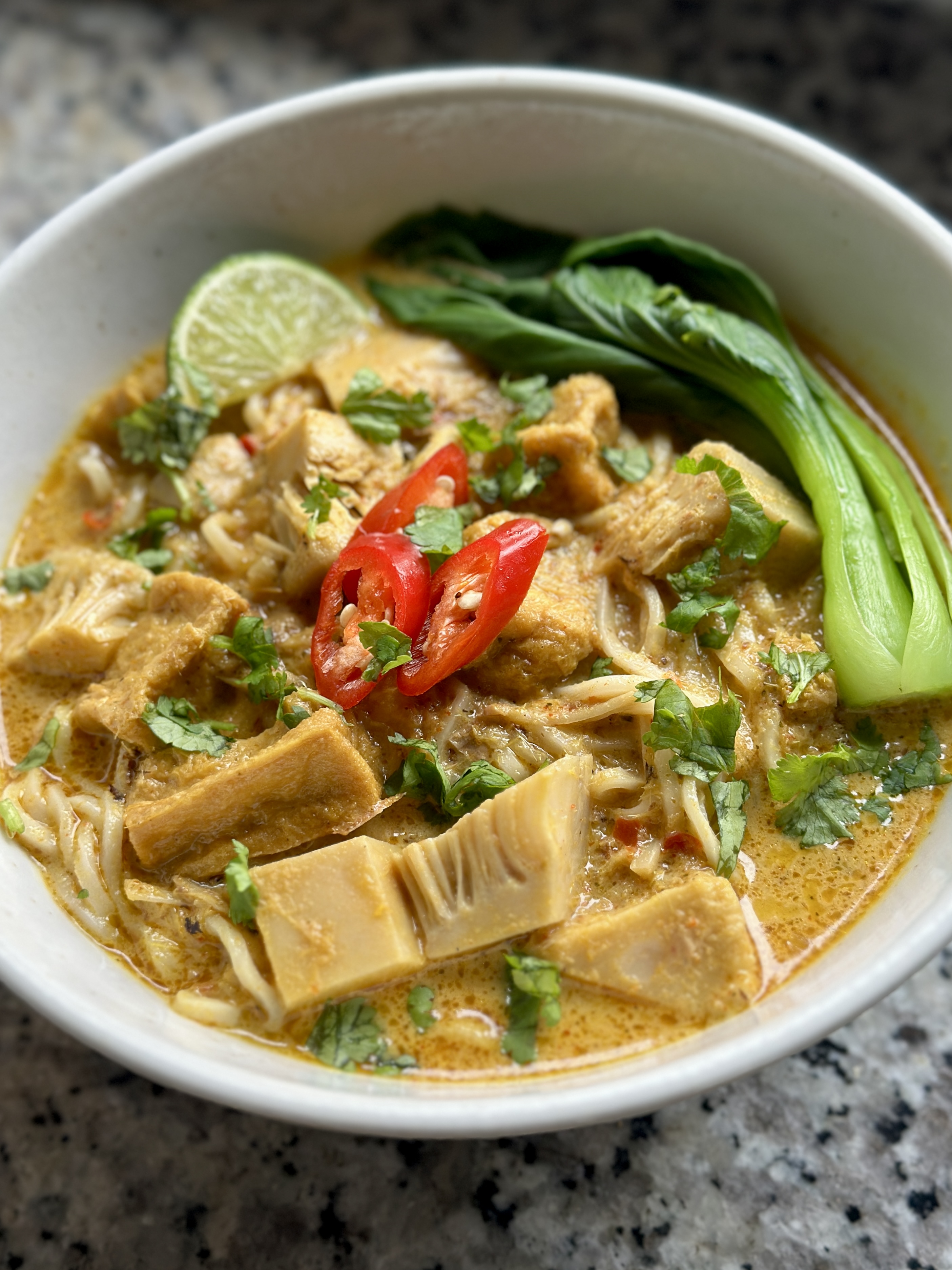
    This jackfruit laksa dish drenched in a spicy, flavourful coconut curry is an Asian delicacy that’s truly addictive! It’s vegan AND gluten free.

    This spicy noodle dish always reminds me that asian food is like a melting pot of different cultures. The ingredients used are so similar to other curries, yet depth and type of flavours are so different.

    I grew up having this in Singapore and it’s one of the most flavourful noodles dishes you can have. It basically comprises thick rice vermicelli noodles doused in a fragrant and umami coconut curry broth. It’s usually topped with fresh herbs and spices. Truly so addictive!

    Laksa is native to Malaysian & Singaporean cuisines so you can easily get this dish here. However, it’s slightly more challenging to find a vegan version of this dish. This is because the traditional version contains shrimp paste so in this recipe, I veganized it very easily by omitting it!

    For recipes similar to this, you can check out my Thai Coconut Curry Chickpea RamenVegan Kimchi Stew with Ramen, & Vegan Creamy Miso Ramen.

    I can’t find all the ingredients in my grocery store…what do I do?

    While I do recommend making the Laksa paste from scratch, for an easier foolproof version, use store bought Laksa Paste. I love this vegan, gluten free and organic one by Mekhala’s Living. You just need to use 2-3 tablespoons for immense flavour (not an affiliate – I’ve tried and tested this brand on my own accord).

    I also used Canned Jackfruit for this recipe which works perfectly fine! The jackfruit is unripe so it’s flaky when pulled apart – however, we can just cut the jackfruit up into pieces for this recipe. I get mine from Nature’s Charm.

    What You Need

    • thick rice vermicelli noodles – or you can substitute this with any noodles you like based on convenience
    • aromatics – shallots, garlic cloves, lemongrass (white part only), kaffir lime leaves, galangal or ginger, limes, dried red chili
    • dry spices – coriander powder, cumin powder, chili powder, turmeric
    • broth base – full-fat coconut milk
    • seasoning – gluten free soy sauce
    • toppings – baked jackfruit, tofu puffs
    • garnish – bok choy, tofu puffs sliced, red chili, coriander

    Gluten free substitutions: This recipe is naturally gluten free! Make sure to use gluten free soy sauce.

    Allium free substitutions: Omit shallots and garlic. Instead soak 5 candlenuts in boiling water and add it to the laksa paste.

    Vegan Jackfruit Laksa

    This jackfruit laksa dish drenched in a spicy, flavourful coconut curry is an Asian delicacy that’s truly addictive! It’s vegan AND gluten free.
    Prep Time20 minutes
    Cook Time20 minutes
    Total Time40 minutes
    Course: Main Course, Soup
    Cuisine: Malaysian, Singaporean
    Keyword: laksa, noodle soup, noodles
    Servings: 3

    Ingredients

    Homemade Laksa Paste

    • 4 shallots
    • 4 garlic cloves
    • 3 lemongrass stalks (parts with purple insides)
    • 6 kaffir lime leaves
    • thumbsized galangal
    • 1 tsp lime zest
    • 3-4 dried red chili
    • 1 tsp coriander powder
    • 1/2 tsp cumin powder
    • 1 tsp chili powder
    • 1/2 tsp turmeric add more for colour if necessary

    Laksa Broth

    • 1 tbsp neutral oil or olive oil
    • 400 ml coconut milk
    • 500 ml water
    • 1 tsp lime juice
    • 1 tbsp gluten free light soy sauce
    • salt
    • 1 can young green jackfruit

    Toppings

    • 3 servings thick rice vermicelli noodles
    • bok choy
    • tofu puffs
    • sliced red chili
    • coriander
    • lime wedges

    Instructions

    • Preheat the oven to 200°C (400°F).
    • Drain and rinse the jackfruit, and cut into smaller pieces. Spread the jackfruit evenly on a baking sheet lined with parchment paper. Drizzle some olive oil and mix well.
    • Bake for 20-25 minutes, flipping halfway through, until the jackfruit is golden and slightly crispy. Set aside.
    • Slice the ends of the lemongrass until you no longer see a purple tint on the insides.
    • De-seed the dried red chilies. Soak them in hot water for about 10 minutes. Alternatively, you can boil them for a few minutes.
    • Add the ingredients needed for the paste into a blender. You can chop them up into smaller pieces for easier blending or you can blend them whole. When adding the kaffir lime leaves, tear them into half along the stem to enhance the aroma.
    • Add oil to pan. Add the curry paste and saute until fragrant (one way to identify this is to see if the oil you added is coming to the top of the paste).
    • Add water, coconut milk and mix well. Add soy sauce, salt and pepper as needed. Bring to a boil.
    • Add your tofu puffs, baked jackfruit and bok choy. Cook them for a few minutes until the bok choy or greens are bright green. Turn off the heat.
    • Cook your rice noodles according to the packaging instructions.
    • Assemble the noodles in a bowl, add your laksa broth and top with coriander, lime and red chili.
  • Kongguksu (Korean Cold Soy Milk Noodles)

    Kongguksu (Korean Cold Soy Milk Noodles)

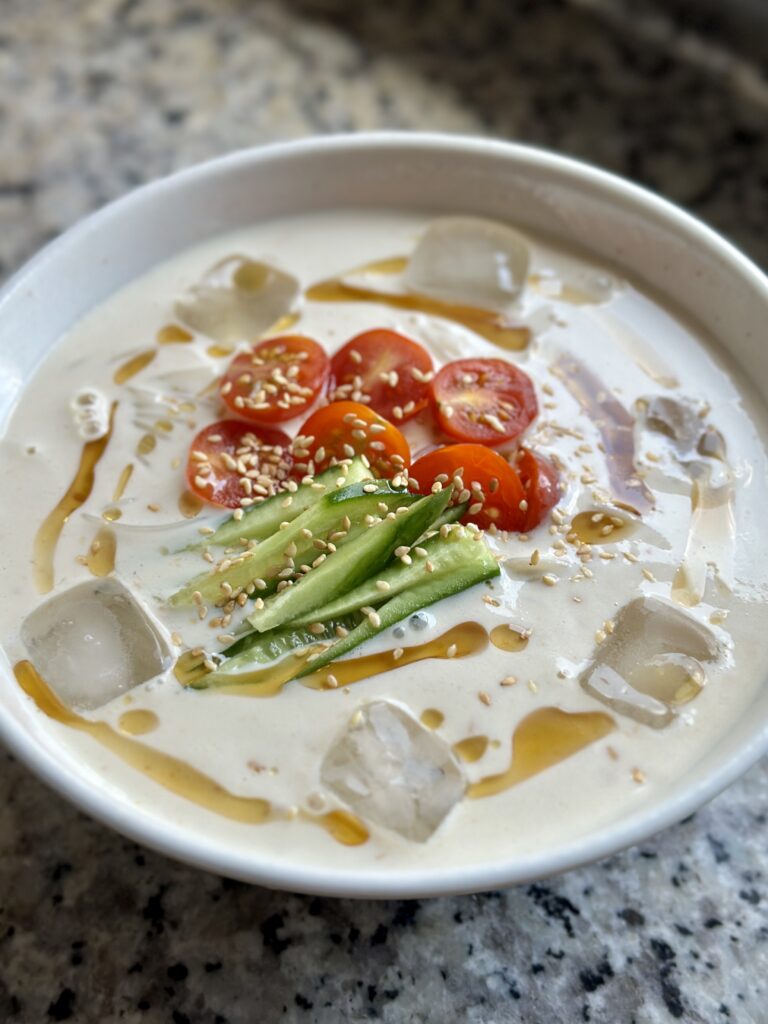
    This creamy soy milk noodles is a cold, refreshing korean dish that can be put together in just 10 minutes! High in protein and gluten free.

    Kongguksu (콩국수) is a popular Korean dish in the summer and it usually features thin wheat noodles served in a chilled, creamy soy milk broth. It has a nutty flavour profile with a silky texture, making it the perfect slurp-able goodness of a dish.

    The best part is that it also includes blended silken tofu in the broth which means this noodle soup is protein rich – you can get up to 20.3g of protein per meal.

    This is one of the most minimal but satisfying dishes I’ve ever eaten. Partly, I was inspired by the making of this dish in Culinary Class Wars – the thick soybean broth was tempting to say the least!

    Ingredients You Need

    Kongguksu’s beauty lies in its minimalism. The dish requires just a few ingredients:

    • soy milk – this would make the base of the creamy broth.
    • thin wheat noodles – you can somyeon (소면) which is traditionally used in kongguksu
    • protein – silken tofu, unsweetened peanut butter
    • seasonings – salt, sugar, toasted sesame oil, toasted sesame seeds
    • garnish – cucumber, cherry tomatoes, sesame seeds, and toasted sesame oil

    Gluten free substitutions: Use rice vermicelli noodles instead of wheat noodles.

    Allium free substitutions: This recipe is 100% alliums free!

    Kongguksu (Korean Cold Soy Milk Noodles)

    This creamy soy milk noodles is a cold, refreshing korean dish that can be put together in just 10 minutes! High in protein and gluten free.
    Cook Time10 minutes
    Total Time10 minutes
    Course: Main Course, Soup
    Cuisine: Korean
    Keyword: cold noodles, korean recipes, noodles
    Servings: 2

    Ingredients

    • 300 g silken tofu
    • 2 tbsp unsweetened peanut butter
    • 2 tbsp toasted sesame seeds
    • 1.5 cups unsweetened soy milk
    • 1/2 cup water
    • 1 tsp sweetener
    • 1 tsp salt
    • 2 servings thin wheat noodles

    Toppings

    • 6 cherry tomatoes
    • julienned cucumbers
    • toasted sesame oil
    • toasted sesame seeds
    • ice cubes

    Instructions

    • Cook the somyeon noodles according to package instructions. Rinse under cold water to stop cooking and remove excess starch. Drain well.
    • Blend soy milk, sesame seeds, unsweetened peanut butter, sweetener, salt and water until you get a smooth and creamy broth.
    • Divide the noodles into serving bowls. Pour the soy milk broth over the noodles.
    • Garnish with halved cherry tomatoes, julienned cucumbers, toasted sesame seeds and sesame oil. Place a few ice cubes in the broth and serve the chilled soy milk noodles.

  • 5-Minute Bibim Guksu

    5-Minute Bibim Guksu

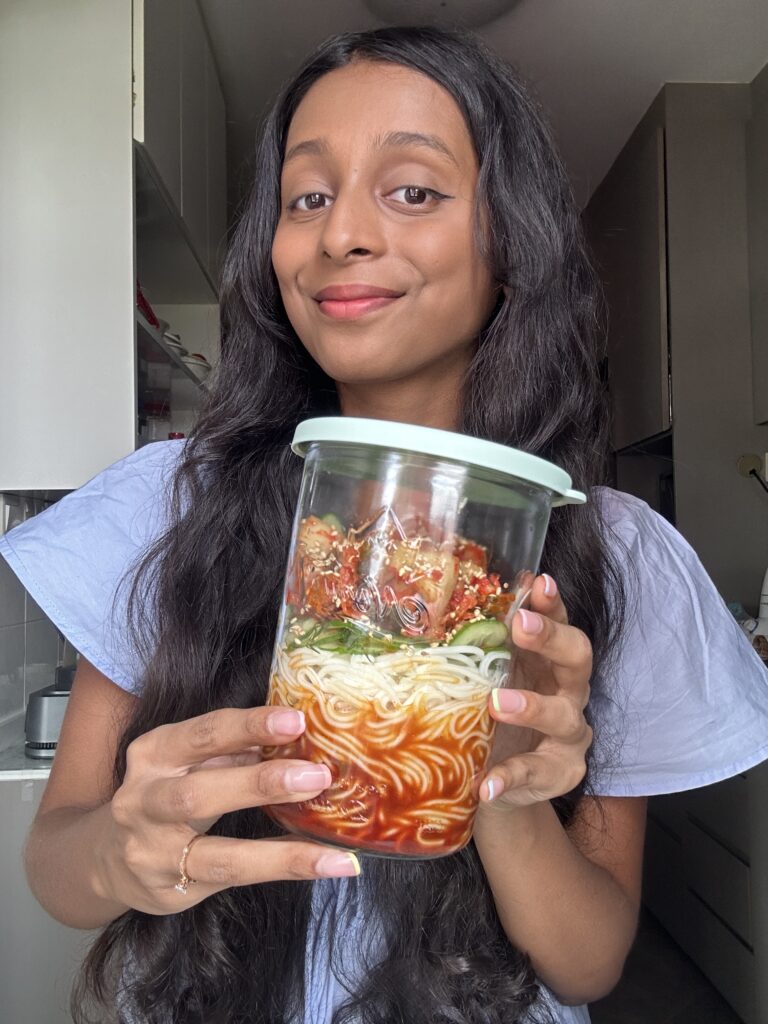
    This super quick & easy Bibim Guksu is a cold noodle dish, coated in a sweet & spicy gochujang sauce with kimchi, cucumbers tossed in a jar.

    I never thought I’ll think cucumbers are NOT boring….this actually SLAPS so hard! I love Bibim Guksu but having it in a jar just makes it easier to put together and for some reason, more delicious.

    Bibim Guksu (비빔국수) is a popular Korean dish that includes cold noodles mixed in a sweet, spicy and tangy sauce! This dish is a staple during the hot summer months because it cold and refreshing.

    Bibim Guksu is thought to have emerged as a variation of traditional bibimbap, a popular Korean dish that involves serving and mixing rice with various sautéed vegetables, protein and spicy gochujang. Guksu (국수) means “noodles” in Korean, and bibim (비빔) refers to “mixing” or “tossing.” Therefore, the dish literally translates to “mixed noodles.”

    Traditionally, the sauce is poured over the noodles and kimchi, egg and cucumbers are added as garnish. In this recipe, we mix together the sauce, add noodles, slice cucumbers directly into the jar (thanks Logan!), add vegan kimchi and toasted sesame seeds. Once we give that a good shake, you can have these refreshing noodles anywhere, anytime!

    Ingredients You Need

    The dish usually consists of:

    • thin wheat noodles – also known as somen or somyeon noodles. You can also use buckwheat noodles as a substitute.
    • gochujang – korean red pepper paste, make sure to get a vegan version! Unfortunately gochujang is not gluten free.
    • light soy sauce – you can also use gluten free soy sauce, tamari or coconut aminos.
    • rice wine vinegar – mirin is a good substitute!
    • toasted sesame oil – for aroma and flavour. I would definitely consider this as a pantry staple!
    • sweetener of choice – agave and maple syrup are great refined sugar free options!
    • garnish – sliced cucumbers, vegan kimchi and toasted sesame seeds

    Gluten free substitutions: Use a gluten free chili paste and a gluten free soy sauce / tamari / coconut aminos.

    Allium free substitutions: Use an allium free chili paste like sambal or chili oil instead of gochujang. You could also omit gochujang in this recipe. Use alliums free kimchi as well. FoodPeople is a good brand!

    5-Minute Bibim Guksu

    This super quick & easy Bibim Guksu is a cold noodle dish, coated in a sweet & spicy gochujang sauce with kimchi, cucumbers tossed in a jar.
    Cook Time5 minutes
    Total Time5 minutes
    Course: Main Course
    Cuisine: Korean
    Keyword: cold noodles, korean recipes, noodles
    Servings: 1

    Equipment

    • 1 Jar

    Ingredients

    • 1 serving thin wheat noodles
    • ice
    • 1 mini cucumber
    • 1 tbsp gochujang
    • 1.5 tbsp light soy sauce
    • 1 tbsp rice wine vinegar
    • 1 tbsp sesame oil
    • 1 tsp agave syrup
    • 3 tbsp vegan kimchi
    • 1/2 tbsp toasted sesame seeds

    Instructions

    • Bring a pot of water to a boil. Add the noodles and cook according to the package instructions, usually around 3 minutes for thin noodles.
    • Once cooked, drain the noodles and rinse them thoroughly under cold running water to cool them down quickly. This step helps remove excess starch and makes the noodles firm and separate.
    • Leave noodles in water and add a few ice cubes to let them cool down even more quickly. Drain the noodles well and set aside.
    • While the noodles are cooking, you can make the gochujang sauce: mix together gochujang, soy sauce, rice wine vinegar, sesame oil and agave. Stir well until the sauce is smooth and all the ingredients are combined.
    • Place the noodles inside the jar.
    • Using a handheld slicer, carefully slice your cucumber directly into the jar. Add vegan kimchi and toasted sesame seeds.
    • Close the lid and shake the jar until all the ingredients are well-combined and the noodles evenly coated in the sauce. Enjoy!

  • Japanese Curry Udon with Crispy Tempeh Katsu

    Japanese Curry Udon with Crispy Tempeh Katsu

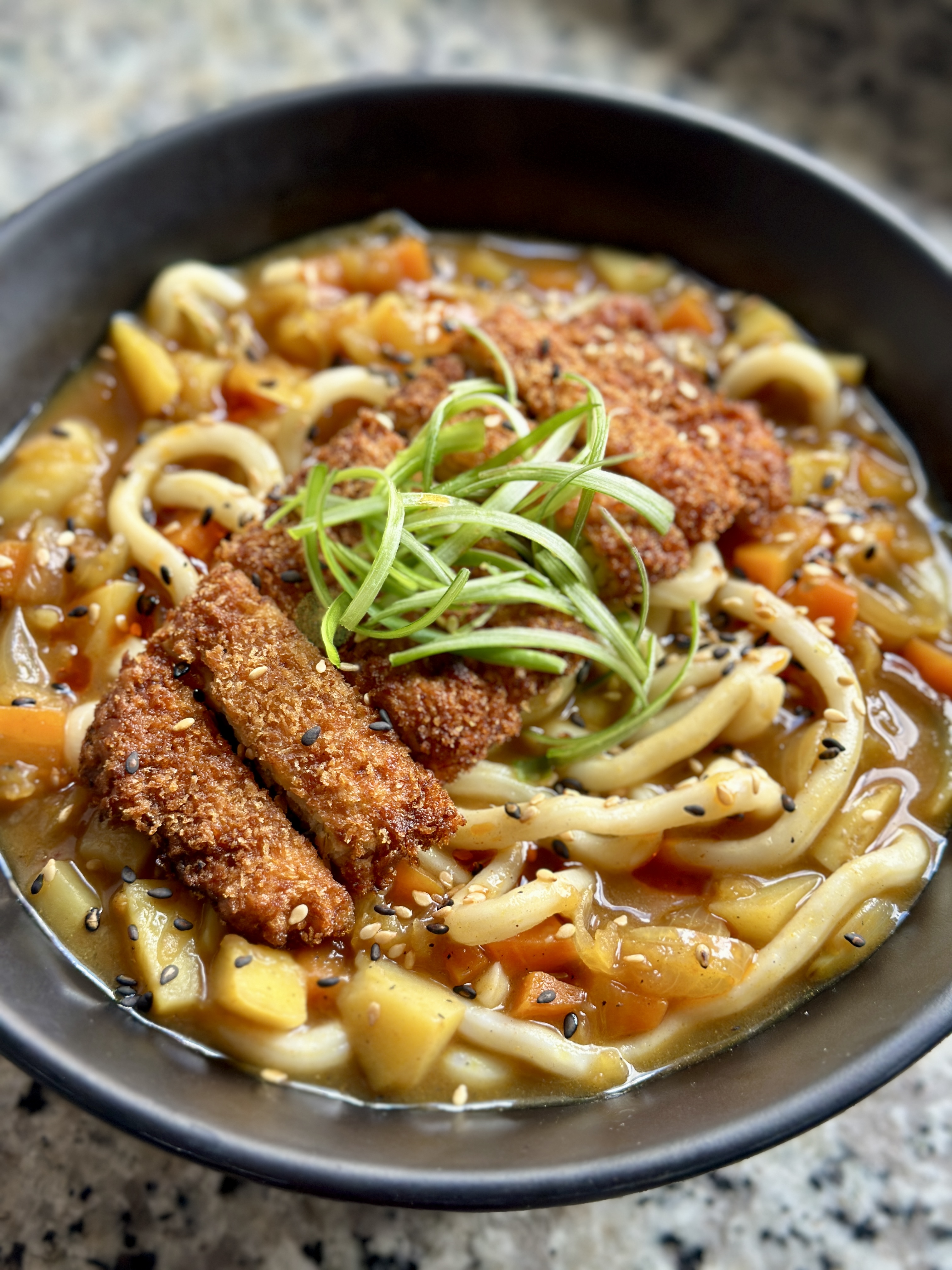
    This luscious and thick homemade Japanese Curry Udon paired with crispy Tempeh Katsu is addictive and perfect for your next weeknight dinner.

    Growing up in Singapore, I was exposed to many different types of cuisines, including Japanese cuisine. One of the dishes I had frequently in school or when I patronised the famous Monster Curry chain (known for their gigantic portions of food), was the always the Katsu Curry Rice. It usually comes with a portion of rice, Japanese curry with a customisable spice level and a big katsu chicken cutlet. Sometimes it also came with a side of pickled vegetables.

    When I went vegan, I definitely missed the flavours of having Japanese Curry. The difference between Japanese Curry and many Indian curries are that Japanese curries tend to be slightly sweeter because of the addition of apples and sweeteners.

    Today, we’re making Japanese Curry Udon paired with gut-friendly and crispy tempeh katsu. It’s one of my favourite well balanced meals to make as it has protein, vegetables, carbs and so much flavour!

    Ingredients You Need

    • kombu or dried kelp – to add to the broth for more umami
    • aromatics and vegetables – white onion, carrots, potatoes, grated apple
    • seasonings – light soy sauce, mushroom dashi, mirin curry roux cubes, toasted sesame oil
    • optional addition – a square of vegan dark chocolate
    • noodles – fresh or frozen udon noodles
    • tempeh – you can use fresh or frozen tempeh. Feel free to also substitute for tofu or sweet potato or eggplant slices here!
    • wet mix – plain flour, corn starch, salt, black pepper, onion and garlic powder, japanese chili flakes, sparkling water
    • dry mix – panko breadcrumbs
    • garnish – spring onions, toasted white & black sesame seeds

    Allium free substitutions: Omit onions, spring onions, onion and garlic powder. Substitute with a pinch of hing in the curry as well as the tempeh batter.

    Japanese Curry Udon with Crispy Tempeh Katsu

    This luscious and thick homemade Japanese Curry Udon paired with crispy Tempeh Katsu is addictive and perfect for your next weeknight dinner.
    Prep Time10 minutes
    Cook Time50 minutes
    Total Time1 hour
    Course: Main Course
    Cuisine: Fusion, Japanese
    Keyword: curry udon, noodles, tempeh, udon
    Servings: 2

    Ingredients

    Japanese Curry

    • 2-3 slices slices kombu or dried kelp
    • 3 cups water
    • 1/2 white onion
    • 1/2 carrot chopped
    • 2 small potatoes chopped
    • 1/2 apple grated
    • 1 tbsp toasted sesame oil
    • 2 tbsp light soy sauce
    • 1/2 tbsp mirin
    • 1 tbsp mushroom dashi
    • 2 cubes curry roux
    • 1 square dark chocolate
    • 2 packs udon noodles

    Tempeh Katsu

    • 4 tbsp plain flour sub with gluten free flour
    • 1 tbsp corn starch
    • 1 tsp onion powder
    • 1 tsp garlic powder
    • 1-2 tsp japanese chili flakes
    • 1 tsp salt
    • 1/2 tsp black pepper
    • 1/3 cup sparkling water (to form a thick but not runny batter)
    • 1/2 cup breadcrumbs
    • 1/2 cup neutral oil or more for frying

    Garnish

    • 1 stalk spring onions
    • toasted white sesame seeds
    • toasted black sesame seeds

    Instructions

    • Add kombu slices to 3 cups of water and bring to a boil. Simmer for a few minutes.
    • Chop your carrots and potatoes into small cubes. Blend apple into a paste or grate them. Slice onions.
    • Add sesame oil to a pan, onions, potatoes and carrots. Saute for 5-7 minutes.
    • Add back in the kombu stock. Add grated apple, light soy sauce, mirin and bring to a boil.
    • Add curry roux cubes, mushroom seasoning and simmer with the lid closed until the vegetables are cooked. Before serving, add in a piece of dark chocolate and mix well in the heat. At this stage, you can add more water if you don't want a thick curry.
    • Cook udon noodles according to package instructions.
    • Mix together dry ingredients – plain flour, corn starch, salt, black pepper, onion powder , garlic powder and chili flakes.
    • Add 1/3 cup water gradually (add more to get a thick paste, but the batter should not be runny).
    • Coat a thin slice of tempeh in the mixture. Coat it again in breadcrumbs.
    • Deep fry it until golden brown. Drain the excess oil on a tissue. Slice the tempeh into pieces.
    • Serve curry udon over noodles and place tempeh. Garnish with spring onions, toasted sesame seeds and japanese chili flakes. Enjoy!
  • 30-Minute Vegan Pho

    30-Minute Vegan Pho

    This easy one-pot Vietnamese noodle soup consists of an aromatic, umami broth made with spices, mushrooms and fresh herbs!

    Pho is a Vietnamese noodle soup dish that originated in Northern Vietnam, most likely in the early 20th century. Its origins can be traced back to influences from both China and France, which were present in Vietnam during that period. It’s not widely available in many parts of the world, and the taste of the broth is simple yet unmatched!

    Chinese influence: The broth for pho is often compared to the Chinese dish “northern noodle soup” (or “guo kui”), which uses a flavourful, clear beef broth. The use of rice noodles are also present in Chinese noodle dishes.

    French influence: During the French colonial period in Vietnam (from the mid-19th century to 1954), French cooking techniques and ingredients started merging with local Vietnamese food. One possible influence is the French beef stew “pot-au-feu,” – this uses a beef broth with meat and bones. The French introduced the use of simmering bones to create a rich, flavourful broth, which became a key element of pho.

    This version is completely meat free and vegan, while preserving the authentic flavours from fresh whole spices, aromatics and herbs. The umaminess comes from a medley of mushrooms that are cooked and simmered in the broth. The best part? This entire soup can be made in just one pot and in 30 minutes!

    Ingredients You Need

    • aromatics – white onions, ginger, scallions
    • whole spices – star anise, cloves, cinnamon stick, fennel seeds, coriander seeds
    • seasonings – vegan fish sauce (or light soy sauce), rice wine vinegar, sweetener, mushroom seasoning or dashi
    • mushrooms – king oyster, oyster, shitake mushrooms (you can use other varieties as well: shitake has the most umami!)
    • fresh herbs – basil, mint and coriander
    • spice (optional) – fresh red chillies and sriracha
    • protein (optional) – shredded tofu, plant based ‘chicken’, vegan beef (Mine is from Green Rebel)

    Gluten free substitutions: Ensure mushroom dashi and vegan fish sauce are gluten free. If not substitute with gluten free soy sauce or coconut aminos.

    Allium free substitutions: Omit scallions and white onions. Substitute with a few pinches of hing to the broth. Use alliums free sriracha or chili sauce – alternatively you can also use hoisin.

    30-minute Vegan Pho

    This easy one-pot Vietnamese noodle soup consists of an aromatic, umami broth made with spices, mushrooms and fresh herbs!
    Prep Time5 minutes
    Cook Time25 minutes
    Total Time30 minutes
    Course: Main Course
    Cuisine: Vietnamese
    Keyword: noodles, soup
    Servings: 2

    Ingredients

    Broth

    • 4 slices 1-inch ginger
    • 2 white onions, halved
    • 2 scallions (white part)
    • 5-6 cups water
    • 1 tbsp mushroom seasoning
    • 1/4 cup vegan fish sauce
    • 1 tbsp rice wine vinegar
    • 1 tbsp sweetener maple syrup / agave
    • 5 star anise
    • 5 cloves
    • 1 cinnamon stick
    • 2 tsp fennel seeds
    • 2 tsp coriander seeds
    • 1 black cardamom (optional)
    • 2 tsp salt adjust accordingly
    • 1/2 cup basil packed
    • 1/2 cup mint leaves packed

    Mushrooms

    • 1 cup mini king oyster mushrooms sliced
    • 1 cup shitake mushrooms sliced
    • 1 cup oyster mushrooms shredded

    Vegan Protein

    • 300 g extra firm tofu or any other plant based substitute

    Toppings

    • 2-3 servings flat pho noodles (rice noodles)
    • chopped coriander
    • chopped mint
    • red chili slices
    • 1/2 cup blanched beansprouts
    • sriracha

    Instructions

    • Char the onion on a medium sized pot until they are lightly browned and fragrant, about 7 minutes. This adds depth to the broth.
    • Add whole spices, ginger, and scallions and let them roast for a few minutes. Pour in the water.
    • Add vegan fish sauce, rice wine vinegar, sweetener, and mushroom seasoning. Mix well.
    • Add basil and mint and bring to a boil. Add your protein at your stage if adding. Boil for 5 minutes and take out the aromatics with a strainer.
    • When you're left with the clear broth, add in your mushrooms and boil them until fully cooked. Strain them out.
    • While boiling the broth, cook your rice noodles according to package instructions.
    • This is optional but you can also fry or roast your mushrooms and protein with some soy sauce towards the end for more flavour.
    • In each serving bowl, place a portion of the cooked noodles. Ladle the hot broth over the noodles.
    • Place the roasted mushrooms, protein and blanched beansprouts (you can blanch the beansprouts in the boiling noodle water – let's be sustainable <3)
    • Serve the pho with these fresh toppings: mint leaves, cilantro, and sliced chilies. Drizzle some sriracha or hoisin sauce for extra flavour if you prefer. Enjoy!